This week minfeub watched Possession. Rachel picked it because she saw this tweet
Here she took up her lodging and began instantly to look about her for what she had come in search of —that is to say, life and a lover. About the first there might be some doubt; the second she found without the least dif- ficulty two days after her arrival. It was a Tuesday that she came to town. On Thursday she went for a walk in the Mall, as was then the habit of persons of quality. She
had not made more than a turn or two of the avenue before she was observed by a little knot of vulgar people who go there to spy upon their betters. As she came past them, a common woman carrying a child at her breast stepped forward, peered familiarly into Orlando’s face, and cried out, “Lawk upon us, if it ain’t the Lady Or- lando!”” Her companions came crowding round, and Orlando found herself in a moment the centre of a mob of staring citizens and tradesmen’s wives, all eager to gaze upon the heroine of the celebrated law suit. Such was the interest that the case excited in the minds of the common people. She might, indeed, have found herself gravely discommoded by the pressure of the crowd—she had forgotten that ladies are not supposed to walk in public places alone—had not a tall gentleman at once stepped forward and offered her the protection of his arm. It was the Archduke. She was overcome with dis- tress and yet with some amusement at the sight. Not only had this magnanimous nobleman forgiven her, but in order to show that he took her levity with the toad in good part, he had procured a jewel made in the shape of that reptile which he pressed upon her with a repetition of his suit as he handed her to her coach.
What with the crowd, what with the Duke, what with the jewel, she drove home in the vilest temper imagin- able. Was it impossible then to go for a walk without
being half suffocated, presented with a toad set in emer- alds, and asked in marriage by an Archduke? She took a kinder view of the case next day when she found on her breakfast table half a dozen billets from some of the greatest ladies in the land — Lady Suffolk, Lady Salis- bury, Lady Chesterfield, Lady Tavistock, and others who reminded her in the politest manner of old alliances be- tween their families and her own, and desired the honour of her acquaintance. Next day, which was a Saturday, many of these great ladies waited on her in person. On Tuesday, about noon, their footmen brought cards of invitation to various routs, dinners, and assemblies in the near future; so that Orlando was launched without delay, and with some splash and foam at that, upon the waters of London society.
To give a truthful account of London society at that or indeed at any other time, is beyond the powers of the biographer or the historian. Only those who have little need of the truth, and no respect for it—the poets and the novelists—can be trusted to do it, for this is one of the cases where truth does not exist. Nothing exists. The whole thing is a miasma—a mirage. To make our mean- ing plain—Orlando would come home from one of these routs at three or four in the morning with cheeks like a Christmas tree and eyes like stars. She would untie a lace, pace the room a score of times, untie another lace,
ORLANDO stop, and pace the room again. Often the sun would be blazing over Southwark chimneys before she could per- suade herself to get into bed, and there she would lie, pitching and tossing, laughing and sighing for an hour or longer before she slept at last. And what was all this stir about? Society. And what had society said or done to throw a reasonable lady into such excitement? In plain language, nothing. Rack her memory as she would, next day Orlando could never remember a single word to magnify into the name something. Lord O. had been gallant. Lord A. polite. The Marquis of C. charming. Mr. M. amusing. But when she tried to recollect in what their gallantry, politeness, charm, or wit had consisted, she was bound to suppose her memory at fault, for she could not name a thing. It was the same always. Noth- ing remained over the next day, yet the excitement of the moment was intense. Thus we are forced to conclude that society is one of those brews such as skilled house- keepers serve hot about Christmas time, whose flavour depends upon the proper mixing and stirring of a dozen different ingredients. Take one out, and it is in itself in- sipid. Take away Lord O., Lord A., Lord C., or Mr. M. and separately each is nothing. Stir them all together and they combine to give off the most intoxicating of flavours, the most seductive of scents. Yet this intoxi- cation, this seductiveness, entirely evade our analysis. At
one and the same time therefore, society is everything and society is nothing. Society is the most powerful con- coction in the world and society has no existence what- soever. Such monsters the poets and the novelists alone ‘tan deal with; with such something-nothings their works are stuffed out to prodigious size; and to them with the best will in the world we are content to leave it.
Following the example of our predecessors, therefore, we will only say that society in the reign of Queen Anne was of unparalleled brilliance. To have the entry there was the aim of every well bred person. The graces were supreme. Fathers instructed their sons, mothers their daughters. No education was complete for either sex which did not include the science of deportment, the art of bowing and curtseying, the management of the sword and the fan, the care of the teeth, the conduct of the leg, the flexibility of the knee, the proper methods of enter- ing and leaving the room, with a thousand etceteras, such as will immediately suggest themselves to anybody who has himself been in society. Since Orlando had won the praise of Queen Elizabeth for the way she handed a bowl of rose water as a boy, it must be supposed that she was sufficiently expert to pass muster. Yet it is true that there was an absent mindedness about her which some- times made her clumsy; she was apt to think of poetry when she should have been thinking of taffeta; her walk
ORLANDO was a little too much of a stride for a woman, perhaps, and her gestures, being abrupt, might endanger a cup of tea on occasion. -
Whether this slight disability was enough to counter- balance the splendour of her bearing, or whether she in- herited a drop too much of that black humour which ran in the veins of all her race, certain it is that she had not been in the world more than a score of times before she might have been heard to ask herself, had there been any- body but her spaniel Pippin to hear her, ‘““What the devil is the matter with me?” The occasion was Tuesday, the 16th of June, 1712; she had just returned from a great ball at Arlington House; the dawn was in the sky, and she was pulling off her stockings. “I don’t care if I never meet another soul as long as I live,”’ cried Orlando, burst- ing into tears. Lovers she had in plenty, but life, which is after all of some importance in its way, escaped her. “Ts this,’ she asked—but there was none to answer, “‘is this what people call life?’ The spaniel raised her fore-_ paw in token of sympathy. The spaniel licked Orlando with her tongue. Orlando stroked the spaniel with her hand. Orlando kissed the spaniel with her lips. In short, there was the truest sympathy between them that can be between a dog and its mistress, and yet, it cannot be de- nied that the dumbness of animals is a great impediment to the refinements of intercourse. They wag their tails;

they bow the front part of the body and elevate the hind; they roll, they jump, they paw, they whine, they bark, they slobber; they have all sorts of ceremonies and arti- fices of their own, but the whole thing is of no avail, since speak they cannot. Such was her quarrel, she thought, setting the dog gently on to the floor, with the great people at Arlington House. They too, wag their tails, bow, roll, jump, paw, and slobber, but talk they cannot. ‘‘All these months that I’ve been out in the world,” said Orlando, pitching one stocking across the room, “I’ve heard nothing but what Pippin might have said. I’m cold. I’m happy. I’m hungry. I’ve caught a mouse. I’ve buried a bone. Please kiss my nose.” And it was not enough.
How, in so short a time, she had passed from intoxi- cation to disgust we will only seek to explain by sup- posing that this mysterious composition which we call society, is nothing absolutely good or bad in itself, but has a spirit in it, volatile but potent, which either makes you drunk when you think it, as Orlando thought it, delightful, or gives you a headache when you think it, as Orlando thought it, repulsive. That the faculty of speech has much to do with it either way, we take leave to doubt. Often a dumb hour is the most ravishing of all; brilliant wit can be tedious beyond description. But to the poets we leave it, and so on with our story.
Orlando threw the second stocking after the first and went to bed dismally enough, determined that she would forswear society-for ever. But again as it turned out, she was too hasty in coming to her conclusions. For the very next morning she woke to find, among the usual cards of invitation upon her table, one from a certain great Lady, the Countess of R. Having determined over night that she would never go into society again, we can only explain Orlando’s behaviour—she sent a messenger hot foot to R—— House to say that she would attend her Ladyship with all the pleasure in the world—by the fact that she was still suffering from the poison of three honeyed words dropped into her ear on the deck of the Enamoured Lady by Captain Nicholas Benedict Barto- lus as they sailed down the Thames. Addison, Dryden, ~ Pope, he had said, pointing to the Cocoa Tree, and Ad- dison, Dryden, Pope had chimed in her head like an incantation ever since. Who can credit such folly? but so it was. All her experience with Nick Greene had taught her nothing. Such names still exercised over her the most powerful fascination. Something, perhaps, we must believe in, and as Orlando, we have said, had no belief in the usual divinities she bestowed her credulity upon great men—yet with a distinction. Admirals, sol- diers, statesmen, moved her not at all. But the very thought of a great writer stirred her to such a pitch of
belief that she almost believed him to be invisible. Her instinct was a sound one. One can only believe entirely, perhaps, in what one cannot see. The little glimpse she had of the poets from the deck of the ship was of the nature of a vision. That the cup was china, or the gazette paper, she doubted. When Lord O. said one day that he had dined with Dryden the night before, she flatly dis- believed him. Now, the Lady R.’s reception room had the reputation of being the antechamber to the presence room of genius; it was the place where men and women met to swing censers and chant hymns to the bust of genius in a niche in the wall. Sometimes the God him- self vouchsafed his presence for a moment. Intellect alone admitted the suppliant, and nothing (so the report ran) was said inside that was not witty.
It was thus with great trepidation that Orlando en- tered the room. She found a company already assembled in a semicircle round the fire. Lady R., an oldish lady, of dark complexion, with a black lace mantilla on her head, was seated in a great arm chair in the centre. Thus being somewhat deaf, she could control the conversation on both sides of her. On both sides of her sat men and women of the highest distinction. Every man, it was said, had been a Prime Minister and every woman, it was whispered, had been the mistress of a king. Certain it is that all were brilliant, and all were famous. Orlando
ORLANDO took her seat with a deep reverence in silence. . . . After three hours, she curtseyed profoundly and left.
But what, the reader may ask with some exasperation, happened in between? In three hours, such a company must have said the wittiest, the profoundest, the most interesting things in the world. So it would seem indeed. But the fact appears to be that they said nothing. It isa curious characteristic which they share with all the most brilliant societies that the world has known. Old Ma- dame du Deffand and her friends talked for fifty years without stopping. And of it all, what remains? Perhaps three witty sayings. So that we are at liberty to suppose either that nothing was said, or that nothing witty was said, or that the fraction of three witty sayings lasted eighteen thousand two hundred and fifty nights, which does not leave a liberal allowance of wit for any one of them.
The truth would seem to be—if we dare use such a word in such a connection — that all these groups of people lie under an enchantment. The hostess is our modern Sibyl. She is a witch who lays her guests under a spell. In this house they think themselves happy; in that witty; in a third profound. Itis all an illusion (which is nothing against it, for illusions are the most valuable and necessary of all things, and she who can create one is among the world’s greatest benefactors), but as it is
notorious that illusions are shattered by conflict with reality, so no real happiness, no real wit, no real pro- fundity are tolerated where the illusion prevails. This serves to explain why Madame du Deffand said no more than three witty things in the course of fifty years. Had she said more, her circle would have been destroyed. The Witticism, as it left her lips, bowled over the current con- versation as a cannon ball lays low the violets and the daisies. When she made her famous ‘mot de Saint Denis’ the very grass was singed. Disillusionment and desola- tion followed. Not a word was uttered. “Spare us an- other such, for Heaven’s sake, Madame!”’ her friends cried with one accord. And she obeyed. For almost sey- enteen years she said nothing memorable and all went well. The beautiful counterpane of illusion lay unbroken on her circle as it lay unbroken on the circle of Lady R. The guests thought that they were happy, thought that they were witty, thought that they were profound, and, as they thought this, other people thought it still more strongly; and so it got about that nothing was more de- lightful than one of Lady R.’s assemblies; everyone envied those who were admitted; those who were ad- mitted envied themselves because other people envied them; and so there seemed no end to it—except that which we have now to relate.
ORLANDO tain incident occurred. She was still under the illusion that she was listening to the most brilliant epigrams in the world, though, as a matter of fact, old General C. was only saying, at some length, how the gout had left his left leg and gone to his right, while Mr. L. inter- rupted when any proper name was mentioned, “R.? Oh! I know Billy R. as well as I know myself. S.? My dear- est friend. T.? Stayed with him a fortnight in York- shire’ —which, such is the force of illusion, sounded like the wittiest repartee, the most searching comment upon human life and kept the company in a roar; when the door opened and a little gentleman entered whose name Orlando did not catch. Soon a curiously disagree- able sensation came over her. To judge from their faces, the rest began to feel it as well. One gentleman said there was a draught. The Marchioness of C. feared a cat must be under the sofa. It was as if their eyes were being slowly opened after a pleasant dream and nothing met ‘them but a cheap wash-stand and a dirty counterpane. It was as if the fumes of some delicious wine were slowly leaving them. Still the General talked and still Mr. L. remembered. But it became more and more apparent how red the General’s neck was, how bald Mr. L.’s head was. As for what they said—nothing more tedious and trivial could be imagined. Everybody fidgeted and those who had fans, yawned behind them. At last Lady R. 201
Drama trauma and lots of blood, a romantic film that I generally enjoyed. The sound track didn’t play much, but it was alright, and the end was a chaotic clusterfuck that had plenty of soul. The actors had an incredible range, practically uncanny, and sans that one time that a hair was stuck to the camera it was really smooth
ORLANDO rapped with hers upon the arm of her great chair. Both gentlemen stopped talking.
Here, it cannot be denied, was true wit, true wisdom, true profundity. The company was thrown into com- plete dismay. One such saying was bad enough; but three, one after another, on the same evening! No society could survive it.
“Mr. Pope,” said old Lady R. in a voice trembling with sarcastic fury, “‘you are pleased to be witty.”” Mr. Pope flushed red. Nobody spoke a word. They sat in dead silence some twenty minutes. Then, one by one, they rose and slunk from the room. That they would ever come back after such an experience was doubtful. Link boys could be heard calling their coaches all down South Audley Street. Doors were slammed and carriages drove off. Orlando found herself near Mr. Pope on the staircase. His lean and misshapen frame was shaken by a variety of emotions. Darts of malice, rage, triumph, wit, and terror (he was shaking like a leaf) shot from his eyes. He looked like some squat reptile set with a burning topaz in its forehead. At the same time, the
*These sayings are too well known to require repetition, and besides, they are all to be found in his published works.
strangest tempest of emotion seized now upon the luck- less Orlando. A disillusionment so complete as that in- flicted not an hour ago leaves the mind rocking from side to side. Everything appears ten times more bare and stark than before. It isa moment fraught with the high- est danger for the human spirit. Women turn nuns and men priests in such moments. In such moments, rich men sign away their wealth; and happy men cut their throats with carving knives. Orlando would have done all will- ingly, but there was a rasher thing still for her to do, and this she did. She invited Mr. Pope to come home with her.
For if itis rash to walk into a lion’s den unarmed, rash to navigate the Atlantic in a rowing boat, rash to stand on one foot on the top of St. Paul’s, it is still more rash to go home alone with a poet. A poet is Atlantic and lion in one. While one drowns us the other gnaws us. If we survive the teeth, we succumb to the waves. A man who can destroy illusions is both beast and flood. Illusions are to the soul what atmosphere is to the earth. Roll up that tender air and the plant dies, the colour fades. The earth we walk on is a parched cinder. It is marl we tread and fiery cobbles scorch our feet. By the truth we are undone. Life is a dream. "Tis waking that kills us. He who robs us of our dreams robs us of our life—(and so on for six pages if you will, but the style is tedious and may well be dropped).
On this showing, however, Orlando should have been a heap of cinders by the time the chariot drew up at her house in Blackfriars. That she was still flesh and blood, though certainly exhausted, is entirely due to a fact to which we drew attention earlier in the narrative. The less we see the more we believe. Now the streets that lie between Mayfair and Blackfriars were at that time very imperfectly lit. True, the lighting was a great improve- ment upon that of the Elizabethan age. Then the be- nighted traveller had to trust to the stars or the red flame of some night watchman to save him from the gravel pits at Park Lane or the oak woods where swine rootled in the Tottenham Court Road. But even so it wanted much of our modern efficiency. Lamp posts lit with oil- lamps occurred every two hundred yards or so, but be- tween lay a considerable stretch of pitch darkness. Thus for ten minutes Orlando and Mr. Pope would be in black- ness; and then for about half a minute again in the light. A very strange state of mind was thus bred in Orlando. As the light faded, she began to feel steal over her the most delicious balm. ““This is indeed a very great honour for a young woman, to be driving with Mr. Pope,” she began to think, looking at the outline of his nose. “I am the most blessed of my sex. Half an inch from me— indeed, I feel the knot of his knee ribbons pressing against my thigh—is the greatest wit in her Majesty’s
ORLANDO dominions. Future ages will think of us with curiosity and envy me with fury.” Here came the lamp post again. “What a foolish wretch I am!” she thought. “There is no such thing as fame and glory. Ages to come will never cast a thought on me or on Mr. Pope either. What’s an ‘age,’ indeed ? What are we?” and their progress through Berkeley Square seemed the groping of two blind ants, momentarily thrown together without interest or con- cern in common, across a blackened desert. She shivered. But here again was darkness. Her illusion revived. “How noble his brow is,” she thought (mistaking a hump ona cushion for Mr. Pope’s forehead in the darkness) .““What a weight of genius lives in it! What wit, wisdom and truth—what a wealth of all those jewels, indeed, for which people are ready to barter their lives! Yours is the only light that burns for ever. But for you the human pilgrimage would be performed in utter darkness”; (here the coach gave a great lurch as it fell into a rut in Park Lane) “without genius we should be upset and undone. Most august, most lucid of beams,”— thus she was apostrophising the hump on the cushion when they drove beneath one of the street lamps in Berkeley Square and she realised her mistake. Mr. Pope had a forehead no bigger than another man’s. Wretched man,” she thought, “chow you have deceived me! I took that hump for your forehead. When one sees you plain, how ignoble, 205
ORLANDO how despicable you are! Deformed and weakly, there is nothing to venerate in you, much to pity, most to despise.”
Again they were in darkness and her anger became modified directly she could see nothing but the poet’s knees.
10/12
“But it is I that am a wretch,” she reflected, once they were in complete obscurity again, “for base as you may be, am I not still baser? It is you who nourish and pro- tect me, you who scare the wild beast, frighten the savage, make me clothes of the silk worm’s wool, and carpets of the sheep’s. If I want to worship have you not provided me with an image of yourself and set it in the sky? Are not evidences of your care everywhere? How humble, how grateful, how docile, should I not be, there- fore? Let it be all my joy to serve, honour, and obey you.”
Here they reached the big lamp post at the corner of what is now Piccadilly Circus. The light blazed in her eyes, and she saw, besides some degraded creatures of her own sex, two wretched pigmies on a stark desert land. Both were naked, solitary, and defenceless. The one was powerless to help the other. Each had enough to do to look after itself. Looking Mr. Pope full in the face, “It is equally vain,” she thought, “for you to think you can protect me, or for me to think I can worship you. The
ORLANDO light of truth beats upon us without shadow, and the light of truth is damnably unbecoming to us both.”
All this time, of course, they went on talking agree- ably, as people of birth and education use, about the Queen’s temper and the Prime Minister’s gout, while the coach went from light to darkness down the Hay- market, along the Strand, up Fleet Street and reached, at length, her house in Blackfriars. For some time the dark spaces between the lamps had been becoming brighter and the lamps themselves less bright—that is to say, the sun was rising, and it was in the equable but confused light of a summer’s morning in which every- thing is seen but nothing is seen distinctly that they alighted, Mr. Pope handing Orlando from her carriage and Orlando curtseying Mr. Pope to precede her into her mansion with the most scrupulous attention to the rites of the Graces.
From the foregoing passage, however, it must not be supposed that genius (but the disease is now stamped out in the British Isles, the late Lord Tennyson, it is said, being the last person to suffer from it) is constantly alight, for then we should see everything plain and per- haps should be scorched to death in the process. Rather it resembles the lighthouse in its working, which sends one ray and then no more for a time; save that genius is much more capricious in its manifestations and may
ORLANDO flash six or seven beams in quick succession (as Mr. Pope did that night) and then lapse into darkness for a year or for ever. To steer by its beams is therefore impossible, and when the dark spell is on them men of genius are, it is said, much like other people.
It was happy for Orlando, though at first disappoint- ing, that this should be so, for she now began to live much in the company of men of genius, yet after all they were not much different from other people. Addison, Pope, Swift, proved, she found, to be fond of tea. They liked arbours. They collected little bits of coloured glass. They adored grottoes. Rank was not distasteful to them. Praise was delightful. They wore plum-coloured suits one day and grey another. Mr. Swift had a fine malacca cane. Mr. Addison scented his handkerchiefs. Mr. Pope suffered with his head. A piece of gossip did not come amiss. Nor were they without their jealousies. (We are jotting down a few reflections that came to Orlando higgledy-piggledy.) At first, she was annoyed with herself for noticing such trifles, and kept a book in which to write down their memorable sayings, but the page remained empty. All the same, her spirits revived, and she took to tearing up her cards of invitation to great parties; kept her evenings free; began to look forward to Mr. Pope’s visit, to Mr. Addison’s, to Mr. Swift’s— and so on and so on. If the reader will here refer to the
ORLANDO Rape of the Lock, to the S pectator, to Gulliver’s Travels, he will understand precisely what these mysterious words may mean. Indeed, biographers and critics might save themselves all their labours if readers would only take this advice. For when we read:
Whether the Nymph shall break Diana’s Law, Or some frail China Jar receive a Flaw,
Or stain her Honour, or her new Brocade, Forget her Pray’rs,—or miss a Masquerade, Or lose her heart, or Necklace, at a Ball
-recima from minfeub
—we know as if we heard him how Mr. Pope’s tongue flickered like a lizard’s, how his eyes flashed, how his hand trembled, how he loved, how he lied, how he suf- fered. In short, every secret of a writer’s soul, every ex- perience of his life, every quality of his mind is written large in his works, yet we require critics to explain the one and biographers to expound the other. That time hangs heavy on people’s hands is the only explanation of the monstrous growth.
So, now that we have read a line or two of the Rape of the Lock, we know exactly why Orlando was so much amused and so much frightened and so very bright- cheeked and bright-eyed that afternoon.
Mrs. Nelly then knocked at the door to say that Mr. Addison waited on her Ladyship. At this, Mr. Pope got up with a wry smile, made his congee, and limped off.
ORLANDO In came Mr. Addison. Let us, as he takes his seat, read the following passage from the Spectator.
“T consider woman as a beautiful, romantic animal, that may be adorned with furs and feathers, pearls and diamonds, ores and silks. The lynx shall cast its skin at her feet to make her a tippet, the peacock, parrot and swan shall pay contributions to her muff; the sea shall be searched for shells, and the rocks for gems, and every part of nature furnish out its share towards the embel- lishment of a creature that is the most consummate work of it. All this, I shall indulge them in, but as for the pet- ticoat I have been speaking of, I neither can, nor will allow it.”
We hold that gentleman, cocked hat and all, in the hollow of our hands. Look once more into the crystal. Is he not clear to the very wrinkle in his stocking? Does not every ripple and curve of his wit lie exposed before us, and his benignity and his timidity and his urbanity and the fact that he would marry a Countess and die very respectably in the end? All is clear. And when Mr. Addison has said his say, there is a terrific rap at the door, and Mr. Swift, who had these arbitrary ways with him, walks in unannounced. One moment, where is Gulli- ver’s Travels? Here itis! Let us read a passage from the voyage to the Houyhnhnms:
of Mind; I did not find the Treachery or Inconstancy of a Friend, nor the Injuries of a secret or open Enemy. I had no occasion of bribing, flattering or pimping, to pro- cure the Favour of any great Man or of his Minion. I wanted no Fence against Fraud or Oppression; Here was neither Physician to destroy my Body, nor Lawyer to ruin my Fortune; No Informer to watch my Words, and Actions, or forge Accusations against me for Hire: Here were no Gibers, Censurers, Backbiters, Pickpockets, Highwaymen, House-breakers, Attorneys, Bawds, Buf- foons, Gamesters, Politicians, Wits, splenetick tedious Aakers:
But stop, stop your iron pelt of words, lest you flay us all alive, and yourself too! Nothing can be plainer than that violent man. He is so coarse and yet so clean; so brutal, yet so kind; scorns the whole world, yet talks baby language to a girl, and will die, can we doubt it, in a madhouse.
So Orlando poured out tea for them all; and some- times when the weather was fine, she carried them down to the country with her, and feasted them royally in the Round Parlour, which she had hung with their pictures all in a circle, so that Mr. Pope could not say that Mr. Addison came before him, or the other way about. They were very witty, too (but their wit is all in their books) and taught her the most important part of style, which is
the natural run of the voice in speaking—a quality which none that has not heard it can imitate, not Greene even, with all his skill; for it is born of the air, and breaks like a wave on the furniture and rolls and fades away, and is never to be recaptured, least of all by those who prick up their ears, half a century later, and try. They taught her this, merely by the cadence of their voices in speech; so that her style changed somewhat, and she wrote some very pleasant, witty verses and characters in prose. And so she lavished her wine on them and put bank notes, which they took very kindly, beneath their plates at din- ner, and accepted their dedications, and thought herself highly honoured by the exchange.
Usually I’m too lazy to write reviews. I’m making an exception: avoid at all cost. Two hours of noise pretending to be signal.
Thus time ran on, and Orlando could often be heard saying to herself with an emphasis which might, perhaps, make the hearer a little suspicious, “Upon my soul, what a life this is!” (For she was still in search of that com- modity.) But circumstances soon forced her to consider the matter more narrowly. One day she was pouring out tea for Mr. Pope while as anyone can tell from the verses quoted above he sat very bright-eyed, observant and all crumpled up in a chair by her side.
“Lord,” she thought, as she raised the sugar tongs, “how women in ages to come will envy me! And yet ”” she paused; for Mr. Pope needed her atten- tion. And yet—let us finish her thought for her-—when
ORLANDO anybody says ““How future ages will envy me,” it is safe to say that they are extremely uneasy at the present mo- ment. Was this life quite so exciting, quite so flattering, quite so glorious as it sounds when the memoir writer has done his work upon it? For one thing, Orlando had a positive hatred of tea; for another, the intellect, divine as it is, and all worshipful, has a habit of lodging in the most seedy of carcases, and often, alas, acts the cannibal among the other faculties so that often, where the Mind is biggest, the Heart, the Senses, Magnanimity, Charity, Tolerance, Kindliness, and the rest of them scarcely have room to breathe. Then the high opinion poets have of themselves; then the low one they have of others; then the enmities, injuries, envies, and repartees in which they are constantly engaged; then the volubility with which they impart them; then the rapacity with which they demand sympathy for them; all this, one may whisper, lest the wits may overhear us, makes pouring out tea a more precarious and, indeed, arduous occupation than is generally allowed. Added to which (we whisper again lest the women may overhear us), there is a little secret which men share among them; Lord Chesterfield whis- pered it to his son with strict injunctions to secrecy, “Women are but children of a larger growth... . A man of sense only trifles with them, plays with them, humours and flatters them,” which, since children al- 213
ORLANDO ways hear what they are not meant to, and sometimes, even, grow up, may have somehow leaked out, so that the whole ceremony of pouring out tea is a curious one. A woman knows very well that, though a wit sends her his poems, praises her judgment, solicits her criticism, and drinks her tea, this by no means signifies that he re- spects her opinions, admires her understanding, or will refuse, though the rapier is denied him, to run her through the body with his pen. All this, we say, whisper it as low as we can, may have leaked out by now; so that even with the cream jug suspended and the sugar tongs distended the ladies may fidget a little, look out of the window a little, yawn a little, and so let the sugar fall with a great plop—as Orlando did now—into Mr. Pope’s tea. Never was any mortal so ready to suspect an insult or so quick to avenge one as Mr. Pope. He turned to Orlando and presented her instantly with the rough draught of a certain famous line in the “Characters of Women.” Much polish was afterwards bestowed on it, but even in the original it was striking enough. Orlando received it with a curtsey. Mr. Pope left her with a bow. Orlando, to cool her cheeks, for really she felt as if the little man had struck her, strolled in the nut grove at the bottom of the garden. Soon the cool breezes did their work. To her amazement she found that she was hugely relieved to find herself alone. She watched the merry
boatloads rowing up the river. No doubt the sight put her in mind of one or two incidents in her past life. She sat herself down in profound meditation beneath a wil- low tree. There she sat till the stars were in the sky. Then she rose, turned, and went into the house, where she sought her bedroom and locked the door. Now she opened a cupboard in which hung still many of the clothes she had worn as a young man of fashion, and from among them she chose a black velvet suit richly trimmed with Venetian lace. It was a little out of fash- ion, indeed, but it fitted her to perfection and dressed in it she looked the very figure of a noble Lord. She took a turn or two before the mirror to make sure that her pet- ticoats had not lost her the freedom of her legs, and then let herself secretly out of doors.
It was a fine night early in April. A myriad stars mingling with the light of a sickle moon, which again was enforced by the street lamps, made a light infinitely becoming to the human countenance and to the archi- tecture of Mr. Wren. Everything appeared in its ten- derest form, yet, just as it seemed on the point of disso- lution, some drop of silver sharpened it to animation. Thus it was that talk should be, thought Orlando (in- dulging in foolish reverie) ; that society should be, that friendship should be, that love should be. For, Heaven knows why, just as we have lost faith in human inter-
ORLANDO course some random collocation of barns and trees or a haystack and a waggon presents us with so perfect a symbol of what is unattainable that we begin the search again.
She entered Leicester Square as she made these obser- vations. The buildings had an airy yet formal symmetry not theirs by day. The canopy of the sky seemed most dexterously washed in to fill up the outline of roof and chimney. A young woman who sat dejectedly with one arm drooping by her side, the other reposing in her lap, on a seat beneath a plane tree in the middle of the square seemed the very figure of grace, simplicity, and desola- tion. Orlando swept her hat off to her in the manner of a gallant paying his addresses to a lady of fashion in a public place. The young woman raised her head. It was of the most exquisite shapeliness. The young woman raised her eyes. Orlando saw them to be of a lustre such as is sometimes seen on teapots but rarely in a human face. Through this silver glaze the girl looked up at him (for a man he was to her) appealing, hoping, trembling, fearing. She rose; she accepted his arm. For—need we stress the point?—she was of the tribe which nightly burnishes their wares, and sets them in order on the com- mon counter to wait the highest bidder. She led Orlando to the room in Gerrard Street which was her lodging. To feel her hanging lightly yet like a suppliant on
her arm, roused in Orlando all the feelings which be- come a man. She looked, she felt, she talked like one. Yet, having been so lately a woman herself, she suspected that the girl’s timidity and her hesitating answers and the very fumbling with the key in the latch and the fold of her cloak and the droop of her wrist were all put on to gratify her masculinity. Upstairs they went, and the pains which the poor creature had been at to decorate her room and hide the fact that she had no other deceived Orlando nota moment. The deception roused her scorn; the truth roused her pity. One thing showing through the other bred the oddest assortment of feeling, so that she did not know whether to laugh or to cry. Meanwhile Nell, as the girl called herself, unbuttoned her gloves; carefully concealed the left hand thumb which wanted mending; then drew behind a screen, where, perhaps, she rouged her cheeks, arranged her clothes, fixed a new kerchief round her neck—all the time prattling as women do, to amuse her lover, though Orlando could have sworn, from the tone of her voice, that her thoughts were else- where. When all was ready, out she came, prepared— but here Orlando could stand it no longer. In the strang- est torment of anger, merriment, and pity she flung off all disguise and admitted herself a woman.
At this, Nell burst into such a roar of laughter as might have been heard across the way.
-sable
“Well, my dear,” she said, when she had somewhat recovered, “I’m by no means sorry to hear it. For the plain Dunstable of the matter is” (and it was remark- able how soon on discovering that they were of the same sex, her manner changed and she dropped her plaintive, appealing ways) “‘the plain Dunstable of the matter is, that I’m not in the mood for the society of the other sex to-night. Indeed, I’m in the devil of a fix.” Whereupon, drawing up the fire and stirring a bowl of Punch, she told Orlando the whole story of her life. Since it is Or- lando’s life that engages us at present, we need not relate the adventures of the other lady, but it is certain that Orlando had never known the hours speed faster or more merrily, though Mistress Nell had not a particle of wit about her, and when the name of Mr. Pope came up in talk asked innocently if he were connected with the perruque maker of that name in Jermyn Street. Yet, to Orlando, such is the charm of ease and the seduction of beauty, this poor girl’s talk, larded though it was with the commonest expressions of the street corners tasted like wine after the fine phrases she had been used to, and she was forced to the conclusion that there was some- thing in the sneer of Mr. Pope, in the condescension of Mr. Addison, and in the secret of Lord Chesterfield which took away her relish for the society of wits, deeply though she must continue to respect their works.
These poor creatures, she ascertained, for Nell brought Prue, and Prue Kitty, and Kitty Rose, had a society of their own of which they now elected her a member. Each would tell the story of the adventures which had landed her in her present way of life. Several were the natural daughters of earls and one was a good deal nearer than she should have been to the King’s person. None was too wretched or too poor but to have some ring or handkerchief in her pocket which stood her in lieu of pedigree. So they would draw round the Punch bowl which Orlando made it her business to furnish gener- ously, and many were the fine tales they told and many the amusing observations they made for it cannot be de- nied that when women get together—but hist—they are always careful to see that the doors are shut and that not a word of it gets into print. All they desire is—but hist again—is that not a man’s step on the stair? All they desire, we were about to say when the gentleman took the very words out of our mouths. Women have no de- sires, says this gentleman, coming into Nell’s parlour; ~ only affectations. Without desires (she has served him and he is gone) their conversation cannot be of the slightest interest to anyone. “It is well known,” says Mr. S. W., ‘that when they lack the stimulus of the other sex, women can find nothing to say to each other. When they are alone, they do not talk; they scratch.” And since they
ORLANDO cannot talk together and scratching cannot continue without interruption and it is well known (Mr. T. R. has proved it) “that women are incapable of any feeling of affection for their own sex and hold each other in the greatest aversion,’ what can we suppose that women do when they seek out each other’s society ?
As that is not a question that can engage the attention of a sensible man, let us, who enjoy the immunity of all biographers and historians from any sex whatever, pass it over, and merely state that Orlando professed great enjoyment in the society of her own sex, and leave it to the gentlemen to prove, as they are very fond of doing, that this is impossible.
But to give an exact and particular account of Or- lando’s life at this time becomes more and more out of the question. As we peer and grope in the ilL-lit, ill-paved, ill-ventilated courtyards that lay about Gerrard Street and Drury Lane at that time, we seem now to catch sight of her and then again to lose it. What makes the task of identification still more difficult is that she found it convenient at this time to change frequently from one set of clothes to another. Thus she often occurs in con- temporary memoirs as “Lord”’ So-and-so, who was in fact her cousin; her bounty is ascribed to him, and it is he who is said to have written the poems that were really hers. She had, it seems, no difficulty in sustaining the
different parts, for her sex changed far more frequently than those who have worn only one set of clothing can conceive; nor can there be any doubt that she reaped a twofold harvest by this device; the pleasures of life were increased and its experiences multiplied. From the probity of breeches she turned to the seductiveness of petticoats and enjoyed the love of both sexes equally.
So then one may sketch her spending her morning in a China robe of ambiguous gender among her books; then receiving a client or two (for she had many scores of suppliants) in the same garment; then she would take a turn in the garden and clip the nut trees—for which knee breeches were convenient; then she would change into a flowered taffeta which best suited a drive to Rich- mond and a proposal of marriage from some great noble- man; and so back again to town, where she would don a snuft-coloured gown like a lawyer’s and visit the courts to hear how her cases were doing—for her fortune was wasting hourly and the suits seemed no nearer consum- mation than they had been a hundred years ago; and so, finally, when night came, she would more often than not become a nobleman complete from head to toe and walk the streets in search of adventure.
Returning from some of these junketings—of which there were many stories told at the time, as, that she fought a duel, served on one of the King’s ships as a cap-
tain, was seen to dance naked ona balcony, and fled with a certain lady to the Low Countries where the lady’s hus- band followed them (but of the truth or otherwise of these stories, we express no opinion), returning from whatever her occupation may have been, she made a point sometimes of passing beneath the windows of a coffee house, where she could see the wits without being seen, and thus could fancy from their gestures what wise, witty, or spiteful things they were saying without hear- ing a word of them which was perhaps an advantage; and once she stood half an hour watching three shadows on the blind drinking tea together in a house in Bolt Court.
Never was any play so absorbing. She wanted to cry out, Bravo! Bravo! For, to be sure, what a fine drama it was—what a page torn from the thickest volume of human life! There was the little shadow with the pout- ing lips, fidgeting this way and that on his chair, uneasy, petulant, officious; there was the bent female shadow, crooking a finger in the cup to feel how deep the tea was, for she was blind; and there was the Roman-looking rolling shadow in the big arm-chair—he who twisted his fingers so oddly and jerked his head from side to side and swallowed down the tea in such vast gulps. Dr. Johnson, Mr. Boswell, and Mrs. Williams, those were the shadows’ names. So absorbed was she in the sight,
dear diary today was so fun. i saw mommy and she cut her neck open with a meat slicer and daddy slit his wrists too but it didn’t hurt. then i played with teacher who looks like mommy alllll day we played hops cotch and she showed me the Beast that grows within her it was so fun. real mommy took me to heinrich’s house and we did sixteen hours of interpretive dance and then mommy and heinrich screamed in their bed room and i played with nana and she taught me about the eternal soul of our lord and saviour jesus christ and went to bed. i love my family
that she forgot to think how other ages would have envied her, though it seems probable that on this occa- sion they would. She was content to gaze and gaze. At length Mr. Boswell rose. He saluted the old woman with tart asperity. But with what humility did he not abase himself before the great rolling shadow, who now rose to its full height and rocking somewhat as he stood there rolled out the most magnificent phrases that have ever left human lips; so Orlando thought them, though she never heard a word that any of the three shadows said as they sat there drinking tea.
At length she came home one night after one of these saunterings and mounted to her bedroom. She took off her laced coat and stood there in shirt and breeches look- ing out of the window. There was something stirring in the air which forbade her to go to bed. A white haze lay over the town, for it was a frosty night in midwinter and a magnificent vista lay all round her. She could see St. Paul’s, the Tower, Westminster Abbey, with all the spires and domes of the city churches, the smooth bulk of its banks, the opulent and ample curves of its halls and meeting-places. On the north rose the smooth, shorn heights of Hampstead, and in the west the streets and squares of Mayfair shone out in one clear radiance. Upon this serene and orderly prospect the stars looked down, glittering, positive, hard, from a cloudless sky. In the
ORLANDO extreme clearness of the atmosphere the line of every rool, the cowl of every chimney was perceptible. Even the cobbles in the streets showed distinct one from an- other; and Orlando could not help comparing this orderly scene with the irregular and huddled purlieus which had been the city of London in the reign of Queen Elizabeth. Then, she remembered, the city, if such one could call it, lay crowded, a mere huddle and conglom- eration of houses, under her windows at Blackfriars. The stars reflected themselves in deep pits of stagnant water which lay in the middle of the streets, A black shadow at the corner where the wine shop used to stand was as likely as not, the corpse of a murdered man. She could remember the cries of many a one wounded in such night brawlings, when she was a little boy, held to the diamond-paned window in her nurse’s arms. Troops of ruftians, men and women, unspeakably interlaced, lurched down the streets, trolling out wild songs with jewels Hashing in their ears, and knives gleaming in their fists, On such a night as this the impermeable tangle of the forests on Highgate and Hampstead would be outlined, writhing in contorted intricacy against the sky, Here and there, on one of the hills which rose above London, was a stark gallows tree, with a corpse nailed to rot or parch on its cross; for danger and insecurity, lust and violence, poetry and filth swarmed over the tor- 224
ORS Ae NEDO tuous Elizabethan highways and buzzed and stank— Orlando could remember even now the smell of them on a hot night—in the little rooms and narrow pathways of the city. Now—she leant out of her window—all was light, order, and serenity. There was the faint rattle of a coach on the cobbles. She heard the far-away cry of the night watchman—“‘Just twelve o’clock ona frosty morn- _ ing.” No sooner had the words left his lips than the first stroke of midnight sounded. Orlando then for the first time noticed a small cloud gathered behind the dome of St. Paul’s. As the stroke sounded, the cloud increased, and she saw it darken and spread with extraordinary speed. At the same time a light breeze rose and by the time the sixth stroke of midnight had struck the whole of the eastern sky was covered with an irregular moving darkness, though the sky to the west and north stayed clear as ever. Then the cloud spread north. Height upon height above the city was engulfed by it. Only Mayfair, with all its lights, burnt more brilliantly than ever by contrast. With the eighth stroke, some hurrying tatters of cloud sprawled over Piccadilly. They seemed to mass themselves and to advance with extraordinary rapidity towards the west end. As the ninth, tenth and eleventh strokes struck, a huge blackness sprawled over the whole of London. With the twelfth stroke of midnight, the darkness was complete. A turbulent welter of cloud cov- 225
ORLANDO ered the city. All was dark; all was doubt; all was con- fusion. The Eighteenth century was over; the Nineteenth century had begun.
but over the whole of the British Isles on the first day of the nineteenth century stayed, or rather, did not stay, for it was buffeted about constantly by blustering gales, long enough to have extraordinary consequences upon those who lived beneath its shadow. A change seemed to have come over the climate of England. Rain fell frequently, but only in fitful gusts, which were no sooner over than they began again. The sun shone, of course, but it was so girt about with clouds and the air was so saturated with water, that its beams were dis- coloured and purples, oranges, and reds of a dull sort took the place of the more positive landscapes of the eighteenth century. Under this bruised and sullen can- opy the green of the cabbages was less intense, and the white of the snow was muddied. But what was worse, damp now began to make its way into every house— damp, which is the most insidious of all enemies, for while the sun can be shut out by blinds, and the frost roasted by a hot fire, damp steals in while we sleep; damp is silent, imperceptible, ubiquitous. Damp swells the
wood, furs the kettle, rusts the iron, rots the stone. So gradual is the process, that it is not until we pick up some chest of drawers, or coal scuttle, and the whole thing drops to pieces in our hands, that we suspect even that the disease is at work.
Thus, stealthily, and imperceptibly, none marking the exact day or hour of the change, the constitution of England was altered and nobody knew it. Everywhere the effects were felt. The hardy country gentleman, who had sat down gladly to a meal of ale and beef in a room designed, perhaps by the brothers Adam, with classic dignity, now felt chilly. Rugs appeared, beards were grown and trousers fastened tight under the instep. The chill which-he felt in his legs he soon transferred to his house; furniture was mufHled; walls and tables were cov- ered too. Then a change of diet became essential. The muffin was invented and the crumpet. Coffee sup- planted the after-dinner port, and, as coffee led to a draw- ing-room in which to drink it, and a drawing-room to glass cases, and glass cases to artificial flowers, and ar- tificial flowers to mantelpieces, and mantelpieces to pianofortes, and pianofortes to drawing-room ballads, and drawing-room ballads (skipping a stage or two) to innumerable little dogs, mats, and antimacassars, the home—which had become extremely important—was completely altered.
Outside the house—it was another effect of the damp —1vy grew in unparalleled profusion. Houses that had been of bare stone were smothered in greenery. No gar- den, however formal its original design, lacked a shrub- bery, a wilderness, a maze. What light penetrated to the bedrooms where children were born was naturally of an obfusc green and what light penetrated to the drawing- rooms where grown men and women lived came through curtains of brown and purple plush. But the change did not stop at outward things. The damp struck within. Men felt the chill in their hearts; the damp in their minds. In a desperate effort to snuggle their feelings into some sort of warmth one subterfuge was tried after another. Love, birth, and death were all swaddled in a variety of fine phrases. The sexes drew further and fur- ther apart. No open conversation was tolerated. Eva- sions and concealments were sedulously practised on both sides. And just as the ivy and the evergreen rioted in the damp earth outside, so did the same fertility show itself within. The life of the average woman was a suc- cession of childbirths. She married at nineteen and had fifteen or eighteen children by the time she was thirty; for twins abounded. Thus the British Empire came into existence; and thus—for there is no stopping damp; it gets into the inkpot as it gets into the woodwork—sen- tences swelled, adjectives multiplied, lyrics became epics,
ORLANDO and little trifles that had been essays a column long were now encyclopaedias in ten or twenty volumes. But Euse- bius Chubb shall be our witness to the effect this all had upon the mind of a sensitive man who could do nothing to stop it. There is a passage towards the end of his mem- oirs where he describes how, after writing thirty-five folio pages one morning ‘all about nothing’ he screwed the lid on his inkpot and went for a turn in his garden. Soon he found himself involved in the shrubbery. In- numerable leaves creaked and glistened above his head. He seemed to himself “‘to crush the mould of a million more under his feet.”’ Thick smoke exuded from a damp bonfire at the end of the garden. He reflected that no fire on earth could ever hope to consume that vast vege- table encumbrance. Wherever he looked, vegetation was rampant. Cucumbers “came scrolloping across the grass to his feet.”” Giant cauliflowers towered deck above deck till they rivalled, to his disordered imagination, the elm trees themselves. Hens laid incessantly eggs of no spe- cial tint. Then, remembering with a sigh his own fe- cundity and his poor wife Jane, now in the throes of her fifteenth confinement indoors, how, he asked himself, could he blame the fowls? He looked upwards into the sky. Did not heaven itself, or that great frontispiece of heaven, which is the sky, indicate the assent, indeed, the instigation of the heavenly hierarchy? For there, winter 230
dear diary this has been a terribly emotional day. i beat anna senseless and she still came back because i suppose she loves our child just as much as i do even though she’s having s*x with that horrible evil vile man heinrich. he’s so strong and handsome and good at dancing but i beat him at his own sexy little game and drowned him and stole his motorbike. so now i can have sex with my wife all i want, either as myself, or as my worm-god-cuckold surrogate. oh yes indeed, everything is coming up mike. sorry i’ve got to fall down this stairwell now cheerio
or summer, year in year out, the clouds turned and tum- bled, like whales, he pondered, or elephants rather; but no, there was no escaping the simile which was pressed upon him from a thousand airy acres; the whole sky itself as it spread wide above the British Isles was nothing buta vast feather bed; and the undistinguished fecundity of the garden, the bedroom and the henroost was copied there. He went indoors, wrote the passage quoted above, laid his head in a gas oven, and when they found him later he was past revival.
While this went on in every part of England, it was all very well for Orlando to mew herself in her house at Blackfriars and pretend that the climate was the same; that one could still say what one liked and wear knee- breeches or skirts as the fancy took one. Even she, at length, was forced to acknowledge that times were changed. One afternoon in the early part of the century she was driving through St. James’ Park in her old pan- elled coach when one of those sunbeams, which occa- sionally, though not often, managed to come to earth, struggled through, marbling the clouds with strange prismatic colours as it passed. Such a sight was sufh- ciently strange after the clear and uniform skies of the eighteenth century to cause her to pull the window down and look at it. The puce and flamingo clouds made her think with a pleasurable anguish, which proves that she
ORLANDO was insensibly afflicted with the damp already, of dol- phins dying in Ionian seas. But what was her surprise when, as it struck the earth, the sunbeam seemed to call forth, or to light up, a pyramid, hecatomb, or trophy (for it had something of a banquet-table air)—a con- glomeration at any rate of the most heterogeneous and ill-assorted objects, piled higgledy-piggledy in a vast mound where the statue of Queen Victoria now stands! Draped about a vast cross of fretted and floriated gold were widow’s weeds and bridal veils; hooked on to other excrescences were crystal palaces, bassinettes, mil- itary helmets, memorial wreaths, trousers, whiskers, wedding cakes, cannon, Christmas trees, telescopes, ex- tinct monsters, globes, maps, elephants and mathemat- ical-instruments—the whole supported like a gigantic coat of arms on the right side by a female figure clothed in flowing white; on the left, by a portly gentleman wear- ing a frock-coat and sponge-bag trousers. The incongru- ity of the objects, the association of the fully clothed and the partly draped, the garishness of the different colours and their plaid-like juxtapositions afflicted Orlando with the most profound dismay. She had never, in all her life, seen anything at once so indecent, so hideous, and so monumental. It might, and indeed it must be, the effect of the sun on the water-logged air; it would vanish with the first breeze that blew; but for all that, it looked, as 232
she drove past, as if it were destined to endure for ever. Nothing, she felt, sinking back into the corner of her coach, no wind, rain, sun, or thunder, could ever demol- ish that garish erection. Only the noses would mottle and the trumpets would rust; but there they would remain, pointing east, west, south, and north, eternally. She looked back as her coach swept up Constitution Hill. Yes, there it was, still beaming placidly in a light which —she pulled her watch out of her fob—was, of course, the light of twelve o’clock mid-day. None other could be so prosaic, so matter of fact, so impervious to any hint of dawn or sunset, so seemingly calculated to last for ever. She was determined not to look again. Already she felt the tides of her blood run sluggishly. But what was more peculiar, a blush, vivid and singular, overspread her cheeks as she passed Buckingham Palace and her eyes seemed forced by a superior power down upon her knees. Suddenly she saw with a start that she was wear- ing black breeches. She never ceased blushing till she had reached her country house, which, considering the time it takes four horses to trot thirty miles, will be taken, we hope, as a signal proof of her chastity.
Once there, she followed what had now become the most imperious need of her nature and wrapped herself as well as she could in a damask quilt which she snatched
ORLANDO mew (who had succeeded good old Grimsditch as house- keeper) that she felt chilly.
“So do we all, m’lady,” said the Widow, heaving a profound sigh. “The walls is sweating,” she said, with a curious, lugubrious complacency, and sure enough, she had only to lay her hand on the oak panels for the finger- prints to be marked there. The ivy had grown so pro- fusely that many windows were now sealed up. The kitchen was so dark that they could scarcely tell a kettle from acullender. A poor black cat had been mistaken for coals and shovelled on the fire. Most of the maids were already wearing three or four red-flannel petticoats, though the month was August.
“But is it true, m’lady,”’ the good woman asked, hug- ging herself, while the golden crucifix heaved on her bosom, “‘that the Queen, bless her, is wearing a what d’you call it, a , the good woman hesitated and blushed.
‘A crinoline,” Orlando helped her out (for the word had reached Blackfriars). Mrs. Bartholomew nodded. The tears were already running down her cheeks, but as she wept she smiled. For it was pleasant to weep. Were they not all of them weak women? wearing crinolines the better to conceal the fact; the great fact; the only fact; but, nevertheless, the deplorable fact; which every mod- est woman did her best to deny until denial was impos-
ORLANDO sible; the fact that she was about to bear a child? to bear fifteen or twenty children indeed, so that most of a mod- est woman’s life was spent, after all, in denying what, on one day at least every year, was made obvious.
dear diary the Beast won’t leave me alone He claws at my insides like a drowned dog bloated and unspooling in the river like the one that flows beneath sister Faith who has all the right postures but her beliefs must be left for those without,, it’s too much for anyone to bear… sister Chance has such an iron will to leave herself alone with us for all this time and all these words but even she could not be swayed by him, she knows his wicked evil devil ways, she can’t be seen there,, i FUCKING HATE milk i’m SO GOOD at dancing and i shall SHOOT MYSELF IN THE BACK just to shag my lovely husband’s clone again, oh woe oh oh god
“The muffins is keepin’ ot,” said Mrs. Bartholomew, mopping up her tears, “‘in the liberry.”
And wrapped in a damask bed quilt, to a dish of muffins Orlando now sat down.
“The mufhns is keepin’ ’ot in the liberry”— Orlando minced out the horrid Cockney phrase in Mrs. Bartholo- mew’s refined Cockney accents as she drank—but not, she detested the mild fluid—her tea. It was in this very room, she remembered, that Queen Elizabeth had stood astride the fireplace with a flagon of beer in her hand, which she suddenly dashed on the table when Lord Burghley tactlessly used the imperative instead of the subjunctive. “Little man, little man,”’— Orlando could hear her say—‘‘is ‘must’ a word to be addressed to princes?” And down came the flagon on the table: there was the mark of it still.
But when Orlando leapt to her feet, as the mere thought of that great Queen commanded, the bed quilt tripped her up, and she fell back in her arm-chair with a curse. To-morrow she would have to buy twenty yards or more of black bombazine, she supposed, to make a
buy acrinoline, and then (here she blushed) a bassinette, and then another crinoline,andsoon. . . . The blushes came and went with the most exquisite iteration of mod- esty and shame imaginable. One might see the spirit of the age blowing, now hot, now cold, upon her cheeks. And if the spirit of the age blew a little unequally, the crinoline being blushed for before the husband, her am- biguous position must excuse her (even her sex was still in dispute) and the irregular life she had lived before. At length the colour on her cheeks resumed its sta- bility and it seemed as if the spirit of the age—if such in- deed it were—lay dormant for a time. Then Orlando felt in the bosom of her shirt as if for some locket or relic of lost affection, and drew out no such thing, but a roll of paper, sea-stained, blood-stained, travel-stained — the manuscript of her poem, “The Oak Tree.” She had car- ried this about with her for so many years now, and in such hazardous circumstances, that many of the pages were stained, some were torn, while the straits she had been in for writing paper when with the gipsies, had forced her to overscore the margins and cross the lines till the manuscript looked like a piece of darning most con- scientiously carried out. She turned back to the first page and read the date, 1586, written in her own boyish hand. She had been working at it for close on three hundred years now. It was time to make an end. And so she began 236
turning and dipping and reading and skipping and thinking as she read how very little she had changed all these years. She had been a gloomy boy, in love with death, as boys are ; and then she had been amorous and florid; and then she had been sprightly and satirical; and sometimes she had tried prose and sometimes she had tried the drama. Yet through all these changes she had remained, she reflected, fundamentally the same. She had the same brooding meditative temper, the same love of animals and nature, the same passion for the country and the seasons.
“After all,” she thought, getting up and going to the window, “nothing has changed. The house, the garden ° are precisely as they were. Not a chair has been moved, not a trinket sold. There are the same walks, the same lawns, the same trees, and the same pool, with, I dare say, the same carp in it. True, Queen Victoria is on the throne and not Queen Elizabeth, but what differ- a ty ohare
No sooner had the thought taken shape, than, as if to rebuke it, the door was flung wide, and in marched Basket, the butler, followed by Bartholomew, the house- keeper, to clear away tea. Orlando, who had just dipped her pen in the ink, and was about to indite some reflec- tion upon the eternity of all things, was much annoyed to be impeded by a blot, which spread and meandered
round her pen. It was some infirmity of the quill, she supposed; it was split or dirty. She dipped it again. The blot increased. She tried to go on with what she was say- ing; no words came. Next she tried to decorate the blot with wings and whiskers, till it became a round-headed monster, something between a bat and a wombat. But as for writing poetry with Basket and Bartholomew in the room, it was impossible. No sooner had she said “‘Im- possible” than, to her astonishment and alarm, the pen began to curve and caracole with the smoothest possible fluency. Her page was written in the neatest sloping Italian hand with the most insipid verse she had ever read in her life:
she wrote without a stop as Bartholomew and Basket grunted and groaned about the room, mending the fire, picking up the muffins. Again she dipped her pen and off it went— 238
dear diary. i love my motorbike. but, alas, i must admit to you a most evil something: i said a terrible badness today. i broke my normal ways of goodness and said words i deeply deeply regret. yes, i claimed agency over anna’s sexuality and threatened her with physical violence. this is unbecoming of me, heinrich, the best character in this movie - there are no words that can forgive my sin. but i will not hide from it, i must face the truth of what i have done to make it right with her, and seek to live every day as a better person. wait holy shit she has a bunch of dudes in the fridge and a moldy sexy wyrm and abbbllblblblblbGASPlobibooboblobolobloblooblobloblolobblobloloobolollobobblo
She was so changed, the soft carnation cloud Once mantling o’er her cheek like that which eve Hangs o’er the sky, glowing with roseate hue, Had faded into paleness, broken by
but here, by an abrupt movement she spilt the ink over the page and blotted it from human sight she hoped for ever. She was all of a quiver, all of a stew. Nothing more repulsive could be imagined than to feel the ink flowing thus in cascades of involuntary inspiration. What had happened to her? Was it the damp, was it Bartholomew, was it Basket, what was it? she demanded. But the room was empty. No one answered her, unless the dripping of the rain in the ivy could be taken for an answer. Meanwhile, she became conscious, as she stood at the window, of an extraordinary tingling and vibration all over her, as if she were made of a thousand wires upon which some breeze or errant fingers were playing scales. Now her toes tingled; now her marrow. She had the queerest sensations about the thigh bones. Her hairs seemed to erect themselves. Her arms sang and twanged as the telegraph wires would be singing and twanging in twenty years or so. But all this agitation seemed at length to concentrate in her hands; and then in one hand, and then in one finger of that hand, and then finally to
bility about the second finger of the left hand. And when she raised it to see what caused this agitation, she saw nothing—nothing but the vast solitary emerald which Queen Elizabeth had given her. And was that not enough? she asked. It was of the finest water. It was worth ten thousand pounds at least. The vibration seemed, in the oddest way (but remember we are deal- ing with some of the darkest manifestations of the hu- man soul) to say No, that is not enough; and, further, to : assume a note of interrogation, as though they were ask- ing, what did it mean, this hiatus, this strange over- sight? till poor Orlando felt positively ashamed of the second finger of her left hand without in the least know- ing why. At this moment, Bartholomew came in to ask which dress she should lay out for dinner, and Orlando, whose senses were much quickened, instantly glanced at Bartholomew’s left hand, and instantly perceived what she had never noticed before—a thick ring of rather jaundiced yellow circling the second finger where her own was bare.
“Let me look at your ring, Bartholomew,” she said, stretching her hand to take it.
At this, Bartholomew made as if she had been struck in the breast by a rogue. She started back a pace or two, clenched her hand and flung it away from her with a gesture that was noble in the extreme. “‘No,”’ she said,
with resolute dignity, her Ladyship might look if she pleased, but as for taking off her wedding ring, not the Archbishop nor the Pope nor Queen Victoria on her throne could force her to do that. Her Thomas had put it on her finger twenty-five years, six months, three weeks ago; she had slept in it; worked in it; washed in it; prayed in it; and proposed to be buried in it. In fact, Orlando understood her to say, but her voice was much broken with emotion, that it was by the gleam on her wedding ring that she would be assigned her station among the angels and its lustre would be tarnished for ever if she let it out of her keeping for a second.
“Heaven help us,”’ said Orlando, standing at the win- dow and watching the pigeons at their pranks. “What a world we live in! What a world to be sure.”’ Its com- plexities amazed her. It now seemed to her that the whole world was ringed with gold. She went in to din- ner. Wedding rings abounded. She went to church. Wedding rings were everywhere. She drove out. Gold, or pinchbeck, thin, thick, plain, smooth, they glowed dully on every hand. Rings filled the jewellers’ shops, not the flashing pastes and diamonds of Orlando’s recol- lection, but simple bands without a stone in them. At the same time, she began to notice a new habit among the town people. In the old days, one would meet a boy trifling with a girl under a hawthorn hedge frequently
ORLANDO enough. Orlando had flicked many a couple with the tip of her whip and laughed and passed on. Now, all that was changed. Couples trudged and plodded in the middle of the road indissolubly linked together. The woman’s right hand was invariably passed through the man’s left and her fingers were firmly gripped by his. Often it was not till the horses’ noses were on them that they budged, and then, though they moved it was all in one piece, heavily, to the side of the road. Orlando could only sup- pose that some new discovery had been made about the race; they were somehow stuck together, couple after couple, but who had made it, and when, she could not guess. It did not seem to be Nature. She looked at the doves and the rabbits and the elk hounds and she could not see that Nature had changed her ways or mended them, since the time of Elizabeth at least. There was no _ indissoluble alliance among the brutes that she could see. Could it be Queen Victoria then, or Lord Melbourne? Was it from them that the great discovery of marriage proceeded ? Yet the Queen, she pondered, was said to be fond of dogs, and Lord Melbourne, she had heard, was said to be fond of women. It was strange—it was dis- tasteful; indeed, there was something in this indissolu- bility of bodies which was repugnant to her sense of decency and sanitation. Her ruminations, however, were accompanied by such a tingling and twangling of 242
the afflicted finger that she could scarcely keep her ideas in order. They were languishing and ogling like a house- maid’s fancies. They made her blush. There was noth- ing for it but to buy one of those ugly bands and wear it like the rest. This she did, slipping it, overcome with shame, upon her finger in the shadow of a curtain; but without avail. The tingling persisted more violently, more indignantly than ever. She did not sleep a wink that night. Next morning when she took up the pen to write, either she could think of nothing, and the pen made one large lachrymose blot after another, or it ambled off, more alarmingly still into mellifluous flu- encies about early death and corruption, which were worse than no thinking at all. For it would seem—her case proved it—that we write, not with the fingers, but with the whole person. The nerve which controls the pen winds itself about every fibre of our being, threads the heart, pierces the liver. Though the seat of her trouble seemed to be the left finger, she could feel herself poisoned through and through, and was forced at length to consider the most desperate of remedies, which was to yield completely and submissively to the spirit of the age, and take a husband.
That this was much against her natural temperament, has been sufficiently made plain. When the sound of the Archduke’s chariot wheels died away, the cry that rose
dear diary scored anna again today mark watched LOL #letsgo #writhing #cuck #cuckoldry #cuckchair
to her lips was “Life! A Lover!” not “Life! A Hus- band!” and it was in pursuit of this aim that she had gone to town and run about the world as has been shown in the previous chapter. Such is the indomitable nature of the spirit of the age however, that it batters down any- one who tries to make stand against it far more effectu- ally than those who bend its own way. Orlando had in- clined herself naturally to the Elizabethan spirit, to the Restoration spirit, to the spirit of the eighteenth century, and had in consequence scarcely been aware of the change from one age to the other. But the spirit of the nineteenth century was antipathetic to her in the ex- treme, and thus it took her and broke her, and she was aware of her defeat at its hands as she had never been be- fore. For it is probable that the human spirit has its place in time assigned to it; some are born of this age, some of that; and now that Orlando was grown a woman, a year or two past thirty indeed, the lines of her character were fixed, and to bend them the wrong way was intolerable.
So she stood mournfully at the drawing-room window (Bartholomew had so christened the library) dragged down by the weight of the crinoline which she had sub- missively adopted. It was heavier and more drab than any dress she had yet worn. None had ever so impeded her movements. No longer could she stride through the garden with her dogs, or run lightly to the high mound
and fling herself beneath the oak tree. Her skirts col- lected damp leaves and straw. The plumed hat tossed on the breeze. The thin shoes were quickly soaked and mud- caked. Her muscles had lost their pliancy. She had be- come nervous lest there should be robbers behind the wainscot and afraid, for the first time in her life, of ghosts in the corridors. All these things inclined her, step by step, to submit to the new discovery, whether Queen Victoria’s or another’s, that each man and each woman has another allotted to it for life, whom it supports, by whom it is supported, till death them do part. It would be a comfort, she felt, to lean; to sit down; yes, to lie down; never, never, never to get up again. Thus did the spirit work upon her, for all her past pride, and as she came sloping down the scale of emotion to this lowly and unaccustomed lodging place, those twanglings and tinglings which had been so captious and so interrog- ative modulated into the sweetest melodies, till it seemed as if angels were plucking harp-strings with white fin- gers and her whole being was pervaded by a seraphic harmony.
But whom could she lean upon? She asked that ques- tion of the wild autumn winds. For it was now October, and wet as usual. Not the Archduke; he had married a very great lady and had hunted hares in Roumania these many years now; nor Mr. M.; he was become a Catholic;
ORLANDO nor the Marquis of C.; he made sacks in Botany Bay; nor the Lord O.; he had long been food for fishes. One way or another, all her old cronies were gone now, and the Nells and the Kits of Drury Lane, much though she favoured them, scarcely did to lean upon.
“Whom,” she asked, casting her eyes upon the re- volving clouds, clasping her hands, as she knelt on the window-sill, and looking the very image of appealing womanhood as she did so, “can I lean upon?” Her words formed themselves, her hands clasped themselves, involuntarily, just as her pen had written of its own ac- cord. It was not Orlando who spoke, but the spirit of the age. But whichever it was, nobody answered it. The rooks were tumbling pell mell among the violet clouds of autumn. The rain had stopped at last and there was an iridescence in the sky which tempted her to put on her plumed hat and her little stringed shoes and stroll out before dinner.
“Everyone is mated except myself,” she mused, as she trailed disconsolately across the courtyard. There were the rooks; Canute and Pippin even—transitory as their alliances were, still each this evening seemed to have a partner. “Whereas, I, who am mistress of it all,’’ Or- lando thought, glancing as she passed at the innumerable emblazoned windows of the hall, “am single, am mate- less, am alone.”’
Such thoughts had never entered her head before. Now they bore her down unescapably. Instead of thrust- ing the gate open, she tapped with a gloved hand for the porter to unfasten it for her. One must lean on someone, she thought, if it is only on a porter; and half wished to stay behind and help him to grill his chop on a bucket of fiery coals, but was too timid to ask it. So she strayed out into the park alone, faltering at first and apprehen- sive lest there might be poachers or game keepers or even errand-boys to marvel that a great lady should walk alone.
At every step she glanced nervously lest some male form should be hiding behind a furze bush or some say- age cow be lowering its horns to toss her. But there were only the rooks flaunting in the sky. A steel-blue plume from one of them fell among the heather. She loved wild birds’ feathers. She had used to collect them as a boy. She picked it up and stuck it in her hat. The air blew upon her spirit somewhat and revived it. As the rooks went whirling and wheeling above her head and feather after feather fell gleaming through the purplish air, she fol- lowed them, her long cloak floating behind her, over the moor, up the hill. She had not walked so far for years. Six feathers had she picked from the grass and drawn between her finger tips and pressed to her lips to feel their smooth, glinting plumage, when she saw, gleaming on
ORLANDO the hill-side, a silver pool, mysterious as the lake into which Sir Bedivere flung the sword of Arthur. A single feather quivered in the air and fell into the middle of it. Then, some strange ecstasy came over her. Some wild notion she had of following the birds to the rim of the world and flinging herself on the spongy turf and there drinking forgetfulness, while the rooks’ hoarse laughter sounded over her. She quickened her pace; she ran; she tripped; the tough heather roots flung her to the ground. Her ankle was broken. She could not rise. But there she lay content. The scent of the bog myrtle and the meadow- sweet was in her nostrils. The rooks’ hoarse laughter was in her ears. “I have found my mate,” she murmured. “It is the-moor. I am nature’s bride,” she whispered, giving herself in rapture to the cold embraces of the grass as she lay folded in her cloak in the hollow by the pool. “Here will I lie. (A feather fell upon her brow.) I have found a greener laurel than the bay. My forehead will be cool always. These are wild birds’ feathers—the owls, the nightjars. I shall dream wild dreams. My hands shall wear no wedding ring,” she continued, slipping it from her finger.““The roots shall twine about them. Ah!” she sighed, pressing her head luxuriously on its spongy pillow, “I have sought happiness through many ages and not found it; fame and missed it; love and not known it; life—and behold, death is better. I have known many 248
rating: a rather dapper, and, if i may say so sir, quite fuckable, mold monster
ORLANDO men and many women,” she continued; “none have I understood. It is better that I should lie at peace here with only the sky above me—as the gipsy told me years ago. That was in Turkey.” And she looked straight up into the marvellous golden foam into which the clouds had churned themselves, and saw next moment a track in it, and camels passing in single file through the rocky desert among clouds of red dust; and then, when the camels had passed, there were only mountains, very high and full of clefts and with pinnacles of rock, and she fancied she heard goat bells ringing in their passes, and in their folds were fields of irises and gentians. So the sky changed and her eyes slowly lowered themselves down and down till they came to the rain-darkened earth and saw the great hump of the South Downs, flowing in one wave along the coast; and where the land parted, there was the sea, the sea with ships passing; and she fancied she heard a gun far out at sea, and thought at first, ““That’s the Armada,” and then she thought, ““No, it’s Nelson,” and then remembered how those wars were over and the ships were busy merchant ships; and the sails on the winding river were those of pleasure boats. She saw, too, cattle sprinkled on the dark fields, sheep and cows, and she saw the lights coming here and there in farm-house windows, and lanterns moving among the cattle as the shepherd went his rounds and the cowman;
and then the lights went out and the stars rose and tangled themselves about the sky. Indeed, she was fall- ing asleep with the wet feathers on her face and her ear pressed to the ground when she heard, deep within, some hammer on an anvil, or was it a heart beating? Tick- tock, tick-tock, so it hammered, so it beat, the anvil, or the heart in the middle of the earth; until, as she listened, she thought it changed to the trot of a horse’s hoofs; one, two, three, four, she counted; then she heard a stumble; then, as it came nearer and nearer, she could hear the crack of a twig and the suck of the wet bog in its hoofs. The horse was almost on her. She sat upright. Towering dark against the yellow-slashed sky of dawn, with the plovers rising and falling about him, she saw a man on horseback. He started. The horse stopped.
The morning after as they sat at breakfast, he told her his name. It was Marmaduke Bonthrop Shelmer- dine, Esquire.
“T knew it!” she said, for there was something ro- mantic and chivalrous, passionate, melancholy, yet de- termined about him which went with the wild, dark-
ORLANDO plumed name—a name which had in her mind, the steel blue gleam of rooks’ wings, the hoarse laughter of their caws, the snake-like twisting descent of their feathers in a silver pool, and a thousand other things besides, which will be described presently.
“Mine is Orlando,” she said. He had guessed it. For if you see a ship in full sail coming with the sun on it proudly sweeping across the Mediterranean from the South Seas, one says at once, “Orlando,” he explained.
In fact, though their acquaintance had been so short, they had guessed, as always happens between lovers, everything of any importance about each other in two seconds at the utmost, and it now remained only to fill in such unimportant details as what they were called; where they lived; and whether they were beggars or people of substance. He had a castle in the Hebrides, but it was ruined, he told her. Gannets feasted in the ban- queting hall. He had been a soldier and a sailor, and had explored the East. He was on his way now to join his brig at Falmouth, but the wind had fallen and it was only when the gale blew from the South-west that he could put out to sea. Orlando looked hastily out of the breakfast room windowat the gilt leopard on the weather vane. Mercifully his tail pointed due east and was steady as a rock. “‘Oh! Shel, don’t leave me!”’ she cried. “I’m passionately in love with you,” she said. No sooner had
ORLANDO the words left her mouth than an awful suspicion rushed into both their minds simultaneously.
Never was there such a scene of protestation and dem- onstration as then took place since the world began. When it was over and they were seated again she asked him, what was this talk of a South-west gale? Where was he bound for?
“For the Horn,” he said briefly, and blushed. (For a man had to blush as a woman had, only at rather differ- ent things.) It was only by dint of great pressure on her side and the use of much intuition that she gathered that his life was spent in the most desperate and splendid of adventures—which is to voyage round Cape Horn in the teeth of a gale. Masts had been snapped off; sails torn to ribbons (she had to drag the admission from him). Sometimes the ship had sunk, and he had been left the only survivor on a raft with a biscuit.
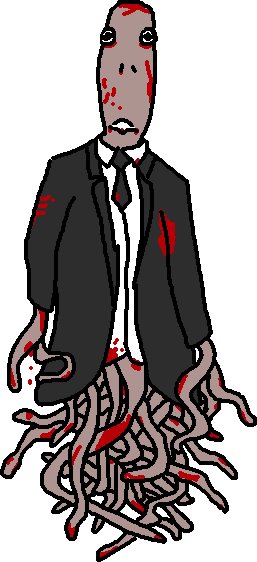
“It’s about all a fellow can do nowadays,” he said sheepishly, and helped himself to great spoonfuls of strawberry jam. The vision which she had thereupon of this boy (for he was little more) sucking peppermints, for which he had a passion, while the masts snapped and the stars reeled and he roared brief orders to cut this adrift, to stow that overboard, brought the tears to her
ORLANDO eyes, tears, she noted, of a finer flavour than any she had cried before. “I am a woman,” she thought, “a real woman, at last.” She thanked Bonthrop from the bot- tom of her heart for having given her this rare and unex- -pected delight. Had she not been lame in the left foot, she would have sat upon his knee.
“Shel, my darling,” she began again, “tellme .. . and so they talked two hours or more, perhaps about Cape Horn, perhaps not, and really it would profit little to write down what they said, for they knew each other so well that they could say anything they liked, which is tantamount to saying nothing, or saying such stupid,
prosy things, as how to cook an omelette, or where to buy the best boots in London, which have no lustre taken from their setting, yet are positively of amazing beauty within it. For it has come about, by the wise economy of nature, that our modern spirit can almost dispense with language; the commonest expressions do, since no ex- pressions do; hence the most ordinary conversation 1s often the most poetic, and the most poetic is precisely that which cannot be written down. For which reasons we leave a great blank here, which must be taken to indicate that the space is filled to repletion.
“Orlando, my dearest,” Shel was beginning, when there was a scuffling outside, and Basket the butler entered with the information that there was a couple of Peelers downstairs with a warrant from the Queen.
“Show ’em up,” said Shelmerdine briefly, as if on his own quarter deck taking up, by instinct, a stand with his hands behind him in front of the fireplace. Two off- cers in bottle green uniforms with truncheons at their hips then entered the room and stood at attention. For- malities being over, they gave into Orlando’s own hands, as their commission was, a legal document of some very impressive sort, judging by the blobs of sealing wax, the ribbons, the oaths, and the signatures, which were all of the highest importance.
Orlando ran her eyes through it and then, using the first finger of her right hand as pointer, read out the following facts as being most germane to the matter.
“The lawsuits are settled,” she read out . . . “‘some in my favour, as for example . . . others not. Turkish marriage annulled (I was ambassador in Constantinople,
mate (they said I had three sons by Pepita, a Spanish dancer). So they don’t inherit, which is all to the good. - . » Sex? Ah! what about sex? My sex,” she read out with some solemnity, “is pronounced indisputably, and beyond the shadow of a doubt (what I was telling you a moment ago, Shel?) Female. The estates which are now desequestrated in perpetuity descend and are tailed and entailed upon the heirs male of my body, or in de- fault of marriage’”— but here she grew impatient with this legal verbiage, and said, “but there won’t be any de- fault of marriage, nor of heirs either, so the rest can be taken as read.” Whereupon she appended her own sig- nature beneath Lord Palmerston’s and entered from that moment into the undisturbed possession of her titles, her house, and her estate—which were now so much shrunk, for the cost of the lawsuits had been prodigious, that though she was infinitely noble again, she was also excessively poor.
When the result of the lawsuit was made known (and rumour flew much quicker than the telegraph which has supplanted it), the whole town was filled with rejoicings.
-grombo
[ Horses were put into carriages for the sole purpose of being taken out. Empty barouches and landaus were trundled up and down the High Street incessantly. Ad- dresses were read from the Bull. Replies were made
from the Stag. The town was illuminated. Gold caskets were securely sealed in glass cases. Coins were well and duly laid under stones. Hospitals were founded. Rat and Sparrow clubs were inaugurated. Turkish women by the dozen were burnt in effigy in the market place, together with scores of peasant boys with the label “I am a base Pretender,” lolling from their mouths. The Queen’s cream-coloured ponies were soon seen trotting up the avenue with a command to Orlando to dine and sleep at the Castle, that very same night. Her table, as on a pre- vious occasion, was snowed under with invitations from the Countess of R., Lady Q., Lady Palmerston, the Marchioness of P., Mrs. W. E. Gladstone, and others, be- seeching the pleasure of her company, reminding her of ancient alliances between their family and her own, etc. | —all of which is properly enclosed in square brackets, as above, for the good reason that a parenthesis it was with- out any importance in Orlando’s life. She skipped it, to get on with the text. For when the bonfires were blazing in the market place, she was in the dark woods with Shelmerdine alone. So fine was the weather that the trees stretched their branches motionless above them, and if a leaf fell, it fell, spotted red and gold, so slowly that one could watch it for half an hour fluttering and falling till it came to rest at last, on Orlando’s foot.
explained, that when she called him by the first syllable of his first name, she was in a dreamy, amorous, acqui- escent mood, domestic, languid a little, as if spiced logs were burning, and it was evening, yet not time to dress, and a thought wet perhaps outside, enough to make the leaves glisten, but a nightingale might be singing even so among the azaleas, two or three dogs barking at dis- tant farms, a cock crowing—all of which the reader should imagine in her voice)—“Tell me, Mar,” she would say, “about Cape Horn.” Then Shelmerdine would make a little model on the ground of the Cape with twigs and dead leaves and an empty snail shell or two.
“Here’s the north,” he would say. “There’s the south. The wind’s coming from hereabouts. Now the Brig is sailing due west; we’ve just lowered the top-boom miz- zen; and so you see—here, where this bit of grass is, she enters the current which you'll find marked—where’s my map and compasses, Bo’sun?—Ah! thanks, that'll do, where the snail shell is. The current catches her on the starboard side, so we must rig the jib boom or we shall be carried to the larboard, which is where that beech leaf is, —for you must understand my dear—” and so he would go on, and she would listen to every word; inter- preting them rightly, so as to sce, that is to say, without his having to tell her, the phosphorescence on the waves,
the icicles clanking in the shrouds; how he went to the top of the mast in a gale; there reflected on the destiny of man; came down again; had a whisky and soda; went on shore; was trapped by a black woman; repented; rea- soned it out; read Pascal; determined to write philos- ophy; bought a monkey; debated the true end of life; decided in favour of Cape Horn, and so on. All this and a thousand other things she understood him to say and so when she replied, Yes, negresses are seductive, aren’t they? he having told her that the supply of biscuits now gave out, he was surprised and delighted to find how | well she had taken his meaning.
“Are you positive you aren’t a man?” he would ask anxiously, and she would echo,
“Can it be possible you’re not a woman?” and then they must put it to the proof without more ado. For each was so surprised at the quickness of the other’s sym- pathy, and it was to each such a revelation that a woman could be as tolerant and free-spoken as a man, and a man as strange and subtle as a woman, that they had to put the matter to the proof at once.
And so they would go on talking or rather, under- standing, which has become the main art of speech in an age when words are growing daily so scanty in com- parison with ideas that “the biscuits ran out”’ has to stand for kissing a negress in the dark when one has just read
ORLANDO Bishop Berkeley’s philosophy for the tenth time. (And from this it follows that only the most profound masters of style can tell the truth, and when one meets a simple one-syllabled writer, one may conclude, without any doubt at all, that the poor man is lying).
So they would talk; and then, when her feet were fairly covered with spotted autumn leaves, Orlando would rise and stroll away into the heart of the woods in solitude, leaving Bonthrop sitting there among the snail shells, making models of Cape Horn. “‘Bonthrop,” she would say, “I’m off,” and when she called him by his second name, “Bonthrop,” it should signify to the reader that she was in a solitary mood, felt them both as specks on a desert, was desirous only of meeting death by her- self, for people die daily, die at dinner tables, or like this, out of doors in the autumn woods; and with the bonfires blazing and Lady Palmerston or Lady Derby asking her out every night to dinner, the desire for death would overcome her, and so saying “Bonthrop,” she said in effect, ‘I’m dead,” and pushed her way asa spirit might through the spectre-pale beech trees, and so oared herself deep into solitude as if the little flicker of noise and move- ment were over and she were free now to take her way— all of which the reader should hear in her voice when she said ““Bonthrop”’; and should also add, the better to illu- mine the word, that for him too, the word signified, mys-
i found this movie very fun to watch throughout, though my reasons for finding it fun changed as the movie progressed. i guess it could be divided in two halves:
ORLANDO tically, separation and isolation and the disembodied pacing the deck of his brig in unfathomable seas.
After some hours of death, suddenly a jay shrieked “Shelmerdine,”’ and stooping, she picked one of those autumn crocuses which to some people signify that very word, and put it with the jay’s feather that came tum- bling blue through the beech woods, in her breast. Then she called “Shelmerdine” and the word went shooting this way and that way through the woods and struck him where he sat, making models out of snail shells in the grass. He saw her, and heard her coming to him with the crocus and the jay’s feather in her breast, and cried “Orlando,” which meant (and it must be remembered that when bright colours like blue and yellow mix them- selves in our thoughts, some of it rubs off on our words) first the bowing and swaying of bracken‘as if something were breaking through, which proved to be a ship in full sail, heaving and tossing a little dreamily, rather as if she had a whole year of summer days to make her voyage in; and so the ship bears down, heaving this way, heaving that way, nobly, indolently and rides over the crest of this wave and sinks into the hollow of that one, and so, sud- denly stands over you (who are in a little cockle shell of a boat, looking up at her) with all her sails quivering and then behold, they drop all of a heap on deck—as Or- lando dropped now into the grass beside him.
Eight or nine days had been spent thus, but on the tenth, which was the 26th of October, Orlando was lying in the bracken, while Shelmerdine recited Shelley (whose entire works he had by heart), when a leaf which had started to fall slowly enough from a tree top whipped briskly across Orlando’s foot. A second leaf followed and then a third. Orlando shivered and turned pale. It was the wind. Shelmerdine—but it would be more proper now to call him Bonthrop—leapt to his feet.
Together they ran through the woods, the wind plas- tering them with leaves as they ran, to the great court and through it and the little courts, frightened servants leav- ing their brooms, their saucepans, to follow after till they reached the Chapel and there a scattering of lights was lit as fast as could be, one knocking over this bench, an- other snuffing out that taper. Bells were rung. People were summoned. At length there was Mr. Dupper catch- ing at the ends of his white tie and asking where was the prayer book. And they thrust Queen Mary’s prayer book in his hands and he searched hastily fluttering the pages, and said, “Marmaduke Bonthrop Shelmerdine, and Lady Orlando, kneel down”’; and they knelt down, and now they were bright and now they were dark as the light and shadow came flying helter skelter through the painted windows; and among the banging of innumer-
ORLANDO able doors and a sound like brass pots beating, the organ sounded, its growl coming loud and faint alternately, and Mr. Dupper, who was grown a very old man, tried now to raise his voice above the uproar and could not be heard and then all was quiet for a moment, and one word—it might be “‘the jaws of death’’— rang out clear, while all the estate servants kept pressing in with rakes and whips still in their hands to listen, and some sang aloud and others prayed and now a bird was dashed against the pane, and now there was a clap of thunder, so that no one heard the word Obey spoken or saw, ex- cept as a golden flash, the ring pass from hand to hand. All was movement and confusion. And up they rose with the organ booming and the lightning playing and the rain pouring and the Lady Orlando, with her ring on her finger, went out into the court in her thin dress and held the swinging stirrup, for the horse was bitted and bridled and the foam was still on his flank, for her husband to mount, which he did with one bound and the horse leapt forward and Orlando, standing there, cried out Marma- duke Bonthrop Shelmerdine! and he answered her Or- lando! and the words went dashing and circling like wild hawks together among the belfries and higher and higher, further and further, faster and faster, they cir- cled, till they crashed and fell in a shower of fragments to the ground; and she went in. 262
It was very silent. There was the ink pot: there was the pen; there was the manuscript of her poem, broken off in the middle of a tribute to eternity. She had been about to say, when Basket and Bartholomew inter- rupted with the tea things, nothing changes. And then, in the space of three seconds and a half, everything had changed—she had broken her ankle, fallen in love, married Shelmerdine.
There was the wedding ring on her finger to prove it. It was true that she had put it there herself before she met Shelmerdine, but that had proved worse than useless. She now turned the ring round and round, with super- stitious reverence, taking care that it should not slip past the finger joint.
“The wedding ring has to be put on the second finger of the left hand,” she said, like a child cautiously repeat- ing its lesson, “for it to be of any use at all.”
She spoke thus, aloud and rather more pompously than was her wont, as if she wished someone whose good opinion she desired to overhear her. Indeed, she
had in mind, now that she was at last able to collect her thoughts, the effect that her behaviour would have had upon the spirit of the age. She was extremely anxious to be informed whether the steps she had taken in the mat- ter of getting engaged to Shelmerdine and marrying him met with its approval. She was certainly feeling more herself. Her finger had not tingled once, or nothing to count, since that night on the moor. Yet, she could not deny that she had her doubts. She was married, true; but if one’s husband was always sailing round Cape Horn, was it marriage? If one liked him, was it mar- riage? If one liked other people, was it mairiage? And finally, if one still wished, more than anything in the whole world, to write poetry, was it marriage? She had her doubts.
the first half was a really violent and graphic depiction of a horrible messy breakup, and the mental spiralling in the fallout from that from both parties involved. it felt all very real (though maybe a little too intense to be fully realistic) and was kind of difficult to watch for me, but it also felt somewhat satisfying to see mental illness portrayed in such a manner
But she would putit to the test. She looked at the ring. She looked at the ink pot. Did she dare? No, she did not. But she must. No, she could not. What should she do then? Faint, if possible. But she had never felt better in her life.
“Hang it all!” she cried, with a touch of her old spirit. “Here goes!”
And she plunged her pen neck deep in the ink. To her enormous surprise, there was no explosion. She drew the nib out. It was wet, but not dripping. She wrote. The words were a little long in coming, but come they did. Ah! but did they make sense? she wondered, a panic
coming over her lest it might have been at some of its involuntary pranks again. She read,
And then I came to a field where the springing grass, Was dulled by the hanging cups of fritillaries,
Sullen and foreign-looking, the snaky flower, Scarfed in dull purple, like Egyptian girls—
At this point she felt that power (remember we are deal- ing with the most obscure manifestations of the human spirit) which had been reading over her shoulder, tell her to stop. Grass, the power seemed to say, going back with a ruler such as governesses use to the beginning, is all right; the hanging cups of fritillaries—admirable; the snaky flower—a thought strong from a lady’s pen, perhaps, but Wordsworth, no doubt, sanctions it; but— girls? Are girls necessary? You have a husband at the Cape, you say? Ah, well, that'll do.
Orlando now performed in spirit (for all this took place in spirit) a deep obeisance to the spirit of her age, such as—to compare great things with small—a travel- ler, conscious that he has a bundle of cigars in the corner of his suit case, makes to the customs officer who has obligingly made a scribble of white chalk on the lid. For she was extremely doubtful whether, if the spirit had ex- amined the contents of her mind carefully, it would not have found something highly contraband for which she would have had to pay the full fine. She had only escaped
by the skin of her teeth. She had just managed, by some dexterous deference to the spirit of the age, by putting on a ring and finding a man on a moor, by loving nature and being no satirist, cynic, or psychologist—any one of which goods would have been discovered at once—to pass its examination successfully. And she heaved a deep sigh of relief, as, indeed, well she might, for the trans- action between a writer and the spirit of the age is one of infinite delicacy, and upon a nice arrangement between the two the whole fortune of his works depend. Orlando had so ordered it that she was in an extremely happy po- sition; she need neither fight her age, nor submit to it; she was of it, yet remained herself. Now, therefore, she could write, and write she did. She wrote. She wrote. She wrote.
It was now November. After November, comes De- cember. Then January, February, March, and April. After April comes May. June, July, August follow. Next is September. Then October, and so, behold, here we are back at November again, with a whole year accom- plished.
while the first half was somewhat metaphorical, the story still made sense and was pretty easy to follow. as the movie went on though, more and more layers of indirect storytelling kept getting added on top of eachother until it got to a point where the actual story and what the movie wanted to say became just completely indecipherable to anyone except for the screenwriter probably. i did mention still liking this portion earlier, which is true, but it was not because i thought the movie was still good. it was moreso just like, really fucking funny to see whatever completely insane stuff would happen next, like random bullshit was just happening for no discernable reason whatsoever and it definitely made me laugh a lot
This method of writing biography, though it has its merits, is a little bare, perhaps, and the reader, if we go on with it, may complain that he could recite the calen- dar for himself and so save his pocket whatever sum the
ORLANDO publisher may think proper to charge for this book. But what can the biographer do when his subject has put
us? Life, it has been agreed by everyone whose opinion is worth consulting, is the only fit subject for novelist or biographer; life, the same authorities have decided, has nothing whatever to do with sitting still in a chair and thinking. Thought and life are as the poles asunder. Therefore—since sitting in a chair and thinking is pre- cisely what Orlando is doing now—there is nothing for it but to recite the calendar, tell one’s beads, blow one’s nose, stir the fire, look out of the window, until she has done. Orlando sat so still that you could have heard a pin drop. Would, indeed, that a pin had dropped! That would have been life of a kind. Or if a butterfly had fluttered through the window and settled on her chair, one could write about that. Or suppose she had got up and killed a wasp. Then, at once, we could out with our pens and write. For there would be blood shed, if only the blood of a wasp. And if killing a wasp is the merest trifle compared with killing a man, still it is a fitter sub- ject for novelist or biographer than this mere wool-gath-
out, with a cigarette and a sheet of paper and a pen and an ink pot. If only subjects, we might complain (for our patience is wearing thin), had more consideration for
their biographers! What is more irritating than to see one’s subject, on whom one has lavished so much time and trouble, slipping out of one’s grasp altogether and indulging—witness her sighs and gasps, her flushing, her palings, her eyes now bright as lamps, now haggard as dawns—what is more humiliating than to see all this dumb show of emotion and excitement gone through before our eyes when we know that what causes it— thought and imagination—are of no importance what- soever ?
But Orlando was a woman—Lord Palmerston had just proved it. And when we are writing the life of a woman, we may, it is agreed, waive our demand for action, and substitute love instead. Love, the poet has said, is woman’s whole existence. And if we look for a moment at Orlando writing at her table, we must admit that never was there a woman more fitted for that call- ing. Surely, since she is a woman, and a beautiful woman, and a woman in the prime of life, she will soon give over this pretence of writing and thinking and begin to think, at least of a gamekeeper (and as long as she thinks of a man, nobody objects to a woman thinking). And then she will write him a little note (and as long as she writes little notes nobody objects to a woman writing either) and make an assignation for Sunday dusk; and Sunday dusk will come; and the gamekeeper will whistle under
the window—all of which is, of course, the very stuff of life and the only possible subject for fiction. Surely Or- lando must have done one of these things? Alas,—a thousand times, alas, Orlando did none of them. Must it then be admitted that Orlando was one of those mon- sters of iniquity who do not love? She was kind to dogs, faithful to friends, generosity itself to a dozen starving poets, had a passion for poetry. But love—as the male novelists define it—and who, after all, speak with greater authority '—has nothing whatever to do with kindness, fidelity, generosity, or poetry. Love is slipping off one’s petticoat and— But we all know what love is. Did Or- lando do that? Truth compels us to say no, she did not. If then, the subject of one’s biography will neither love nor kill, but will only think and imagine, we may con- clude that he or she is no better than a corpse and so leave her.
The only resource now left us is to look out of the win- dow. There were sparrows; there were starlings; there were a number of doves, and one or two rooks, all occu- pied after their fashion. One finds a worm, another a snail. One flutters to a branch; another takes a little run on the turf. Then a servant crosses the courtyard, wear- ing a green baize apron. Presumably he is engaged on some intrigue with one of the maids in the pantry, but as no visible proof is offered us, in the courtyard, we can but
hope for the best and leave it. Clouds pass, thin or thick, with some disturbance of the colour of the grass beneath. The sun dial registers the hour in its usual cryptic way. One’s mind begins tossing up a question or two, idly, vainly, about this same life. Life, it sings, or croons rather, like a kettle on a hob, Life, life, what art thou? Light or darkness, the baize apron of the under footman or the shadow of the starling on the grass?
Let us go, then, exploring, this summer morning, when all are adoring the plum blossom and the bee. And humming and hawing, let us ask of the starling (who is a more sociable bird than the lark) what he may think on the brink of the dust bin, whence he picks among the sticks combings of scullion’s hair. What’s life, we ask, leaning on the farmyard gate; Life, Life, Life! cries the bird, as if he had heard, and knew precisely, what we meant by this bethering prying habit of ours of asking questions indoors and out and peeping and picking at daisies as the way is of writers when they don’t know what to say next. Then they come here, says the bird, and ask me what life is; Life, Life, Life!
~ noëlle
We trudge on then by the moor path, to the high brow of the wine-blue purple-dark hill, and fling ourselves down there, and dream there and see there a grasshop- per, carting back to his home in the hollow, a straw. And he says (if sawings like his can be given a name so sacred
and tender) Life’s labour, or so we interpret the whirr of his dust-choked gullet. And the ant agrees and the bees, but if we lie here long enough to ask the moths, when they come ‘at evening, stealing among the paler heather bells, they will breathe in our ears such wild nonsense as one hears from telegraph wires in snow storms; tee hee, haw haw, Laughter, Laughter! the moths say.
Having asked then of man and of bird and the insects, for fish, men tell us, who have lived in green caves, soli- tary for years to hear them speak, never, never say, and so perhaps know what life is—having asked them all and grown no wiser, but only older and colder (for did we not pray once in a way to wrap up in a book something so hard, so rare, one could swear it was life’s meaning?) back we must go and say straight out to the reader who waits a tiptoe to hear what life is—Alas, we don’t know.
At this moment, but only just in time to save the book from extinction, Orlando pushed away her chair, stretched her arms, dropped her pen, came to the win- dow, and exclaimed, “Done!”
She was almost felled to the ground by the extraor- dinary sight which now met her eyes. There was the garden and some birds. The world was going on as usual. All the time she was writing the world had continued.
Such was the intensity of her feelings that she could even imagine that she had suffered dissolution, and per- haps some faintness actually attacked her. Fora moment she stood looking at the fair, indifferent spectacle with staring eyes. At length she was revived in a singular way. The manuscript which reposed above her heart began shuffling and beating as if it were a living thing, and, what was still odder, and showed how fine a sympathy was between them, Orlando, by inclining her head, could make out what it was that it was saying. It wanted to be read. It must be read. It would die in her bosom if it were not read. For the first time in her life she turned with violence against nature. Elk hounds and rose bushes were about her in profusion. But elk hounds and rose bushes can none of them read. It is a lamentable over- sight on the part of Providence which had never struck her before. Human beings alone have this power. Hu- man beings had become necessary. She rang the bell. She ordered the carriage to take her to London at once.
“There’s just time to catch the eleven forty-five, M’Lady,” said Basket. Orlando had not yet realised the invention of the steam engine, but such was her absorp- tion in the sufferings of a being, who, though not herself, yet entirely depended on her, that she saw a railway train
for the first time, took her seat in a railway carriage, and had the rug arranged about her knees without giving a thought to “that stupendous invention, which had (the historians say) completely changed the face of Europe in the past twenty years” (as, indeed, happens much more frequently than historians suppose). She noticed only that it was extremely smutty; rattled horribly; and the windows stuck. Lost in thought, she was whirled up to London in something less than an hour and stood on the platform at Charing Cross, not knowing where to go.
The old house at Blackfriars, where she had spent so many pleasant days in the eighteenth century, was now sold, part to the Salvation Army, part to an umbrella factory. She had bought another in Mayfair which was sanitary, convenient, and in the heart of the fashionable world, but was it in Mayfair that her poem would be relieved of its desire? Pray God, she thought, remem- bering the brightness of their ladyships’ eyes and the symmetry of their lordships’ legs, “they haven’t taken to reading there.”’ For that would be a thousand pities. Then there was Lady R.’s. The same sort of talk would be going on there still, she had no doubt. The gout might have shifted from the General’s left leg to his right, per- haps. Mr. L. might have stayed ten days with R. instead of T. Then Mr. Pope would come in. Oh! but Mr. Pope was dead. Who were the wits now, she wondered—but
ORLANDO that was not a question one could put to a porter, and so she moved on. Her ears were now distracted by the jing- ling of innumerable bells on the heads of innumerable horses. Fleets of the strangest little boxes on wheels were drawn up by the pavement. She walked out into the Strand. There the uproar was even worse. Vehicles of all sizes, drawn by blood horses and by dray horses, convey- ing one solitary dowager or crowded to the top by whisk- ered men in silk hats were inextricably mixed. Carriages, carts, and omnibuses seemed to her eyes, so long used to the look of a plain sheet of foolscap, alarmingly at log- gerheads; and to her ears, attuned to a pen scratching, the uproar of the street sounded violently and hideously cacophonous. Every inch of the pavement was crowded. Streams of people, threading in and out between their own bodies and the lurching and lumbering traffic with incredible agility, poured incessantly east and west. Along the edge of the pavement stood men, holding out trays of toys, and bawled. At corners, women sat beside great baskets of spring flowers and bawled. Boys run- ning in and out of the horses’ noses, holding printed sheets to their bodies, bawled too, Disaster! Disaster! At first Orlando supposed that she had arrived at some mo- ment of national crisis; but whether it was happy or tragic, she could not tell. She looked anxiously at people’s faces. But that confused her still more. Here would come
By the end of the movie, it felt really incoherent and the movie felt like it was just doing shocking things for their own sake. Isabelle Adjani, the main wife actor of the film, would go on to say “‘How or why did I do that?’ I don’t think any other actress ever did two films with him.”, and she had a suicide attempt after. I kind of feel like it’s the kind of movie the director gets off to by having control of the actors….
by a man sunk in despair, muttering to himself as if he knew some terrible sorrow. Past him would nudge a fat, jolly-faced fellow, shouldering his way along as if it were a festival for all the world. Indeed, she came to the con- clusion that there was neither rhyme nor reason in any of it. Each man and each woman was bent on his own affairs. And where was she to go?
She walked on without thinking, up one street and down another, by vast windows piled with handbags, and mirrors, and dressing gowns, and flowers, and fish- ing rods, and luncheon baskets; while stuff of every hue and pattern, thickness or thinness, was looped and fes- tooned and ballooned across and across. Sometimes she passed down avenues of sedate mansions, soberly num- bered ‘one,’ ‘two,’ ‘three,’ and so on right up to two or three hundred, each the copy of the other, with two pil- lars and six steps and a pair of curtains neatly drawn and family luncheons laid on tables, and a parrot looking out of one window and a man servant out of another, until her mind was dizzied with the monotony. Then she came to great open squares with black, shiny, tightly- buttoned statues of fat men in the middle, and war horses prancing, and columns rising and fountains falling and pigeons fluttering. So she walked and walked along pavements between houses until she felt very hungry, and something fluttering above her heart rebuked her
ORLANDO | with having forgotten all about it. It was her manu- script, “The Oak Tree.”
She was confounded at her own neglect. She stopped dead where she stood. No coach was in sight. The street, which was wide and handsome, was singularly empty. Only one elderly gentleman was approaching. There was something vaguely familiar to her in his walk. As he came nearer, she felt certain that she had met him at some time or other before. But when? But where? Could it be that this gentleman, so neat, so portly, so prosperous, with a cane in his hand and a flower in his button hole, with a pink, plump face, and combed white moustaches, could it be, Yes, by jove, it was!—her old, her very old friend, Nick Greene!
recognized her. ““The Lady Orlando!” he cried, sweep- ing his silk hat almost in the dust.
“Sir Nicholas!” she replied. For she was made aware intuitively by something in his bearing that the scurri- lous penny-a-liner, who had lampooned her and many another in the time of Queen Elizabeth, was now risen in the world and become certainly a Knight and doubt- less a dozen other fine things into the bargain.
With another bow, he acknowledged that her con- clusion was correct; he was a Knight; he was a Litt.D.; he was a Professor. He was the author of a score of vol-
ORLANDO umes. He was, in short, the most influential critic of the Victorian age.
A violent tumult of emotion besieged her at meeting the man who had caused her, years ago, so much pain. Could this be the plaguey, restless fellow who had burnt holes in her carpets, and toasted cheese in the Italian fire- place and told such merry stories of Marlowe and the rest that they had seen the sun rise nine nights out of ten? He was now sprucely dressed in a grey morning suit, had a pink flower in his button hole, and grey suede gloves to match. But even as she marvelled, he made another profound bow, and asked her whether she would honour him by lunching with him? The bow was a thought overdone perhaps, but the imitation of fine breeding was creditable. She followed him, wondering, into a superb restaurant, all red plush, white table cloths, and silver cruets, as unlike as could be the old tavern or coffee house with its sanded floor, its wooden benches, its bowls of punch and chocolate, and its broadsheets and spittoons. He laid his gloves neatly on the table beside him. Still she could hardly believe that he was the same man. His nails were clean; where they used to be an inch long. His chin was shaved; where a black beard used to sprout. He wore gold sleeve links; where his ragged linen used to dip in the broth. It was not, indeed, until he had ordered the wine, which he did with a care that reminded her of
his taste in Malmsey long ago, that she was convinced he was the same man. “Ah!” he said, heaving a little sigh, which was yet comfortable enough, “Ah! my dear lady, the great days of literature are over. Marlowe, Shake- speare, Ben Jonson— those were the giants. Dryden, Pope, Addison—those were the heroes. All, all are dead now. And whom have they left us? Tennyson, Brown- ing, Carlyle!”,— he threw an immense amount of scorn into his voice. “The truth of it is,” he said, pouring him- self a glass of wine, “‘that all our young writers are in the pay of booksellers. They turn out any trash that serves to pay their tailor’s bills. Itis an age,” he said, helping him- self to hors d’ceuvres, “marked by precious conceits and wild experiments—none of which the Elizabethans would have tolerated for an instant.”
-avery
‘No, my dear lady,” he continued, passing with ap- proval the turbot au gratin, which the waiter exhibited for his sanction, “the great days are over. We live in de- generate times. We must cherish the past; honour those writers—there are still a few left of °em—who take an- tiquity for their model and write, not for pay but a Here Orlando almost shouted “‘Glawr!” Indeed she could have sworn that she had heard him say the very same things three hundred years ago. The names were different, of course, but the spirit was the same. Nick Greene had not changed, for all his knighthood. And
yet, some change there was. For while he ran on about taking Addison as one’s model (it had been Cicero once, she thought) and lying in bed of a morning (which she was proud to think her pension paid quarterly enabled him to do) rolling the best works of the best authors round and round on one’s tongue for an hour, at least, before setting pen to paper, so that the vulgarity of the present time and the deplorable condition of our native tongue (he had lived long in America, she believed) might be purified—while he ran on in much the same way that Greene had run on three hundred years ago, she had time to ask herself, how was it then that he had changed? He had grown plump; but he was a man verging on seventy. He had grown sleek: literature had been a prosperous pursuit evidently, but somehow the old restless, uneasy vivacity had gone. His stories, bril- liant as they were, were no longer quite so free and easy. He mentioned, it is true, “my dear friend Pope,” or “my illustrious friend, Addison” every other second, but he had an air of respectability about him, which was depress- ing, and he preferred, it seemed, to enlighten her about the doings and sayings of her own blood relations rather than tell her, as he used to do, scandal about the poets.
Orlando was unaccountably disappointed. She had thought of literature all these years (her seclusion, her rank, her sex must be her excuse) as something wild as
the wind, hot as fire, swift as lightning; something er- rant, incalculable, abrupt, and behold, literature was an elderly gentleman in a grey suit talking about duchesses. The violence of her disillusionment was such that some hook or button fastening the upper part of her dress burst open, and out upon the table fell ““The Oak Tree,” a poem.
“A manuscript!” said Sir Nicholas, putting on his gold pince nez. “How interesting, how excessively inter- esting! Permit me to look at it.” And once more, after an interval of some three hundred years Nicholas Greene took Orlando’s poem, and laying it down among the coffee cups and the liqueur glasses began to read it. But now his verdict was very different from what it had been then. It reminded him, he said as he turned over the pages, of Addison’s Cato. It compared favourably with Thomson’s Seasons. There was no trace in it, he was thankful to say, of the modern spirit. It was composed with a regard to truth, to nature, to the dictates of the human heart, which was rare indeed, in these days of unscrupulous eccentricity. It must, of course, be pub- lished instantly.
Really Orlando did not know what he meant. She had always carried her manuscripts about with her in the bosom of her dress. The idea tickled Sir Nicholas con- siderably.
ORLANDO “But what about Royalties?” he asked. Orlando’s mind flew to Buckingham Palace and some dusky potentates who happened to be staying there. Sir Nicholas was highly diverted. He explained that he was alluding to the fact that Messrs. (here he mentioned a well known firm of publishers) would be
delighted, if he wrote them a line, to put the book on their list. He could probably arrange for a royalty of ten per cent on all copies up to two thousand; after that it would be fifteen. As for the reviewers, he would himself
then a compliment—-say a little puff of her own poems —addressed to the wife of the editor of the
did any harm. He would call lando understood nothing of all this, and from old ex- perience did not altogether trust his good nature, but there was nothing for it but to submit to what was evi- dently his wish and the fervent desire of the poem itself. So Sir Nicholas made the blood-stained packetintoa neat parcel; flattened it into his breast pocket, lest it should disturb the set of his coat; and with many compliments on both sides, they parted.
i didnt watch it lol but it was good or bad or maybe in between
Orlando walked up the street. Now that the poem was gone,—and she felt a bare place in her breast where she had been used to carry it—she had nothing to do but reflect upon whatever she liked —the extraordinary
ORLANDO chances it might be of the human lot. Here she was in St. James’ Street; a married woman; with a ring on her finger; where there had been a coffee house once there was now a Restaurant; it was about half past three in the afternoon; the sun was shining; there were three pi- geons; a mongrel terrier dog; two hansom cabs and a barouche landau. What then, was Life? The thought popped into her head violently, irrelevantly (unless old Greene were somehow the cause of it). And it may be taken as a comment, adverse or favourable, as the reader chooses to consider it upon her relations with her hus- band (who was at the Horn), that whenever anything popped violently into her head, she went straight to the nearest telegraph office and wired to him. There was one, as it happened, close at hand. “My God Shel,” she wired; “life literature Greene toady—” here she dropped into a cypher language which they had invented between them so that a whole spiritual state of the utmost com- plexity might be conveyed in a word or two without the telegraph clerk being any the wiser, and added the words “Rattigan Glumphoboo,” which summed it up pre- cisely. For not only had the events of the morning made a deep impression on her, but it cannot have escaped the reader’s attention that Orlando was growing up—which is not necessarily growing better—and “‘Rattigan Glum- phoboo”’ described a very complicated spiritual state— 282
ORLANDO which if the reader puts all his intelligence at our service he may discover for himself.
There could be no answer to her telegram for some hours; indeed, it was probable, she thought, glancing at the sky, where the upper clouds raced swiftly past, that there was a gale at Cape Horn, so that her husband would be at the mast head, as likely as not, or cutting away some tattered spar, or even alone in a boat with a biscuit. And so, leaving the post office, she turned to beguile her- self into the next shop, which was a shop so common in our day that it needs no description, yet, to her eyes, strange in the extreme; a shop where they sold books. All her life long Orlando had known manuscripts; had held in her hands the rough brown sheets on which Spenser had written in his little crabbed hand; she had seen Shakespeare’s script and Milton’s. She owned, in- deed, a fair number of quartos and folios often with a sonnet in her praise in them and sometimes a lock of hair. But these innumerable little volumes, bright, iden- tical, ephemeral, for they seemed bound in cardboard and printed on tissue paper, surprised her infinitely. The whole works of Shakespeare cost half a crown and could be put in your pocket. One could hardly read them, in- deed, the print was so small, but it was a marvel, none the less. ‘Works’— the works of every writer she had known or heard of and many more stretched from end
to end of the long shelves. On tables and chairs, more ‘works’ were piled and tumbled, and these she saw, turn- ing a page or two, were often works about other works by Sir Nicholas and a score of others whom, in her igno- rance, she supposed, since they were bound and printed, to be very great writers too. So she gave an astounding order to the bookseller to send her everything of any importance in the shop and left.
She turned into Hyde Park, which she had known of old (beneath that cleft tree, she remembered, the Duke | of Hamilton fell run through the body by Lord Mohun) and her lips, which are often to blame in the matter, be- gan framing the words of her telegram into a senseless singsong; life literature Greene toady, Rattigan Glum- phoboo; so that several park keepers looked at her with suspicion and were only brought to a favourable opinion of her sanity by noticing the pearl necklace which she wore. She had carried off a sheaf of papers and critical journals from the book shop, and at length, flinging her- self on her elbow beneath a tree, she spread these pages round her and did her best to fathom the noble art of prose composition as these masters practised it. For still the old credulity was alive in her; even the blurred type of a weekly newspaper had some sanctity in her eyes. So she read, lying on her elbow, an article by Sir Nicholas on the collected works of a man she had once known—
ORLANDO John Donne. But she had pitched herself, without know- ing it, not far from the Serpentine. The barking of a thousand dogs sounded in her ears. Carriage wheels rushed ceaselessly in a circle round her. Leaves sighed overhead. Now and again a braided skirt and a pair of tight scarlet trousers crossed the grass within a few steps of her. Once a gigantic rubber ball bounced on the news- paper. Violets, oranges, reds, and blues broke through the interstices of the leaves and sparkled in the emerald on her finger. She was distracted between the two. She looked at the paper and looked up; she looked at the sky and looked down. Life? Literature? One to be made into the other? But how monstrously difficult! For— here came by a pair of tight scarlet trousers—how would Addison have put that? Here came two dogs dancing on their hind legs. How would Lamb have described that? For reading Sir Nicholas and his friends (as she did in the intervals of looking about her) , she somehow got the impression—here she rose and walked—they made one feel—it was an extremely uncomfortable feeling—one must never, never say what one thought. (She stood on the banks of the Serpentine. It was a bronze colour; spider-thin boats were skimming from side to side. ) They made one feel, she continued, that one must always, always write like somebody else. (The tears formed themselves in her eyes.) For really, she thought, pushing 285
a little boat off with her toe, I don’t think I couid (here the whole of Sir Nicholas’ article came before her as articles do, ten minutes after they are read, with the look of his room, his head, his cat, his writing table, and the time of the day thrown in), I don’t think I could, she continued, considering the article from this point of view, sit in a study, no, it’s not a study, it’s a mouldy kind of drawing-room, all day long, and talk to pretty young men, and tell them little anecdotes, which they mustn’t repeat, about what Tupper said about Smiles; and then, she continued, weeping bitterly, they’re all so manly; and then, I do detest Duchesses; and I don’t like cake; and though I’m spiteful enough, I could never learn to be as spiteful as all that, so how can I bea critic and write the best English prose of my time? Damn it all! she ex- claimed, launching a penny steamer so vigorously that the poor little boat almost sank in the bronze coloured waves.
Now, the truth is that when one has been in a state of mind (as nurses call it)—and the tears still stood in Orlando’s eyes—the thing one is looking at becomes, not itself, but another thing, which is bigger and much more important and yet remains the same thing. If one looks at the Serpentine in this state of mind, the waves soon become just as big as the waves on the Atlantic; the toy boats become indistinguishable from ocean liners. So
Orlando mistook the toy boat for her husband’s brig; and the wave she had made with her toe for a mountain of water off Cape Horn; and as she watched the toy boat climb the ripple, she thought she saw Bonthrop’s ship climb up and up a glassy wall; up and up it went, anda white crest with a thousand deaths in it arched over it; and through the thousand deaths it wentand disappeared —It’s sunk!’ she cried out in an agony—and then, be- hold, there it was again sailing along safe and sound among the ducks on the other side of the Atlantic.
-mal
“Ecstasy!” she cried. “Ecstasy! Where’s the post of- fice ?’’ she wondered. ‘“‘For I must wire at once to Shel and tell him. . . .” And repeating “A toy boat on the Serpentine,” and “Ecstasy,” alternately, for the thoughts were interchangeable and meant exactly the same thing, she hurried towards Park Lane.
“A toy boat, a toy boat, a toy boat,” she repeated, thus enforcing upon herself the fact that it is not articles by Nick Greene on John Donne nor eight-hour bills nor covenants nor factory acts that matter; it’s something useless, sudden, violent; something that costs a life; red, blue, purple; a spirt; a splash; like those hyacinths (she was passing a fine bed of them); free from taint, de- pendence, soilure of humanity or care for one’s kind; something rash, ridiculous, “like my hyacinth, husband I mean, Bonthrop: that’s what it is—a toy boat on the
Serpentine, it’s ecstasy—ecstasy.”” Thus she spoke aloud, waiting for the carriages to pass at Stanhope Gate, for the consequence of not living with one’s husband, except when the wind is sunk, is that one talks nonsense aloud in Park Lane. It would no doubt have been different had she lived all the year round with him as Queen Victoria recommended. As it was the thought of him would come upon her in a flash. She found it absolutely neces- sary to speak to him instantly. She did not care in the least what nonsense it might make, or what dislocation it might inflict on the narrative. Nick Greene’s article had plunged her in the depths of despair; the toyboat had raised her to the heights of joy. So she repeated: “Ecstasy, ecstasy,” as she stood waiting to cross.
But the traffic was heavy that spring afternoon, and kept her standing there, repeating ecstasy, ecstasy, or a toy boat on the Serpentine, while the wealth and power of England, sat, as if sculptured, in hat and cloak, in four-in-hand, victoria and barouche landau. It was as if a golden river had coagulated and massed itself in golden blocks across Park Lane. The ladies held card- cases between their fingers; the gentlemen balanced gold-mounted canes between their knees. She stood there gazing, admiring, awe-struck. One thought only dis- turbed her, a thought familiar to all who behold great elephants, or whales of an incredible magnitude, and
that is how do these leviathans to whom obviously stress, change, and activity are repugnant, propagate their kind? Perhaps, Orlando thought, looking at the stately, still faces, their time of propagation is over; this is the fruit; this is the consummation. What she now beheld was the triumph of an age. Portly and splendid there they sat. But now, the policeman let fall his hand; the stream became liquid; the massive conglomeration of splendid objects moved, dispersed and disappeared into Piccadilly.
So she crossed Park Lane and went to her house in Curzon Street where, when the meadow-sweet blew there, she could remember curlew calling and one very
She could remember, she thought, stepping across the threshold of her house, how Lord Chesterfield had said —but her memory was checked. Her discreet eight- eenth-century hall, where she could see Lord Chester- field putting his hat down here and his coat down there with an elegance of deportment which it was a pleasure to watch, was now completely littered with parcels. While she had been sitting in Hyde Park the bookseller had delivered her order, and the house was crammed— there were parcels slipping down the staircase—with the whole of Victorian literature done up in grey paper and
ORLANDO neatly tied with string. She carried as many of these packets as she could to her room, ordered footmen to bring the others, and, rapidly cutting innumerable strings, was soon surrounded by innumerable volumes.
Accustomed to the little literatures of the sixteenth, seventeenth, and eighteenth centuries, Orlando was ap- palled by the consequences of her order. For, of course, to the Victorians themselves Victorian literature meant not merely four great names separate and distinct but four great names sunk and embedded in a mass of Alex- ander Smiths, Dixons, Blacks, Milmans, Buckles,Taines, Paynes, Tuppers, Jamesons—all vocal, clamorous, prom- inent, and requiring as much attention as anybody else. Orlando’s reverence for print had a tough job set before it, but drawing her chair to the window to get the benefit of what light might filter between the high houses of Mayfair, she tried to come to a conclusion.
And now it is clear that there are only two ways of coming to a conclusion upon Victorian literature—one is to write it out in sixty volumes octavo, the other is to squeeze it into six lines of the length of this one. Of the two courses, economy, since time runs short, leads us to choose the second; and so we proceed. Orlando then came to the conclusion (opening half-a-dozen books) that it was very odd that there was not a single dedica- tion to a nobleman among them; next (turning over a
rlly liked the film from a formal perspective, camerawork all so pretty and acting was really solid too. it was definitely very over the top, it actually reminded me a bit of the million dollar extreme wife slap sketch. this is the only MDE thing i ever saw. i know that sam hyde is terrible guy but also i don’t really know anything about this moment in culture, just got lost on wikipedia for a second sorry
vast pile of memoirs) that several of these writers had family trees half as high as her own; next, that it would be impolitic in the extreme to wrap a ten-pound note round the sugar tongs when Miss Christina Rossetti came to tea; next (here were half-a-dozen invitations to cele- brate centenaries by dining) that literature since it ate all these dinners must be growing very corpulent; next (she was invited to a score of lectures upon the Influence of this upon that; the Classical revival; the Romantic sur- vival, and other titles of the same engaging kind) that literature since it listened to all these lectures must be growing very dry; next (here she attended a reception given by a peeress) that literature since it wore all these fur tippets must be growing very respectable; next (here she visited Carlyle’s sound-proof room at Chelsea) that genius since it needed all this coddling must be growing very delicate; and so at last she reached her final con- clusion, which was of the highest importance but which, as we have already much overpassed our limit of six lines, we must omit.
Orlando, having come to this conclusion, stood look- ing out of the window for a considerable space of time. For, when anybody comes to a conclusion it is as if they had tossed the ball over the net and must wait for the unseen antagonist to return it to them. What would be sent her next from the colourless sky above Chesterfield
ORLANDO House, she wondered? And with her hands clasped, she stood for a considerable space of time wondering. Sud- denly she started—and here we could only wish that, as on a former occasion, Purity, Chastity, and Mod- esty would push the door ajar and provide, at least, a breathing space in which we could think how to wrap up what now has to be told delicately, as a biographer should. But no! Having thrown their white garment at the naked Orlando and seen it fall short by several inches, these ladies had given up all intercourse with her these many years; and were now otherwise engaged. Is noth- ing, then, going to happen this pale March morning to mitigate, to veil, to cover, to conceal, to shroud this un- deniable event whatever it may be? ‘For after giving that sudden, violent start, Orlando—but Heaven be praised, at this very moment there struck up outside one of these frail, reedy, fluty, jerky, old-fashioned barrel-organs which are still sometimes played by Italian organ-grind- ers in back streets. Let us accept the intervention, humble though it is, as if it were the music of the spheres, and allow it, with all its gasps and groans, to fill this page with sound until the moment comes which it is impos- sible to deny is coming; which the footman has seen coming and the maid-servant; and the reader will have to see too; for Orlando herself is clearly unable to ignore it any longer—let the barrel-organ sound and transport 292
us on thought, which is no more than a little boat, when music sounds, tossing on the waves; on thought, which is, of all carriers, the most clumsy, the most erratic, over the roof tops and the back gardens where washing is hanging to—what is this place? Do you recognise the Green and in the middle the steeple, and the gates with a lion couchant on either side? Oh yes, it is Kew! Well, Kew will do. So here then we are at Kew, and I will show you to-day (the second of March) under the plum tree, a grape hyacinth, and a crocus, and a bud, too, on the almond tree; so that to walk there is to be thinking of bulbs, hairy and red, thrust into the earth in October; flowering now; and to be dreaming of more than can rightly be said, and to be taking from its case a cigarette or cigar even, and to be flinging a cloak under (as the rhyme requires) an oak, and there to sit, waiting the kingfisher, which, it is said, was seen once to cross in the evening from bank to bank.
Behold, meanwhile, the factory chimneys, and their smoke; behold the city clerks flashing by in their out- rigger. Behold the old lady taking her dog for a walk and the servant girl wearing her new hat for the first time not at the right angle. Behold them all. Though Heaven has mercifully decreed that the secrets of all
hearts are hidden so that we are lured on for ever to suspect something, perhaps, that does not exist; still through our cigarette smoke, we see blaze up and salute the splendid fulfilment of natural desires for a hat, for a boat, for a rat in a ditch; as once one saw blazing—such silly hops and skips the mind takes when it slops like this all over the saucer and the barrel-organ plays—saw blaz- ing a fire in a field against minarets near Constantinople.
Hail! natural desire! Hail! happiness! divine happi- ness! and pleasure of all sorts, flowers and wine, though one fades and the other intoxicates; and half-crown tick- ets out of London on Sundays, and singing in a dark chapel hymns about death, and anything, anything that interrupts.and confounds the tapping of typewriters and filing of letters and forging of links and chains, binding the Empire together. Hail even the crude, red bows on shop girls’ lips (as if Cupid, very clumsily, dipped his thumb in red ink and scrawled a token in passing) . Hail, happiness! kingfisher flashing from bank to bank, and all fulfilment of natural desire, whether it is what the male novelist says it is; or prayer; or denial; hail! in what- ever form it comes, and may there be more forms, and stranger. For dark flows the stream—would it were true, as the rhyme hints “like a dream’’— but duller and worser than that is our usual lot; without dreams, but alive, smug, fluent, habitual, under trees whose shade
ORLANDO of an olive green drowns the blue of the wing of the vanishing bird when he darts of a sudden from bank to bank.
Hail, happiness, then, and after happiness, hail not those dreams which bloat the sharp image as spotted mirrors do the face in a country-inn parlour; dreams which splinter the whole and tear us asunder and wound us and split us apart in the night when we would sleep; but sleep, sleep, so deep that all shapes are ground to dust of infinite softness, water of dimness inscrutable, and there, folded, shrouded, like a mummy, like a moth, prone let us lie on the sand at the bottom of sleep.
But wait! but wait! we are not going, this time, visit- ing the blind land. Blue, like a match struck right in the ball of the innermost eye, he flys, burns, bursts the seal of sleep; the kingfisher; so that now floods back refluent like a tide, the red, thick stream of life again; bubbling, dripping; and we rise, and our eyes (for how handy a rhyme is to pass us safe over the awkward transition from death to life) fall on—(here the barrel-organ stops play- ing abruptly).
i can see how if you’re taking it as a totally serious intellectual movie it’ll be frustrating
“Tt’s a very fine boy, M’Lady,” said Mrs. Banting, the midwife. In other words Orlando was safely delivered of a son on Thursday, March the 2oth, at three o’clock in the morning.
Once more Orlando stood at the window, but let the reader take courage; nothing of the same sort is going to happen to-day, which is not, by any means, the same day. No—for if we look out of the window, as Orlando was doing at the moment, we shall see that Park Lane itself has considerably changed. Indeed one might stand there ten minutes or more, as Orlando stood now, without seeing a single barouche landau. “Look at that!”’ she ex- claimed, some days later when an absurd truncated car- riage without any horses began to glide about of its own accord. A carriage without any horses indeed! She was called away just as she said that, but came back again after a time and had another look out of the window. It was odd sort of weather nowadays. The sky itself, she could not help thinking had changed. It was no longer so thick, so watery, so prismatic now that King Edward —sec, there he was, stepping out of his neat brougham to go and visit a certain lady opposite—had succeeded Queen Victoria. The clouds had shrunk to a thin gauze; the sky seemed made of metal, which in hot weather tarnished verdigris, copper colour or orange as metal does in a fog. It was a little alarming—this shrinkage. Everything seemed to have shrunk. Driving past Buck- ingham Palace last night, there was not a trace of that vast erection which she had thought everlasting; top hats, widows’ weeds, trumpets, telescopes, wreaths, all had
ORLANDO vanished and left not a stain, not a puddle even, on the pavement. But it was now—after another interval she had come back again to her favourite station in the win- dow—now, in the evening, that the change was most remarkable. Look at the lights in the houses! At a touch, a whole room was lit; hundreds of rooms were lit; and one was precisely the same as the other. One could see everything in the little square-shaped boxes; there was no privacy; none of those lingering shadows and odd cor- ners that there used to be; none of those women in aprons carrying wobbly lamps which they put down carefully on this table and on that. Ata touch, the whole room was bright. And the sky was bright all night long; and the pavements were bright; everything was bright. She came back again at mid-day. How narrow women had grown lately! They looked like stalks of corn, straight, shining, identical. And men’s faces were as bare as the palm of one’s hand. The dryness of the atmosphere brought out the colour in everything and seemed to stiffen the muscles of the cheeks. It was harder to cry now. People were much gayer. Water was hot in two seconds. Ivy had perished or been scraped off houses. Vegetables were less fertile; families were much smaller. Curtains and covers had been frizzled up and the walls were bare so that new brilliantly coloured pictures of real things like streets, umbrellas, apples, were hung
in frames, or painted upon the wood. There was some- thing definite and distinct about the age, which re- minded her of the eighteenth century, except that there was a distraction, a desperation—as she was thinking this, the immensely long tunnel in which she seemed to have been travelling for hundreds of years widened; the light poured in; her thoughts became mysteriously tightened and strung up as if a piano tuner had put his key in her back and stretched the nerves very taut; at the same time her hearing quickened; she could hear every whisper and crackle in the room so that the clock ticking on the mantelpiece beat like a hammer. And so for some seconds the light went on becoming brighter and brighter, and she saw everything more and more clearly and the clock ticked louder and louder until there was a terrific explosion right in her ear. Orlando leapt as if she had been violently struck on the head. Ten times she was struck. In fact it was ten o’clock in the morning. It was the eleventh of October. It was 1928. It was the present moment.
No one need wonder that Orlando started, pressed her hand to her heart, and turned pale. For what more terrifying revelation can there be than that it is the present moment? That we survive the shock at all is only possible because the past shelters us on one side, the future on another. But we have no time now for reflec-
tions; Orlando was terribly late already. She ran down- stairs, jumped into her motor car, pressed the self-starter and was off. Vast blue blocks of building rose into the air; the red cowls of chimneys were spotted irregularly across the sky; the road shone like silver-headed nails; omnibuses bore down upon her with sculptured white- faced drivers; she noticed sponges, bird-cages, boxes of green American cloth. But she did not allow these sights to sink into her mind even the fraction of an inch. as she crossed the narrow plank of the present, lest she should fall into the raging torrent beneath. “Why don’t you look where you’re going to? . . . Put your hand out can’t you ?’’— that was all she said sharply, as if the words were jerked out of her. For the streets were im- mensely crowded; people crossed without looking where they were going. People buzzed and hummed round the plate-glass windows within which one could see a glow of red, a blaze of yellow, as if they were bees, Orlando thought—but her thought that they were bees was vio- lently snipped off and she saw, regaining perspective with one flick of her eye, that they were bodies. ““Why don’t you look where you’re going?” she snapped out.
At last, however, she drew up at Marshall & Snel- grove’s and went into the shop. Shade and scent envel- oped her. The present fell from her like drops of scald- ing water. Light swayed up and down like thin stuffs
ORLANDO puffed out by a summer breeze. She took a list from her bag and began reading in a curious stiff voice at first as if she were holding the words—boy’s boots, bath salts, sar- dines—under a tap of many-coloured water. She watched them change as the light fell on them. Bath and boots became blunt, obtuse; sardines serrated itself like a saw. So she stood in the ground-floor department of Messrs. Marshall & Snelgrove; looked this way and that; snuffed ~ this smell and that and thus wasted some seconds. Then she got into the lift, for the good reason that the door stood open; and was shot smoothly upwards. The very fabric of life now, she thought as she rose, is magic. In the eighteenth century, we knew how everything was done; but here I rise through the air; I listen to voices in America; I see men flying—but how it’s done, I can’t even begin to wonder. So my belief in magic returns. Now the lift gave a little jerk as it stopped at the first floor; and she had a vision of innumerable coloured stuffs flaunting in a breeze from which came distinct, strange smells; and each time the lift stopped and flung its doors open, there was another slice of the world displayed with all the smells of that world clinging to it. She was re- minded of the river off Wapping in the time of Eliza- beth, where the treasure ships and the merchant ships used to anchor. How richly and curiously they had smelt! How well she remembered the feel of rough 300
rubies running through her fingers when she dabbled them in a treasure sack! And then lying with Sukey—or whatever her name was—and having Cumberland’s lantern flashed on them! The Cumberlands had a house in Portland Place now and she had lunched with them the other day and ventured a little joke with the old man about almshouses in the Sheen Road. He had winked. But here as the lift could go no higher, she must get out —Heaven knows into what ‘department’ as they called it. She stood still to consult her shopping list, but was blessed if she could see, as the list bade her, bath salts, or . boy’s boots anywhere about. And indeed, she was about to descend again, without buying anything, but was saved from that outrage by saying aloud automatically the last item on her list; which happened to be “sheets for a double bed.”
“Sheets for a double bed,” she said to a man at a counter and, by a dispensation of Providence, it was sheets that the man at that particular counter happened to sell. For Grimsditch, no, Grimsditch was dead; Bar- tholomew, no, Bartholomew was dead; Louise then— Louise had come to her in a great taking the other day, for she had found a hole in the bottom of the sheet in the royal bed. Many kings and queens had slept there, Eliza- beth; James; Charles; George; Victoria; Edward; no wonder the sheet had a hole in it. But Louise was posi-
my favorite scene is probably when heinrich sends mark the footage of anna teaching ballet
ORLANDO tive she knew who had done it. It was the Prince Consort.
“Sale bosch!” she said (for there had been another war; this time against the Germans).
“Sheets for a double bed,” Orlando repeated dream- ily, for a double bed with a silver counterpane in a room fitted in a taste which she now thought perhaps a little vulgar—all in silver; but she had furnished it when she _ had a passion for that metal. While the man went to get sheets for a double bed, she took out a little looking-glass and a powder puff. Women were not nearly as round- about in their ways, she thought, powdering herself with the greatest unconcern, as they had been when she her- self first turned woman and lay on the deck of the Enam- oured Lady. She gave her nose the right tint deliberately. She never touched her cheeks. Honestly, though she was now thirty-six, she scarcely looked a day older. She looked just as pouting, as sulky, as handsome, as rosy (like a million-candled Christmas tree, Sasha had said) as she had done that day on the ice, when the Thames was frozen and they had gone skating:
“The best Irish linen, Ma’am,” said the shopman, spreading the sheets on the counter,—and they had met
ORLANDO waxen, tinted as if from pink candles, and the scent curved like a shell round a figure—was it a boy’s or was it a girl’s—furred, pearled, in Russian trousers— young, slender, sedtictive—a girl, by God! but faithless, faithless!
“Faithless!” cried Orlando (the man had gone) and all the shop seemed to pitch and toss with yellow water and far off she saw the masts of the Russian ship stand- ing out to sea, and then, miraculously (perhaps the door opened again) the conch which the scent had made be- came a platform, a dais, off which stepped a fat, furred woman, marvellously well preserved, seductive, dia- demed, a Grand Duke’s mistress; she who, leaning over the banks of the Volga, eating sandwiches, had watched men drown; and began walking down the shop toward her.
“Oh, Sasha!’’ Orlando cried. Really, she was shocked that she should have come to this; she had grown so fat; so lethargic; and she bowed her head over the linen so that this apparition of a grey woman in fur, and a girl in Russian trousers with all these smells of wax candles, white flowers and Russian sailors that it brought with it might pass behind her back unseen.
“Any napkins, towels, dusters to-day, Ma’am?”’ the shopman persisted. And it is enormously to the credit of the shopping list, which Orlando now consulted, that
ORLANDO she was able to reply with every appearance of com- posure, that there was only one thing in the world she wanted and that was bath salts; which was in another department.
But descending in the lift again—-so insidious is the repetition of any scene—she was again sunk far beneath the present moment; and thought when the lift bumped on the ground, that she heard a pot broken against a river bank. As for finding the right department, whatever it might be, she stood engrossed among the handbags, deaf to the suggestions of all the polite, black, combed, sprightly, shop assistants, who descending as they did equally and some of them, perhaps, as proudly, even from such depths of the past as she did, chose to let down the impervious screen of the present so that to-day they appeared shop assistants in Marshall and Snelgrove’s merely. Orlando stood there hesitating. Through the great glass doors she could see the traffic in Oxford Street. Omnibus seemed to pile itself upon omnibus and then to jerk itself apart. So the ice blocks had pitched and tossed that day on the Thames. An old nobleman in furred slip- pers had sat astride one of them. There he went—she could see him now—calling down maledictions upon the Irish rebels. He had sunk there, where her car stood.
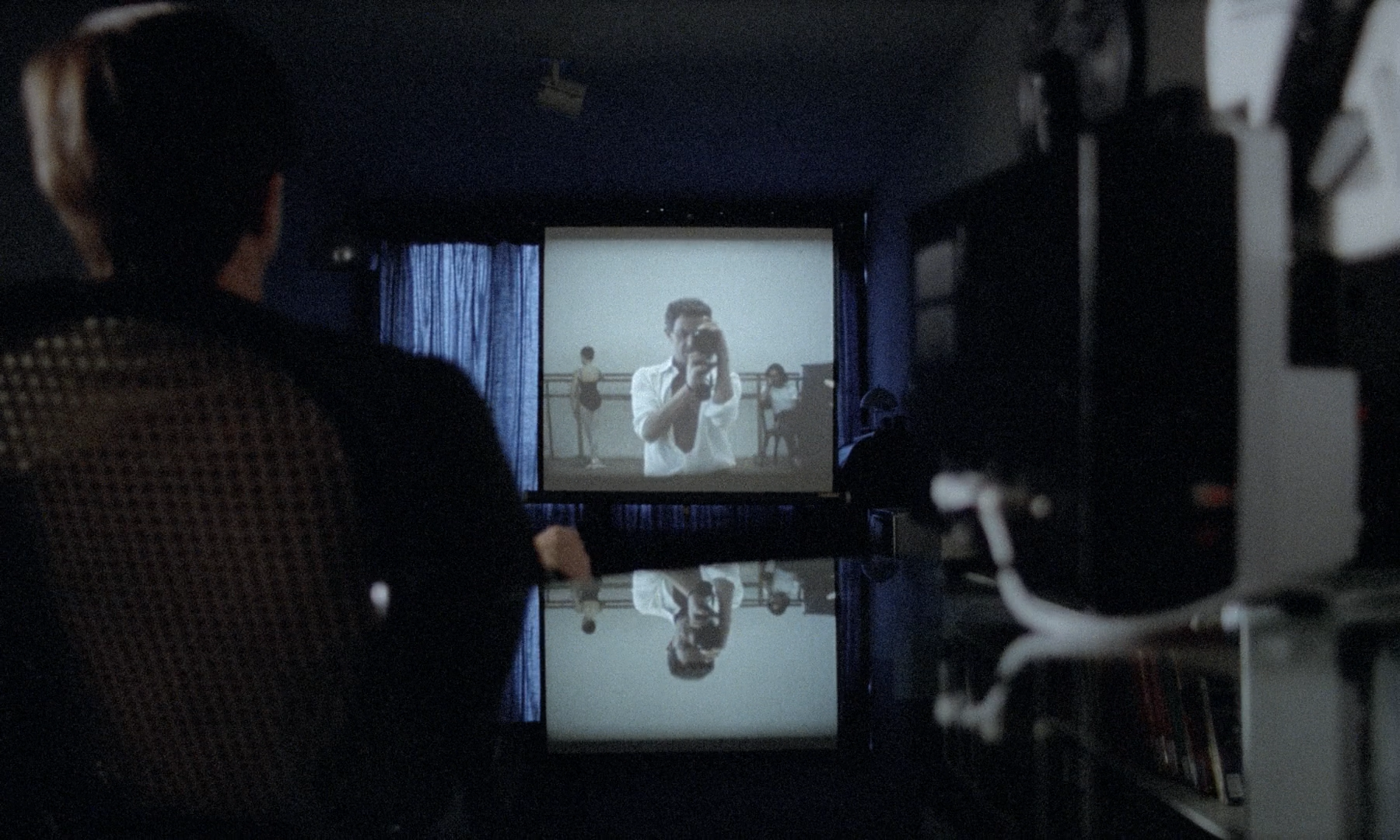
“Time has passed over me,” she thought, trying to collect herself; “this is the oncome of middle age. How
strange it is! Nothing is any longer one thing. I take up a handbag and I think of an old bumboat woman frozen in the ice. Someone lights a pink candle and I see a girl in Russian trousers. When i step out of doors—as I do now,” here she stepped on to the pavement of Oxford Street, “what is it that I taste? Little herbs. I hear goat bells. I see mountains. Turkey? India? Persia?” Her eyes filled with tears.
That Orlando had gone a little too far from the pres- ent moment will, perhaps, strike the reader who sees her now preparing to get into her motor car with her eyes full of tears and visions of Persian mountains. And in- deed, it cannot be denied that the most successful prac- titioners of the art of life, often unknown people by the way, somehow contrive to synchronise the sixty or sev- enty different times which beat simultaneously in every normal human system so that when eleven strikes, all the rest chime in unison, and the present is neither a violent disruption nor completely forgotten in the past. Of them we can justly say that they live precisely the sixty-eight or seventy-two years allotted them on the tombstone. Of the rest, some we know to be dead, though they walk among us; some are not yet born, though they go through the forms of life; others are hundreds of years old though they call themselves thirty-six. The true length of a person’s life, whatever the Dictionary of National Biog-
raphy may say, is always a matter of dispute. Indeed it is a difficult business—this time-keeping; nothing more quickly disorders it than contact with any of the arts; and it may have been her love of poetry that was to blame for making Orlando lose her shopping list and start home without the sardines, the bath salts, or the boots. Now as she stood with her hand on the door of her motor car, the present again struck her on the head. Eleven times she was violently assaulted.
“‘Confound it all!” she cried, for it is a great shock to the nervous system, hearing a clock strike—so much so that for some time now there is nothing to be said of her save that she frowned slightly, changed her gears admir- ably, and cried out, as before, “Look where you're going!” “Don’t you know your own mind?” “Why didn’t you say so then ?”’ while the motor car shot, swung, squeezed, and slid, for she was an expert driver, down Regent Street, down Haymarket, down Northumberland Ave- nue, over Westminster Bridge, to the left, straight on, to the right, straight on again. . .
The old Kent Road was very crowded on Thursday, the eleventh of October, 1928. People spilt off the pave- ment. There were women with shopping bags. Children ran out. There were sales at drapers’ shops. Streets widened and narrowed. Long vistas steadily shrunk to- gether. Here was a market. Here a funeral. Herea pro-
cession with banners upon which was written in great letters “Ra—Un,” but what else? Meat was very red. Butchers stood at the door. Women almost had their heels sliced off. Amor Vin— that was over a porch. A woman looked out of a bedroom window, profoundly contemplative, and very still. Applejohn and Applebed, Undert—. Nothing could be seen whole or read from start to finish. What was seen begun—like two friends starting to meet each other across the street—was never seen ended. After twenty minutes the body and mind were like scraps of torn paper tumbling from a sack and, indeed, the process of motoring fast out of London se much resembles the chopping up small of body and mind,which precedes unconsciousness and perhaps death itself that it is an open question in what sense Orlando can be said to have existed at the present moment. Indeed we should have given her over for a person entirely dis- assembled were it not that here, at last, one green screen was held out on the right, against which the little bits of paper fell more slowly; and then another was held out on the left so that one could see the separate scraps now turn- ing over by themselves in the air; and then green screens were held continuously on either side, so that her mind regained the illusion of holding things within itself and she saw a cottage, a farmyard and four cows, all pre- cisely life-size.
When this happened, Orlando heaved a sigh of relief, lit a cigarette, and puffed for a minute or two in silence. Then she called hesitatingly, as if the person she wanted might not be there, “Orlando?” For if there are (at a venture) seventy-six different times all ticking in the mind at once, how many different people are there not— Heaven help us—all having lodgment at one time or an- other in the human spirit? Some say two thousand and fifty-two. So that it is the most usual thing in the world for a person to say, directly they are alone, Orlando? (if that is one’s name) meaning by that, Come, come! ’m sick to death of this particular self. I want another. Hence, the astonishing changes we see in our friends. But it is not altogether plain sailing, either, for though one may say, as Orlando said (being out in the country and needing another self presumably) Orlando? still the Orlando she needs may not come; these selves of which we are built up, one on top of another, as plates are piled on a waiter’s hand, have attachments elsewhere, sympa- thies, little constitutions and rights of their own, call them what you will (and for many of these things there is no name) so that one will only come if it is raining, another in a room with green curtains, another when Mrs. Jones is not there, another if you can promise it a glass of wine —and so on; for everybody can multiply from his own experience the different terms which his different selves
ORLANDO have made with him—and some are too wildly ridicu- lous to be mentioned in print at all.
So Orlando, at the turn by the barn, called “Orlando?” with a note of interrogation in her voice and waited. Orlando did not come.
in frame you have the projector, the audience, the screen: reflected once internally by a mirror revealing the camera itself and the man behind the camera, and reflected once externally by the table. like come on…
“All right then,” Orlando said, with the good hu- mour people practise on these occasions; and tried an- other. For she had a great variety of selves to call upon, far more than we have been able to find room for, since a biography is considered complete if it merely accounts for six or seven selves, whereas a person may well have as many thousand. Choosing then, only those selves we have found room for, Orlando may now have called on the boy who cut the nigger’s head down; the boy who strung it up again; the boy who sat on the hill; the boy who saw the poet; the boy who handed the Queen the bowl of rose water; or she may have called upon the young man who fell in love with Sasha; or upon the Courtier; or upon the Ambassador; or upon the Soldier; or upon the Traveller; or she may have wanted the woman to come to her; the Gipsy; the Fine Lady; the Hermit; the girl in love with life; the Patroness of Letters; the woman who cailed Mar (meaning hot baths and evening fires) or Shelmerdine (meaning crocuses in autumn woods) or Bonthrop (meaning the death we die daily) or all three together—which meant more things than we have
ORLANDO space to write out—all these selves were different and she may have called upon any one of them.
Perhaps; but what appeared certain (for we are now in the region of ‘perhaps’ and ‘appears’) was that the one she needed most kept aloof, for she was, to hear her talk, changing her selves as quickly as she drove—there was a new one at every corner—as happens when, for some unaccountable reason, the conscious self, which is the uppermost, and has the power to desire, wishes to be nothing but one self. This is what some people call the true self, and it is, they say, compact of al! the selves we have it in us to be; commanded and locked up by the Captain self, the Key self, which amalgamates and con- trols them all. Orlando was certainly seeking this self as the reader can judge from overhearing her talk as she drove (and if it is rambling talk, disconnected, trivial, dull, and sometimes unintelligible, it is the reader’s fault for listening to a lady talking to herself; we only copy her words as she spoke them, adding in brackets which self in our opinion is speaking, but in this we may well be wrong).
“What then? Who then?” she said. “Thirty-six; in a motor car; a woman. Yes, but a million other things as well. A snob am I? The garter in the hall? The leopards? My ancestors? Proud of them? Yes! Greedy, luxurious, vicious? Am I? (here a new self came in). Don’t care a
ORLANDO damn if Iam. Truthful? I think so. Generous? Oh, but that don’t count (here a new self came in). Lying in bed of a morning on fine linen; listening to the pigeons; silver dishes; wine; maids; footmen. Spoilt? Perhaps (here another self came in). My books (here she men- tioned fifty classical titles; which represented, so we think, the early romantic works that she tore up). Facile, glib, romantic. But (here another self came in) a duffer, a fumbler. More clumsy I couldn’t be. And—and— (here she hesitated for a word and if we suggest ‘Love’ we may be wrong, but certainly she laughed and blushed and then cried out) a toad set in emeralds! Harry the Archduke! Bluebottles on the ceiling! (here another self came in). But Nell, Kit,Sasha? (she was sunk in gloom: tears actually shaped themselves and she had long given over crying). Trees, she said. (She was passing a clump. Here another self came in.) I love trees, trees growing there a thousand years. And barns (she passed a tumble- down barn at the edge of the road). And sheep dogs (here one came trotting across the road. She carefully avoided it). And the night. But people (here another self came in). People? (She repeated it as a question.) Chattering, spiteful, always telling lies. (Here she turned into the High Street of her native town which was crowded, for it was market day, with farmers, and shep- herds, and old women with hens in baskets). Peasants I
ORLANDO like. I understand crops. But (here another self came skipping over the top of her mind like the beam from a lighthouse). Fame! (She laughed.) Fame! Seven edi- tions. A prize. Photographs in the evening papers (here she alluded to the ‘Oak Tree’ and “The Burdett Coutts’ Memorial Prize which she had won; and we must here snatch time to remark how discomposing it is for her biographer that this culmination and peroration should be dashed from us on a laugh casually like this; but the truth is that when we write of a woman, everything is out of place—cuiminations and perorations; the accent never falls where it does with a man). ‘““Fame!”’ she re- peated. “A poet—a charlatan; both every morning as regularly as the post comes in. To dine, to meet; to meet, to dine; fame—fame!”’ (She had here to slow down to pass through the crowd of market people. But no one noticed her. A porpoise in a fishmonger’s shop attracted far more attention than a lady who had won a prize and might, had she chosen, have worn three coronets one on top of another on her brow.) Driving very slowly she now hummedas if it were part of an old song, ““With my guineas I’ll buy flowering trees, flowering trees, flower- ing trees and walk among my flowering trees and tell my sons what fame is.”’ So she hummed, and now all her words began to sag here and there (another self came in) like a barbaric necklace of heavy beads. “And walk 312
- ORLANDO among my flowering trees,” she sang, “and see the moon rise slow, the waggons go . . .” Here she stopped short, and looked ahead of her intently at the bonnet of the car in profound meditatfon.
“He sat at Twitchett’s table,”’ she mused, “‘with a dirty ruffon. . . . Wasit old Mr. Baker come to meas- ure the timber? Or was it Sh—p—re?” (for when we speak names we deeply reverence to ourselves we never speak them whole). She gazed for ten minutes ahead of her, letting the car come almost to a standstill.
“Haunted!” she cried, suddenly pressing the accel- erator. “Haunted! ever since I was a child. There flies the wild goose. It flies past the window out to sea. Up I jumped (she gripped the steering wheel tighter) and stretched after it. But the goose flies too fast. I’ve seen it, here—there—there—England, Persia, Italy. Always it flies fast out to sea and always I fling after it words like nets (here she flung her hand out) which shrivel as I’ve seen nets shrivel drawn on deck with only sea-weed in them. And sometimes there’s an inch of silver—six words—in the bottom of the net. But never the great fish who lives in the coral groves.” Here she bent her head, pondering deeply.
And it was at this moment, when she had ceased to call “Orlando” and was deep in thoughts of something else that the Orlando whom she had called came of its
anna breaks down once she pushes her student past the limit, looks into the camera, which is being held by heinrich, and says:
ORLANDO own accord; as was proved by the change that now came over her as she passed through the lodge gates into the park.
The whole of her darkened and settled, as when some foil whose addition makes the round and solidity of a surface is added to it, and the shallow becomes deep and the near distant; and all is contained as water is con- tained by the sides of a well. So she was now darkened, stilled, and become, with the addition of this Orlando, what is called, rightly or wrongly, a single self, a real self. And she fell silent. For it is probable that when people talk aloud, the selves (of which there may be more than two thousand) are conscious of disseverment, and are trying to communicate but when communication is es- tablished there is nothing more to be said.
Masterfully, swiftly, she drove up the curving drive between the elms and oaks through the falling turf of the park whose fall was so gentle that had it been water it would have spread the beach with a smooth green tide. Planted here and in solemn groups were beech trees and oak trees. The deer stepped among them, one white as snow, another with its head on one side, for some wire netting had caught in its horns. All this, the trees, deer, and turf, she observed with the greatest satis- faction as if her mind had become a fluid that flowed round things and enclosed them completely. Next min-
ORLANDO ute she drew up in the courtyard, where, for so many hundred years she had come, on horseback or in coach and six, with men riding before or coming after; where plumes had tossed, torches flashed, and the same flower- ing trees that let their leaves drop now had shaken their blossoms. Now she was alone. The autumn leaves were falling. The porter opened the great gates. “Morning, James,” she said, “there’re some things in the car. Will you bring ’em in?” words of no beauty, interest, or sig- nificance in themselves, it will be conceded, but now so plumped out with meaning that they fell like ripe nuts from a tree, and proved that when the shrivelled skin of the ordinary is stuffed out with meaning it satisfies the senses amazingly. This was true indeed of every move- ment and action now, usual though they were; so that to see Orlando change her skirt for a pair of whipcord breeches, and leather jacket, which she did in less than three minutes, was to be ravished with the beauty of movement as if Madame Lopokova were using her high- est art. Then she strode into the dining-room where her old friends Dryden, Pope, Swift, Addison regarded her demurely at first as who should say Here’s the prize win- ner! but when they reflected that two hundred guineas was in question, they nodded their heads approvingly. Two hundred guineas, they seemed to say; two hundred guineas are not to be sniffed at. She cut herself a slice of
bread and ham, clapped the two together and began to eat, striding up and down the room, thus shedding her company habits in a second, without thinking. After five or six such turns, she tossed off a glass of red Spanish wine, and, filling another which she carried in her hand, strode down the long corridor and through a dozen drawing-rooms and so began a perambulation of the house, attended by such elk hounds and spaniels as chose to follow her.
This, too, was all in the day’s routine. As soon would she come home and leave her own grandmother without a kiss as come back and leave the house unvisited, She fancied that the rooms brightened as she came in; stirred, opened their eyes as if they had been dozing in her ab- sence. She fancied, too, that, hundreds and thousands of times as she had seen them, they never looked the same twice, as if so long a life as theirs had been had stored in them a myriad moods which changed with winter and summer, bright weather and dark and her own fortunes and the people’s characters who visited them. Polite, they always were to strangers, but.a little weary; with her, they were entirely open and at their ease. Why not indeed? They had known each other close on four cen- turies now. They had nothing to conceal. She knew their sorrows and joys. She knew what age each part of them was and its little secrets—a hidden drawer, a con-
ORLANDO cealed cupboard, or some deficiency perhaps, such as a part made up, or added later. They, too, knew her in all her moods and changes. She had hidden nothing from them; had come to them as child, as man, crying and dancing, brooding and gay. In this window-seat, she had written her first verses; in that chapel, she had been married. And she would be buried here, she reflected, kneeling on the window-sill in the long gallery and sip- " ping her Spanish wine. Though she could hardly fancy it, the body of the heraldic leopard would be making yellow pools on the floor the day they lowered her to lie among her ancestors. She, who believed in no immor- tality, could not help feeling that her soul would come and go for ever with the reds on the panels and the greens on the sofa. For the room—she had strolled into the Ambassador’s bedroom—shone like a shell that has lain at the bottom of the sea for centuries and has been crusted over and painted a million tints by the water; it was rose and yellow, green and sand-coloured. It was frail as a shell, as iridescent and as empty. No Ambassador would ever sleep there again. Ah, but she knew where the heart of the house still beat. Gently opening a door, she stood on the threshold so that (as she fancied) the room could not see her and watched the tapestry rising and falling on the eternal faint breeze which never failed to move it.
ORLANDO beat, she thought, however faint, however far with- drawn; the frail indomitable heart of the immense building.
Now, calling her troop of dogs to her she passed down the gallery whose floor was laid with oak trees sawn. across. Rows of chairs with all their velvets faded stood ranged against the wall holding their arms out for Eliza- beth, for James, for Shakespeare it might be, for Cecil, who never came. The sight made her gloomy. She un- hooked the rope that fenced them off. She sat on the Queen’s chair; she opened a manuscript book lying on Lady Betty’s table; she stirred her fingers in the aged rose leaves; she brushed her short hair with King James’ silver brushes; she bounced up and down upon his bed (but no King would ever sleep there again, for all Louise’s new sheets) and pressed her cheek against the worn silver counterpane that lay upon it. But everywhere were little lavender bags to keep the moth out and printed notices, “Please do not touch,” which, though she had put them there herself, seemed to rebuke her. The house was no longer hers entirely, she sighed. It belonged to time now; to history; was past the touch and control of the living. Never would beer be spilt here any more, she thought (she was in the bedroom that had been old Nick Greene’s) or holes burnt in the carpet. Never two hun- dred servants come running and brawling down the cor-
ridors with warming pans and great branches for the great fireplaces. Never would ale be brewed and candles made and saddles fashioned and stone shaped in the workshops outside the house. Hammers and mallets were silent now. Chairs and beds were empty; tankards of silver and gold were locked in glass cases. The great wings of silence beat up and down the empty house.
From now on she’ll know how much righteous anger and sheer will she’s got in her to say “I. I can do as well. I can be better. I’m the best.” Only in this case can she become a success. Nobody took me there. That’s why I’m with you. Because you say “I” for me! Because you say “I” for me.
So she sat at the end of the gallery with her dogs couched round her, in Queen Elizabeth’s hard armchair. The gallery stretched far away to a point where the light almost failed. It was as a tunnel bored deep into the past. As her eyes peered down it, she could see people laugh- ing and talking; the great men she had known; Dryden, Swift, and Pope; and statesmen in colloquy; and lovers dallying in the window-seats; and people eating and drinking at the long tables; and the wood smoke curling round their heads and making them sneeze and cough. Still further down, she saw sets of splendid dancers formed for the quadrille. A fluty, frail, but nevertheless stately music began to play. An organ boomed. A coffin was borne into the chapel. A marriage procession came out of it. Armed men with helmets left for the wars. They brought banners back from F lodden and Poitiers and stuck them on the wall. The long gallery filled itself thus, and still peering further, she thought she could make out at the very end, beyond the Elizabethans and
ORLANDO the Tudors, some one older, further, darker, a cowled figure, monastic, severe, a monk, who went with his hands clasped, and a book in them murmuring—
Like thunder, the stable clock struck four. Never did any earthquake so demolish a whole town. The gallery and all its occupants fell to powder. Her own face, that had been dark and sombre as she gazed, was lit as by an explosion of gunpowder. In this same light everything near her showed with extreme distinctness. She saw two flies circling round and noticed the blue sheen on their bodies; she saw a knot in the wood where her foot was, and her dog’s ear twitching. At the same time, she heard a bough creaking in the garden, a sheep coughing in the park, a swift screaming past the window. Her own body quivered and tingled as if suddenly stood naked in a hard frost. Yet, she kept, as she had not done when the clock struck ten in London, complete composure (for she was now one and entire, and presented, it may be a larger surface to the shock of time). She rose, but without pre- cipitation, called her dogs, and went firmly but with great alertness of movement down the staircase and out into the garden. Here the shadows of the plants were miraculously distinct. She noticed the separate grains of earth in the flower beds as if she had a microscope stuck to her eye. She saw the intricacy of the twigs of every tree. Each blade of grass was distinct and the markings
ORLANDO of veins and petals. She saw Stubbs, the gardener, com- ing along the path, and every button on his gaiters; she saw Betty and Prince, the cart horses, and never had she marked so clearly the white star on Betty’s forehead, and the three long hairs that fell down below the rest on Prince’s tail. Out in the quadrangle the old grey walls of the house looked like a scraped new photograph; she heard the loud speaker condensing on the terrace a dance tune that people were listening to in the red velvet opera house at Vienna. Braced and strung up by the present moment'she was also strangely afraid, as if every time the gulf of time gaped and let a second through some un- known danger might come with it. The tension was too relentless and too rigorous to be endured Jong without discomfort. She walked more briskly than she liked, as if her legs were moved for her, through the garden and out into the park. Here she forced herself by a great ef- fort, to stop by the carpenter’s shop, and to stand stock- still watching Joe Stubbs fashion a cart wheel. She was standing with her eye fixed on his hand when the quarter struck. It hurtled through her like a meteor, so hot that no fingers can hold it. She saw with disgusting vividness that the thumb on Joe’s right hand was without a finger nail and there was a raised saucer of pink flesh where the nail should have been. The sight was so repulsive that she felt faint for a moment, but in that moment’s darkness, 321
when her eyelids flickered, she was relieved of the pres- sure of the present. There was something strange in the shadow that the flicker of her eyes cast, something which (as anyone can test for himself by looking now at the sky), is always absent from the present—whence its terror, its nondescript character—something one trem- bles to pin through the body with aname and call beauty, for it has no body, is as a shadow and without substance or quality of its own, yet has the power to change what- ever it adds itself to. This shadow now while she flick- ered her eye in her faintness in the carpenter’s shop stole out, and attaching itself to the innumerable sights she had been receiving, composed them into something tol- erable, comprehensible. Yes, she thought, heaving a deep sigh of relief, as she turned from the carpenter’s shop to climb the hill, I can begin to live again. I am by the Ser- pentine, she thought, the little boat is climbing through the white arch of a thousand deaths. I am about to understand. . . .”
Those were her words, spoken quite distinctly, but we cannot conceal the fact that she was now a very indiffer- ent witness to the truth of what was before her and might easily have mistaken a sheep for a cow, or an old man called Smith for one who was called Jones and was no relation of his whatever. For the shadow of faintness which the thumb without a nail had cast had deepened
now, at the back of her brain (which is the part furthest from sight) into a pool where things dwell in darkness so deep that what they are we scarcely know. She now looked down into this pool or sea in which everything is reflected—and, indeed, some say that all our most vio- lent passions, and art and religion are the reflections which we see in the dark hollow at the back of the head when the visible world is obscured for the time. She looked there now, long, deeply, profoundly, and imme- diately the ferny path up the hill along which she was walking became not entirely a path, but partly the Ser- pentine; the hawthorn bushes were partly ladies and gentlemen sitting with card cases and gold-mounted canes; the sheep were partly tall Mayfair houses; every- thing was partly something else, and each gained an odd moving power from this union of itself and something not itself so that with this mixture of truth and falsehood her mind became like a forest in which things moved; lights and shadows changed, and one thing became an- other. Except when Canute, the elk hound, chased a rabbit and so reminded her that it must be about half past four—it was indeed twenty-three minutes to six—she forgot the time.
The ferny path led, with many turns and windings, higher and higher to the oak tree, which stood on the top. The tree had grown bigger, sturdier, and more knotted
ORLANDO since she had known it, somewhere about the year 1588, but it was still in the prime of life. The little sharply frilled leaves were still fluttering thickly on its branches. Flinging herself on the ground, she felt the bones of the tree running out like ribs from a spine this way and that beneath her. She liked to think that she was riding the back of the world. She liked to attach herself to some- thing hard. As she flung herself down a little square book bound in red cloth fell from the breast of her leather jacket—her poem The Oak Tree. “I should have brought a trowel,” she reflected. The earth was so shal- low over the roots that it seemed doubtful if she could do as she meant and bury the book here. Besides the dogs would dig it up. No luck ever attends these symbolical celebrations, she thought. Perhaps it would be as well then to do without them. She had a little speech on the tip of her tongue which she meant to speak over the book as she buried it. (It was a copy of the first edition, signed by author and artist.) “I bury this as a tribute,”’ she was going to have said, “a return to the land of what the land has given me,” but Lord! once one began mouthing words aloud, how silly they sounded! She was reminded of old Greene getting upon a platform the other day, comparing her with Milton (save for his blindness) and handing her a cheque for two hundred guineas. She had thought then of the oak tree here on its hill, and what
has that got to do with this, she had wondered? What has praise and fame to do with poetry? What has seven editions (the book had already gone into no less) got to do with the value of it? Was not writing poetry a secret transaction, a voice answering a voice? So that all this chatter and praise, and blame and meeting people who admired one and meeting people who did not admire one was as ill suited as could be to the thing itself—a voice answering a voice. What could have been more secret, she thought, more slow, and like the intercourse of lovers, than the stammering answer she had made all these years to the old crooning song of the woods, and the farms and the brown horses standing at the gate, neck to neck, and the smithy and the kitchen and the fields, so laboriously bearing wheat, turnips, grass, and the gardens blowing irises and fritillaries ?
finally, we get a reverse shot of mark reacting to this, rocking back and forth in his chair as he’s liable to do
So she let her book lie unburied and dishevelled on the ground, and watched the vast view, varied like an ocean floor this evening with the sun lightening it and the shadows darkening it. There was a village with a church tower among elm trees; a grey-domed manor house in a park, a spark of light burning on some glass- house, a farmyard with yellow corn stacks. The fields were marked with black tree clumps, and beyond the fields stretched long woodlands, and there was the gleam of a river, and then hills again. In the far distance Snow-
don’s crags broke white among the clouds; she saw the far Scottish hills and the wild tides that swirl about the Hebrides. She listened for the sound of gun-firing out at sea, No—only the wind blew, There was no war to-day. Drake had gone; Nelson had gone. “And that,” she thought, letting her eyes, which had been looking at these far distances, drop once more to the land beneath her, “‘was my land once: that Castle between the downs was mine; and all that moor running almost to the sea was mine.”” Here the landscape (it must have been some trick of the fading light) shook itself, heaped itself, let all this encumbrance of houses, castles, and woods slide off its tent-shaped sides. The bare mountains of Turkey were before her. Itwas blazing noon. She looked straight at the baked hill-side. Goats cropped the sandy tufts at her feet. An eagle soared above her. The raucous voice of old Rustum, the gipsy, croaked in her ears, “What is your antiquity and your race, and your possessions com- pared with this? What do you need with four hundred bedrooms and silver lids on all the dishes, and house- maids dusting?”
At this moment some church clock chimed in the valley. The tent-like landscape collapsed and fell. The present showered down upon her head once more, but now that the light was fading, gentlier than before, call- ing into view nothing detailed, nothing small, but only
misty fields, lamps in cottage windows, the slumbering bulk of a wood, and a fan-shaped light pushing the dark- ness before it along some lane. Whether it had struck nine, ten, or eleven, she could not say. Night had come —night that she loved of all times, night in which the re- flections in the dark pool of the mind shine more clearly than by day. It was not necessary to faint now in order to look deep into the darkness where things shape them- selves and to see in the pool of the mind now Shake- speare, now a girl in Russian trousers, now a toy boat on the Serpentine, and then the Atlantic itself, where it storms in great waves past Cape Horn. There was her husband’s brig, rising to the top of the wave! Up, it went, and up and up. The white arch of a thousand deaths rose before it. Oh rash, oh ridiculous man, always sailing, so uselessly, round Cape Horn in the teeth of a gale! But the brig was through the arch and out on the other side; it was safe at last!
“Ecstasy!”’ she cried, “ecstasy!” And then the wind sank, the waters grew calm; and she saw the waves rip- pling peacefully in the moonlight.
“Marmaduke Bonthrop Shelmerdine!”’ she cried, standing by the oak tree.
The beautiful, glittering name fell out of the sky like a steel blue feather. She watched it fall, turning and twisting like a slow falling arrow that cleaves the deep
ORLANDO air beautifully. He was coming, as he always came, in moments of dead calm; when the wave rippled and the spotted leaves fell slowly over her foot in the autumn woods; when the leopard was still; the moon was on the waters, and nothing moved between sky and sea. It was then that he came.
All was still now. It was near midnight. The moon rose slowly over the weald. Its light raised a phantom castle upon earth. There stood the great house with all its windows robed in silver. Of wall or substance there was none. All was phantom. All was still. All was lit as for the coming of a dead Queen. Gazing below her, Or- lando saw dark plumes tossing in the courtyard, and torches flickering and shadows kneeling. A Queen once more stepped from her chariot.
“The house is at your service, Ma’am,” she cried, curtseying deeply. “Nothing has been changed. The dead Lord, my father, shall lead you in.”
since i do love formal meta reflexive readings of everything, gotta love this scene. but what does it mean?
Immediately, the first stroke of midnight sounded. The cold breeze of the present brushed her face with its little breath of fear. She looked anxiously into the sky. It was dark with clouds now. The wind roared in her ears. But in the roar of the wind she heard the roar of an aeroplane coming nearer and nearer.
“Here! Shel, here!” she cried, baring her breast to the moon (which now showed bright) so that her pearls
ORLANDO glowed like the eggs of some vast moon-spider. The aero- plane rushed out of the clouds and stood over her head. It hovered above her. Her pearls burnt like a phosphor- escent flare in the darkness.
And as Shelmerdine, now grown a fine sea captain, hale, fresh-coloured, and alert, leapt to the ground, there sprang up over his head a single wild bird.
And the twelfth stroke of midnight sounded; the twelfth stroke of midnight, Thursday, the eleventh of October, Nineteen Hundred and Twenty-eight.
aM ey Ae nya * paid. fe a tee a 7 i ' b Vans i. | dee Ik J ee ee te ‘ »), ry et a ass *) Sah LP 7 mM . In ae y.
A., Lord, 193 Abbey, Westminster, 53, 55, 223 Addison, Joseph, 167,197, 208-211,
Archduchess Harriet of Finster- Aarhorn (see Archduke Harry), 114, 177-179
Bartolus, Captain Nicholas Bene- dict, 155, 162, 164, 165, 167, 187, 197
C., Marquis of, 193, 246 Canute, The elk-hound, 246 Carlyle, Thomas, 278 Carpenter, Nurse, 69
well, the final reverse shot of mark is basically the film saying “I” for us. crazy lady on screen has just said a whole lotta crap, meeting our gaze directly, breaking the fourth wall. mark is the audience stand-in, the two of just saw the same bit of film. if movie was more sure of what tone it was going for goes he would quip to the camera, “I don’t know what I’ve gotten myself into…”, laugh track
Charles the Second, King, 118 Chesterfield, Lady, 192 Chesterfield, Lord, 213, 289 Chubb, Eusebius, 230
Dryden, John, 167, 197, 198, 315 Dupper, Mr., 69, 75, 83, 169-171,
Elizabeth, Queen, 20, 22-26, 28, 100, 194, 224, 235, 240 Euphrosyne, 31, 32
Leicester Square, 216 Lock, Rape of the, 209 Lopokova, Madame, 315 Louise, 301
Marshall & chelerivets, 300 Mary, Queen of Scots, 172 Melbourne, Lord, 242 Moray, the Earl of, 39
writes his first play, 16; visits Queen at Whitehall, 24; made Treasurer and Steward, 25; his loves, 27; and Russian Princess, 38-64; his first trance, 66; retires into solitude, 68; love of reading, 72; his romantic dramas, literary
ambitions, 76, 81, 82, 100-1045 and Greene, 83, 88-96; his great- grandmother Moll, 86; buys elk- hounds,g6; and his poem The Oak Tree, 96, 113, 173, 236; and his house, 105—112;and the Archduch- ess Harriet, 114-118; Ambassador at Constantinople, 118-140; created a Duke, 126; second trance, 131; marriage to Rosina Pepita, a gipsy, 132; becomes a woman, 137; with the gipsies, 140-152; returns to England, 152; lawsuits, 168; and Archduke Harry, 179; in London society, 192; entertains the wits, 208; and Mr. Pope, 212; and Nell, 217; confused with her cousin, 220; returns to her country house, 233; breaks her ankle, 248; de- clared a woman, 255; engagement, 250; marriage, 264; birth of her first son, 295 Othello, 56
Fetes eR pete irere casey Ease CESTOSr ETERS ene staset ata Bbieres mie
sie At, Bara Foe oe es aay nepese erent eet) pub ropa brian bua biennerot drat sc? sper es: Fer Se resey Saresesn eye #4 es guesses Dreier eraritcgsstaee Sees
here, anna’s logic is because the student’s teacher molded her into the ‘perfect’ pose, the student will be able to continue on in the future with the understanding that she can achieve perfection again, because she ‘did it’ once before. “I” to lacan is the constitutive word of the mirror stage, the (mis/self)recognition we have between our actual selves and our imaginary reflections, at first an image in the mirror, then a symbol, “I”, in language. think that this scene is playing around with that idea, except with cinema as the medium of reflection
Riverside, California Please return books on time. Always have books charged by the librarian when &, taken from the library.
Digitized by the Internet Archive in 2022 with funding from Kahle/Austin Foundation
The Voyage Out Night and Day Monday or Tuesday Facob’s Room Mrs. Dalloway
PRINTED IN THE UNITED STATES OF AMERICA BY QUINN & BODEN COMPANY, INC., RAHWAY, N. J.
Some are dead and so illustrious that I scarcely dare name them, yet no one can read or write without being perpetually in the debt of Defoe, Sir Thomas Browne, Sterne, Sir Walter Scott, Lord Macaulay, Emily Bronté, De Quincey, and Walter Pater,—to name the first that come to mind. Others are alive, and though perhaps as illustrious in their own way, are less formidable for that very reason. I am specially indebted to Mr. C. P. Sanger, without whose knowledge of the law of real property this book could never have been written. Mr. Sydney-Turner’s wide and peculiar erudition has saved me, I hope, some lamentable blunders. I have had the advantage—how great I alone can estimate —of Mr. Arthur Waley’s knowledge of Chinese. Madame Lopokova (Mrs. F. M. Keynes) has been at hand to correct my Russian. To the unrivalled sympathy and imagination of Mr. Roger Fry I owe whatever understanding of the art | of painting I may possess. I have, I hope, profited in an- other department by the singularly penetrating, if severe, criticism of my nephew Mr. Fulian Bell. Miss M. K. Snowdon’ s indefatigable researches in the archives of Har- rogate and Cheltenham were none the less arduous for being vain. Other friends have helped me in ways too various to
PREFACE specify. I must content myself with naming Mr. Angus Davidson; Mrs. Cartwright; Miss fanet Case; Lord Ber- ners (whose knowledge of Elizabethan music has proved invaluable); Mr. Francis Birrell; my brother, Dr. Adrian Stephen; Mr. F. L. Lucas; Mr. and Mrs. Desmond Mac- carthy; that most inspiriting of critics, my brother-in-law, Mr. Clive Bell; Mr. G. H. Rylands; Lady Colefax; Miss Nellie Boxall; Mr. F. M. Keynes; Miss Violet Dickinson; the Hon. Edward Sackville West; Mr. and Mrs. St. Fobn Hutchinson; Mr. Duncan Grant; Mr. and Mrs. Stephen Tomlin; Mr. and Lady Ottoline Morrell; my mother-in- law, Mrs. Sidney Woolf; Mr. Osbert Sitwell; Madame Facques Raverat; Colonel Cory Bell; Miss Valerie Taylor; Mr. fF. T. Sheppard; Mr. and Mrs. T. S. Eliot; Miss Ethel Sands; Miss Nan Hudson; my nephew, Mr. Quentin Bell (an old and valued collaborator in fiction); Mr. Ray- mond Mortimer; Miss Emphie Case; Lady Gerald Welles- ley; Mr. Lytton Strachey; the Viscountess Cecil; Miss Hope Mirrlees; Mr. E. M. Forster; the Hon. Harold Nicolson; my sister, Vanessa Bell—but the list threatens to grow too long and is already far too distinguished. For while it rouses in me memories of the pleasantest kind it will inevitably wake expectations in the reader which the book itself can only disappoint. Therefore I will conclude by thanking the officials of the British Museum and Record Office for their wonted courtesy; my niece Miss Angelica Bell, for a service Vill
which none but she could have rendered; and my husband for the patience with which he has invariably helped my researches and for the profound historical knowledge to which these pages owe whatever degree of accuracy they may attain. Finally, I would thank, bad I not lost his name and address, a gentleman in America, who has generously and gratuitously corrected the punctuation, the botany, the en- tomology, the geography, and the chronology of previous works of mine and will, I hope, not spare his services on the present occasion.
Orlando as a Boy frontispiece The Russian Princess as a Child 54 The Archduchess Harriet 114 Orlando as Ambassador 126 Orlando on her return to England 158 Orlando about the year 1840 246 Marmaduke Bonthrop Shelmerdine, Esquire 262
E—for there could be no doubt of his sex, though the fashion of the time did something to disguise it—was in the act of slicing at the head of a Moor which swung from the rafters. It was the colour of an old foot- ball, and more or less the shape of one, save for the sunken cheeks and a strand or two of coarse, dry hair, like the hair on a cocoanut. Orlando’s father, or perhaps his grandfather, had struck it from the shoulders of a vast Pagan who had started up under the moon in the barbarian fields of Africa; and now it swung, gently, perpetually, in the breeze which never ceased blowing through the attic rooms of the gigantic house of the lord who had slain him. ) Orlando’s fathers had ridden in fields of asphodel, and stony fields, and fields watered by strange rivers, and they had struck many heads of many colours off many shoulders, and brought them back to hang from the raft- ers. So too would Orlando, he vowed. But since he was sixteen only, and too young to ride with them in Africa or France, he would steal away from his mother and the peacocks in the garden and go to his attic room and there lunge and plunge and slice the air with his blade. Some-
ORLANDO times he cut the cord so that the skull bumped on the floor and he had to string it up again, fastening it with some chivalry almost out of reach so that his enemy grinned at him through shrunk, black lips triumphantly. The skull swung to and fro, for the house, at the top of which he lived, was so vast that there seemed trapped in it the wind itself, blowing this way, blowing that way, winter or summer. The green arras with the hunters on it moved perpetually. His fathers had been noble since they had been at all. They came out of the northern mists wearing coronets on their heads. Were not the bars of darkness in the room, and the yellow pools which chequered the floor, made by the sun falling through the stained glass of a vast coat of arms in the window? Orlando stood now in the midst of the yellow body of an heraldic leopard. When he put his hand on the window- sill to push the window open, it was instantly coloured red, blue, and yellow like a butterfly’s wing. Thus, those who like symbols, and have a turn for the deciphering of them, might observe that though the shapely legs, the handsome body, and the well-set shoulders were all of them decorated with various tints of heraldic light, Or- lando’s face, as he threw the window open, was lit solely by the sun itself. A more candid, sullen face it would be impossible to find. Happy the mother who bears, hap- pier still the biographer who records the life of such a
i’m with you because you say i for me
ORLANDO one! Never need she vex herself, nor he invoke the help of novelist or poet. From deed to deed, from glory to glory, from office to office he must go, his scribe follow- ing after, till they reach what ever seat it may be that is the height of their desire. Orlando, to look at, was cut out precisely for some such career. The red of the cheeks was covered with peach down; the down on the lips was only a little thicker than the down on the cheeks. The lips themselves were short and slightly drawn back over teeth of an exquisite and almond whiteness. Nothing disturbed the arrowy nose in its short, tense flight; the hair was dark, the ears small, and fitted closely to the head. But, alas, that these catalogues of youthful beauty cannot end without mentioning forehead and eyes. Alas, that people are seldom born devoid of all three; for di- rectly we glance at Orlando standing by the window, we must admit that he had eyes like drenched violets, so large that the water seemed to have brimmed in them and widened them; and a brow like the swelling of a marble dome pressed between the two blank medallions which were his temples. Directly we glance at eyes and fore- head, thus do we rhapsodise. Directly we glance at eyes and forehead, we have to admit a thousand disagreeables which it is the aim of every good biographer to ignore. Sights disturbed him, like that of his mother,a very beau- tiful lady in green walking out to feed the peacocks with
Twitchett, her maid, behind her; sights exalted him— the birds and the trees; and made him in love with death —the evening sky, the homing rooks; and so, mounting up the spiral stairway into his brain—which was a roomy one—all these sights, and the garden sounds too, the hammer beating, the wood chopping, began that riot and confusion of the passions and emotions which every good biographer detests. But to continue — Orlando slowly drew in his head, sat down at the table, and, with the half-conscious air of one doing what he does every day of his life at this hour, took out a writing book labelled “Ethelbert: A Tragedy in Five Acts,” and dipped an old stained goose quill in the ink.
Soon he had covered ten pages and more with poetry. He was fluent, evidently, but he was abstract. Vice, Crime, Misery were the personages of his drama; there were Kings and Queens of impossible territories; horrid plots confounded them; noble sentiments suffused them; there was never a word said as he himself would have said it, but all was turned with a fluency and sweetness which, considering his age—he was not yet seventeen —and that the sixteenth century had still some years of its course to run, were remarkable enough. At last, how- ever, he came to a halt. He was describing, as all young poets are for ever describing, nature, and in order to match the shade of green precisely he looked (and here
he showed more audacity than most) at the thing itself, which happened to be a laurel bush growing beneath the window. After that, of course, he could write no more. Green in nature is one thing, green in literature another. Nature and letters seem to have a natural antipathy; bring them together and they tear each other to pieces. The shade of green Orlando now saw spoilt his rhyme and split his metre. Moreover, nature has tricks of her own. Once look out of a window at bees among flowers, at a yawning dog, at the sun setting, once think “how many more suns shall I see set,” etc., etc. (the thought is too well known to be worth writing out) and one drops the pen, takes one’s cloak, strides out of the room, and catches one’s foot on a painted chest as one does so. For Orlando was a trifle clumsy.
He was careful to avoid meeting anyone. There was Stubbs, the gardener, coming along the path. He hid behind a tree till he had passed. He let himself out at a little gate in the garden wall. He skirted all stables, ken- nels, breweries, carpenters’ shops, wash-houses, places where they make tallow candles, kill oxen, forge horse- shoes, stitch jerkins—for the house was a town ringing with men at work at their various crafts—and gained the ferny path leading uphill through the park unseen. There is perhaps a kinship among qualities; one draws
ORLANDO call attention to the fact that this clumsiness is often mated with a love of solitude. Having stumbled over a chest, Orlando naturally loved solitary places, vast views, and to feel himself for ever and ever and ever alone.
So, after a long silence, “I am alone,” he breathed at last, opening his lips for the first time in this record. He had walked very quickly uphill through ferns and haw- thorn bushes, startling deer and wild birds, to a place crowned by a single oak tree. It was very high, so high indeed that nineteen English counties could be seen be- neath, and on clear days thirty, or forty perhaps, if the weather was very fine. Sometimes one could see the Eng- lish Channel, wave reiterating upon wave. Rivers could be seen and pleasure boats gliding on them; and galleons setting out to sea; and armadas with puffs of smoke from which came the dull thud of cannon firing; and forts on the coast; and castles among the meadows; and here a watch tower; and there a fortress; and again some vast mansion like that of Orlando’s father, massed like a town in the valley circled by walls. To the east there were the spires of London and the smoke of the city; and per- haps on the very sky line, when the wind was in the right quarter, the craggy top and serrated edges of Snowden herself showed mountainous among the clouds. For a moment Orlando stood counting, gazing, recognising. That was his father’s house; that his uncle’s. His aunt
owned those three great turrets among the trees there. The heath was theirs and the forest; the pheasant and the deer, the fox, the badger, and the butterfly.
He sighed profoundly, and flung himself—there was a passion in his movements which deserves the word— on the earth at the foot of the oak tree. He loved, be- neath all this summer transiency, to feel the earth’s spine beneath him; for such he took the hard root of the oak tree to be; or, for image followed image, it was the back of a great horse that he was riding; or the deck of a tumbling ship—it was anything indeed, so long as it was hard, for he felt the need of something which he could attach his floating heart to; the heart that tugged at his side; the heart that seemed filled with spiced and amor- ous gales every evening about this time when he walked out. To the oak tree he tied it and as he lay there, grad- ually the flutter in and about him stilled itself; the little leaves hung; the deer stopped; the pale summer clouds stayed; his limbs grew heavy on the ground; and he lay so still that by degrees the deer stepped nearer and the rooks wheeled round him and the swallows dipped and circled and the dragon-flies shot past, as if all the fer- tility and amorous activity of a summer’s evening were woven web-like about his body.
After an hour or so—the sun was rapidly sinking, the white clouds had turned red, the hills were violet, the
lacan maybe would say fantasies are with you because we say i for them (we identify with the ideal ego, the impossible perfect form of ourselves where the teacher lifts our knee up for us). maybe, i never read ecrits. films are with you because we say i for them (we identify with the characters on screen)
woods purple, the valleys black—a trumpet sounded. Orlando leapt to his feet. The shrill sound came from the valley. It came from a dark spot down there; a spot com- pact and mapped out; a maze; a town, yet girt about with walls; it came from the heart of his own great house in the valley, which, dark before, even as he looked and the single trumpet duplicated and reduplicated itself with other shriller sounds, lost its darkness and became pierced with lights. Some were small hurrying lights, as if servants dashed along corridors to answer summonses; others were high and lustrous lights, as if they burnt in empty banqueting-halls made ready to receive guests who had not come; and others dipped and waved and sank and rose, as if held in the hands of troops of serv- ing men, bending, kneeling, rising, receiving, guarding, and escorting with all dignity indoors a great Princess alighting from her chariot. Coaches turned and wheeled in the courtyard. Horses tossed their plumes. The Queen had come.
Orlando looked no more. He dashed downhill. He let himself in at a wicket gate. He tore up the winding staircase. He reached his room. He tossed his stockings to one side of the room, his jerkin to the other. He dipped his head. He scoured his hands. He pared his finger nails. With no more than six inches of looking-glass and a pair of old candles to help him, he had thrust on crim-
ORLANDO son breeches, lace collar, waistcoat of taffeta, and shoes with rosettes on them as big as double dahlias in less than ten minutes by the stable clock. He was ready. He was flushed. He was excited. But he was terribly late.
By short cuts known to him, he made his way now through the vast congeries of rooms and staircases to the banqueting-hall, five acres distant on the other side of the house. But half-way there, in the back quarters where the servants lived, he stopped. The door of Mrs. Stewkley’s sitting-room stood open—she was gone, doubtless, with all her keys to wait upon her mistress. But there, sitting at the servants’ dinner table with a tankard beside him and paper in front of him, sat a rather fat, rather shabby man, whose ruff was a thought dirty, and whose clothes were of hodden brown. He held a pen in his hand, but he was not writing. He seemed in the act of rolling some thought up and down, to and fro in his mind till it gathered shape or momentum to his liking. His eyes, globed and clouded like some green stone of curious texture, were fixed. He did not see Orlando. For all his hurry, Orlando stopped dead. Was this a poet? Was he writing poetry? “Tell me,” he wanted to say, “everything in the whole world’’— for he had the wild- est, most absurd, extravagant ideas about poets and po- etry—but how speak to a man who does not see you? who sees ogres, satyrs, perhaps the depths of the sea in-
stead? So Orlando stood gazing while the man turned his pen in his fingers, this way and that way; and gazed and mused; and then, very quickly, wrote half-a-dozen lines and looked up. Whereupon Orlando, overcome with shyness, darted off and reached the banqueting-hall only just in time to sink upon his knees and, hanging his head in confusion, to offer a bowl of rose water to the great Queen herself.
Such was his shyness that he saw no more of her than her ringed hand in water; but it was enough. It was a memorable hand; a thin hand with long fingers always curling as if round orb or sceptre; a nervous, crabbed, sickly hand; a commanding hand; a hand that had only to raise itself for a head to fall; a hand, he guessed, at- tached to an old body that smelt like a cupboard in which furs are kept in camphor; which body was yet capari- soned in all sorts of brocades and gems; and held itself very upright though perhaps in pain from sciatica; and never flinched though strung together by a thousand fears; and the Queen’s eyes were light yellow. All this he felt as the great rings flashed in the water and then something pressed his hair—which, perhaps, accounts for his seeing nothing more likely to be of use to a his- torian. And in truth, his mind was such a welter of oppo- sites—of the night and the blazing candles, of the shabby poet and the great Queen, of silent fields and the clatter of
By the same showing, the Queen herself can have seen only a head. But if itis possible from a hand to deduce a body, informed with all the attributes of a great Queen, her crabbedness, courage, frailty, and terror, surely a head can be as fertile, looked down upon from a chair of state by a lady whose eyes were always, if the waxworks at the Abbey are to be trusted, wide open. The long, curled hair, the dark head bent so reverently, so inno- cently before her, implied a pair of the finest legs that a young nobleman has ever stood upright upon; and violet eyes; and a heart of gold; and loyalty and manly charm —all qualities which the old woman loved the more the more they failed her. For she was growing old and worn and bent before her time. The sound of cannon was al- ways in her ears. She saw always the glistening poison drop and the long stiletto. As she sat at table she listened; she heard the guns in the Channel; she dreaded—was that a curse, was that a whisper? Innocence, simplicity, were all the more dear to her for the dark background she set them against. And it was that same night, so tra- dition has it, when Orlando was sound asleep, that she made over formally, putting her hand and seal finally to the parchment, the gift of the great monastic house that had been the Archbishop’s and then the King’s to Orlando’s father.
Orlando slept all night in ignorance. He had been kissed by a queen without knowing it. And perhaps, for women’s hearts are intricate, it was his ignorance, and the start he gave when her lips touched him that kept the memory of her young cousin (for they had blood in common) green in her mind. At any rate, two years of this quiet country life had not passed, and Orlando had written no more perhaps than twenty tragedies and a dozen histories and a score of sonnets when a message came that he was to attend the Queen at Whitehall.
“Here,” she said, watching him advance down the long gallery towards her, “‘comes my innocent!” (There was a serenity about him always which had the look of innocence when, technically, the word was no longer applicable. )
“Come!”’ she said. She was sitting bolt upright be- side the fire. And she held him a foot’s pace from her and looked him up and down. Was she matching her speculations the other night with the truth now visible? Did she find her guesses justified? Eyes, mouth, nose, breast, hips, hands—she ran them over; her lips twitched visibly as she looked; but when she saw his legs she laughed out loud. He was the very image of a noble gen- tleman. But inwardly? She flashed her yellow hawk’s eyes upon him as if she would pierce his soul. The young man withstood her gaze, blushing only a damask rose
so what’s the deal with this creature?
as became him. Strength, grace, romance, folly, poetry, youth—she read him like a page. Instantly she plucked a ring from her finger (the joint was swollen rather) and as she fitted it to his, named him her Treasurer and Steward; next hung about him chains of office; and bid- ding him bend his knee, tied round it at the slenderest part the jewelled order of the Garter. Nothing after that was denied him. When she drove in state he rode at her carriage door. She sent him to Scotland on a sad embassy to the unhappy Queen. He was about to sail for the Polish wars when she recalled him. For how could she bear to think of that tender flesh torn and that curly head rolled in the dust? She kept him with her. At the height of her triumph when the guns were booming at the Tower and the air was thick enough with gunpowder to make one sneeze and the huzzas of the people rang be- neath the windows, she pulled him down among the cushions where her women had laid her (she was so worn and old) and made him bury his face in that aston- ishing composition—she had not changed her dress for a month—which smelt for all the world, he thought, recalling his boyish memory, like some old cabinet at home where his mother’s furs were stored. He rose, half suffocated from the embrace. “This,” she breathed, “‘is my victory !’’— even as a rocket roared up and dyed her cheeks scarlet.
For the old woman loved him. And the Queen, who knew a man when she saw one, though not, it is said, in the usual way, plotted for him a splendid ambitious ca- reer. Lands were given him, houses assigned him. He was to be the son of her old age; the limb of her infirm- ity; the oak tree on which she leant her degradation. She croaked out these promises and strange domineering tendernesses (they were at Richmond now) sitting bolt upright in her stiff brocades by the fire which, however high they piled it, never kept her warm.
Meanwhile, the long winter months drew on. Every tree in the Park was lined with frost. The river ran slug- gishly. One day when the snow was on the ground and the dark panelled rooms were full of shadows and the stags were barking in the Park, she saw in the mirror, which she kept for fear of spies always by her, through the door, which she kept for fear of murderers always open, a boy—could it be Orlando?’—kissing a girl— who in the Devil’s name was the brazen hussy? Snatch- ing at her golden-hilted sword she struck violently at the mirror. The glass crashed; people came running; she was lifted and set in her chair again; but she was stricken after that and groaned much, as her days wore to an end, of man’s treachery.
It was Orlando’s fault perhaps; yet, after all, are we to blame him? The age was the Elizabethan; their mor-
ORTEAN DO als were not ours; nor their poets; nor their climate; nor their vegetables even. Everything was different. The weather itself, the heat and cold of summer and winter, was, we may believe, of another temper altogether. The brilliant amorous day was divided as sheerly from the night as land from water. Sunsets were redder and more intense; dawns were whiter and more auroral. Of our crepuscular half-lights and lingering twilights they knew nothing. The rain fell vehemently, or not at all. The sun blazed or there was darkness. Translating this to the spiritual regions as their wont is, the poets sang beautifully how roses fade and petals fall. The moment is brief they sang; the moment is over; one long night is then to be slept by all. As for using the artifices of the greenhouse or conservatory to prolong or preserve these fresh pinks and roses, that was not their way. The with- ered intricacies and ambiguities of our more gradual and doubtful age were unknown to them. Violence was all. The flower bloomed and faded. The sun rose and sank. The lover loved and went. And what the poets said in rhyme, the young translated into practice. Girls were roses, and their seasons were short as the flowers’. Plucked they must be before nightfall; for the day was brief and the day was all. Thus, if Orlando followed the leading of the climate, of the poets, of the age itself, and plucked his flower in the window-seat even with the
snow on the ground and the Queen vigilant in the corri- dor, we can scarcely bring ourselves to blame him. He was young; he was boyish; he did but as nature bade him. As for the girl, we know no more than Queen Eli- zabeth herself did what her name was. It may have been Doris, Chloris, Delia, or Diana, for he made rhymes to them all in turn; equally, she may have been a court lady, or some serving maid. For Orlando’s taste was broad; he was no lover of garden flowers only; the wild and the weeds even had always a fascination for him.
Here, indeed, we lay bare rudely, as a biographer may, a curious trait in him, to be accounted for, perhaps, by the fact that a certain grandmother of his had worn a smock and carried milkpails. Some grains of the Kent- ish or Sussex earth were mixed with the thin, fine fluid which came to him from Normandy. He held that the mixture of brown earth and blue blood was a good one. Certain it is that he had always a liking for low com- pany, especially for that of lettered people whose wits so often keep them under, as if there were sympathy of blood between them. At this season of his life, when his head brimmed with rhymes and he never went to bed without striking off some conceit, the cheek of an inn- keeper’s daughter seemed fresher and the wit of a game- keeper’s niece seemed quicker than those of the ladies at Court. Hence, he began going frequently to Wapping
ORLANDO “Old Stairs and such places at night; wrapped in a grey cloak to hide the star at his neck and the garter at his knee. There, with a mug before him, among the sanded alleys and bowling greens and all the simple architec- ture of such places, he listened to sailors’ stories of hard- ship and horror and cruelty on the Spanish main; how some had lost their toes, others their noses —for the spoken story was never so rounded or so finely coloured as the written. Especially he loved to hear them volley forth their songs of the Azores, while the parrakeets, which they had brought from those parts, pecked at the rings in their ears, tapped with their hard acquisitive beaks at the rubies on their fingers, and swore as vilely as their masters. The women were scarcely less bold in their speech and less free in their manners than the birds. They perched on his knee, flung their arms round his neck and, guessing that something out of the common lay hid beneath his duffle cloak, were quite as eager to come at the truth of the matter as Orlando himself. Nor was opportunity lacking. The river was astir early and late with barges, wherries, and craft of all de- scription. Every day sailed to sea some fine ship bound for the Indies; now and again another blackened and ragged with hairy unknown men on board crept pain- fully to anchor. No one missed a boy or girl if they dallied a little on the water after sunset; or raised an
eyebrow if gossip had seen them sleeping soundly among the treasure sacks safe in each other’s arms. Such indeed was the adventure that befell Orlando, Sukey, and the Earl of Cumberland. The day was hot; their love was active; they had fallen asleep among the rubies. Late that night the Earl, whose fortunes were much bound up in the Spanish ventures, came to check the booty alone with a lantern. He flashed the light on a barrel. He started back with an oath. Twined about the cask two spirits lay sleeping. Superstitious by nature, his con- science laden with many a crime, the Earl took the couple —they were wrapped in a red cloak, and Sukey’s bosom was almost as white as the eternal snows of Orlando’s poetry —for a phantom sprung from the graves of drowned sailors to upbraid him. He crossed himself. He vowed repentance. The row of alms houses still standing in the Sheen Road is the visible fruit of that moment’s panic. Twelve poor old women of the parish to-day drink tea and to-night bless his Lordship for a roof above their heads; so that illicit love in a treasure ship— but we omit the moral.
Soon, however, Orlando grew tired, not only of the discomfort of this way of life, and of the crabbed streets of the neighbourhood, but of the primitive manners of the people. For it has to be remembered that crime and poverty had none of the attraction for the Elizabethans
i’m not sure. but it’s definitely got something to do with the ideal ego. probably. well who cares what it means. you can read a philosophy book if you want a point. i think anna shooting herself in the back so that she and mark would die in the same instant just rocked simple as, and made the whole film worth it. but if the movie’s not for you it’s not for you LOL
that they have for us. They had none of our modern shame of book learning; none of our belief that to be born the son of a butcher is a blessing and to be unable to read a virtue; no fancy that what we call “life” and “reality” are somehow connected with ignorance and brutality; nor, indeed, any equivalent for these two words at all. It was not to seek “‘life’”’ that Orlando went among them; not in quest of “reality” that he left them. But when he had heard a score of times how Jakes had lost his nose and Sukey her honour—and they told the stories admirably, it must be admitted—he began to be a little weary of the repetition, for a nose can only be cut off in one way and maidenhood lost in another—or so it seemed to him—whereas the arts and the sciences had a diversity about them which stirred his curiosity pro- foundly. So, always keeping them in happy memory, he left off frequenting the beer gardens and the skittle alleys, hung his grey cloak in his wardrobe, let his star shine at his neck and his garter twinkle at his knee, and appeared once more at the Court of King James. He was young, he was rich, he was handsome. No one could have been received with greater acclamation than he was.
It is certain indeed that many ladies were ready to show him their favours. The names of three at least were freely coupled with his in marriage—Clorinda, Favilla,
ORLANDO Euphrosyne—to give them the names he called them in his sonnets.
To take them in order; Clorinda was a sweet-man- nered gentle lady enough ;—indeed Orlando was greatly taken with her for six months and a half; but she had white eyelashes and could not bear the sight of blood. A hare brought up roasted at her father’s table turned her faint. She was much under the influence of the Priests too, and stinted her underlinen in order to give to the poor. She took it on her to reform Orlando of his sins, which sickened him, so that he drew back from the mar- riage, and did not much regret it when she died soon after of the small pox.
Favilla, who comes next, was of a different sort alto- gether. She was the daughter of a poor Somersetshire gentleman; who, by sheer assiduity and the use of her eyes had worked her way up at court, where her address in horsemanship, her fine instep, and her grace in danc- ing won the admiration of all. Once, however, she was so ill-advised as to whip a spaniel that had torn one of her silk stockings (and it must be said in justice that Favilla had few stockings and those for the most part of drugget) within an inch of its life beneath Orlando’s window. Orlando, who was a passionate lover of ani- mals, now noticed that her teeth were crooked, and the two front turned inward, which, he said, is a sure sign of
ORLANDO a perverse and cruel disposition in woman, and so broke the engagement that very night for ever.
The third, Euphrosyne, was by far the most serious of his flames. She was by birth one of the Irish Des- monds and had therefore a family tree of her own as old and deeply rooted as Orlando’s itself. She was fair, florid, and a trifle phlegmatic. She spoke Italian well, had a perfect set of teeth in the upper jaw, though those on the lower were slightly discoloured. She was never without a whippet or spaniel at her knee; fed them with white bread from her own plate; sang sweetly to the virginals; and was never dressed before mid-day owing to the ex- treme care she took of her person. In short, she would have made a perfect wife for such a nobleman as Or- lando, and matters had gone so far that the lawyers on both sides were busy with covenants, jointures, settle- ments, messuages, tenements, and whatever is needed before one great fortune can mate with another when, with the suddenness and severity that then marked the English climate, came the Great Frost.
The Great Frost was, historians tell us, the most se- vere that has ever visited these islands. Birds froze in mid-air and fell like stones to the ground. At Norwich a young countrywoman started to cross the road in her usual robust health and was seen by the onlookers to turn visibly to powder and be blown in a puff of dust over the
roofs as the icy blast struck her at the street corner. The mortality among sheep and cattle was enormous. Corpses froze and could not be drawn from the sheets. It was no uncommon sight to come upon a whole herd of swine frozen immovable upon the road. The fields were full of shepherds, ploughmen, teams of horses, and little bird- scaring boys all struck stark in the act of the moment, one with his hand to his nose, another with the bottle to his lips, a third with a stone raised to throw at the raven who sat, as if stuffed, upon the hedge within a yard of him. ' The severity of the frost was so extraordinary that a kind of petrifaction sometimes ensued; and it was commonly supposed that the great increase of rocks in some parts of Derbyshire was due to no eruption, for there was none, but to the solidification of unfortunate wayfarers who had been turned literally to stone where they stood. The Church could give little help in the matter, and though some landowners had these relics blessed, the most part preferred to use them either as landmarks, scratching posts for sheep, or, when the form of the stone allowed, drinking troughs for cattle, which purposes they serve, admirably for the most part, to this day.
But while the country people suffered the extremity of want, and the trade of the country was at a standstill, London enjoyed a carnival of the utmost brilliancy. The Court was at Greenwich, and the new King seized the
so yeah i liked it, it was fun
ORLANDO opportunity that his coronation gave him to curry favour with the citizens. He directed that the river, which was frozen to a depth of twenty feet and more for six or seven miles on either side, should be swept, decorated and given all the semblance of a park or pleasure ground, with ar- bours, mazes, alleys, drinking booths, etc., at his expense. For himself and the courtiers, he reserved a certain space immediately opposite the Palace gates; which, railed off from the public only by a silken rope, became at once the centre of the most brilliant society in England. Great statesmen, in their beards and rufts, despatched affairs of state under the crimson awning of the Royal Pagoda. Soldiers planned the conquest of the Moor and the down- fall of the Turk in striped arbours surmounted by plumes of ostrich feathers. Admirals strode up and down the narrow pathways, glass in hand, sweeping the horizon and telling stories of the north-west passage and the Spanish Armada. Lovers dallied upon divans spread with sables. Frozen roses fell in showers when the Queen and her ladies walked abroad. Coloured balloons hov- ered motionless in the air. Here and there burnt vast bonfires of cedar and oak wood, lavishly salted, so that the flames were of green, orange, and purple fire. But however fiercely they burnt, the heat was not enough to melt the ice which, though of singular transparency, was yet of the hardness of steel. So clear indeed was it that
there could be seen, congealed at a depth of several feet, here a porpoise, there a flounder. Shoals of eels lay mo- tionless in a trance, but whether their state was one of death or merely of suspended animation which the warmth would revive puzzled the philosophers. Near London Bridge, where the river had frozen to a depth of some twenty fathoms, a wrecked wherry boat was plainly visible, lying on the bed of the river where it had sunk last autumn, overladen with apples. The old bum- boat woman, who was carrying her fruit to market on the Surrey side, sat there in her plaids and farthingales with her lap full of apples, for all the world as if she were about to serve a customer, though a certain blueness about the lips hinted the truth. "Twas a sight King James specially liked to look upon, and he would bring a troupe of courtiers to gaze with him. In short, nothing could exceed the brilliancy and gaiety of the scene by day. But it was at night that the carnival was at its mer- riest. For the frost continued unbroken; the nights were of perfect stillness; the moon and stars blazed with the hard fixity of diamonds, and to the fine music of flute and trumpet the courtiers danced.
Orlando, it is true, was none of those who tread lightly the coranto and lavolta; he was clumsy; and a little absent-minded. He much preferred the plain dances of his own country, which he had danced as a child to
ORLANDO these fantastic foreign measures. He had indeed just brought his feet together about six in the evening of the seventh of January at the finish of some such quadrille or minuet when he beheld, coming from the pavilion of the Muscovite Embassy, a figure, which, whether boy’s or woman’s, for the loose tunic and trousers of the Rus- sian fashion served to disguise the sex, filled him with the highest curiosity. The person, whatever the name or sex, was about middle height, very slenderly fashioned, and dressed entirely in oyster-coloured velvet, trimmed with some unfamiliar greenish-coloured fur. But these details were obscured by the extraordinary seductiveness which issued from the whole person. Images, metaphors of the most extreme and extravagant twined and twisted in his mind. He called her a melon, a pineapple, an olive tree, an emerald, and a fox in the snow all in the space of three seconds; he did not know whether he had heard her, tasted her, seen her, or all three together. (For though we must pause not a moment in the narrative we may here hastily note that all his images at this time were simple in the extreme to match his senses and were mostly taken from things he had liked the taste of as a boy. But if his senses were simple they were at the same time extremely strong. To pause therefore and seek the reasons of things is out of the question.) ... A melon, an emerald, a fox in the snow—so he raved, so
he called her. When the boy, for alas, a boy it must be— no woman could skate with such speed and vigour— swept almost on tiptoe past him, Orlando was ready to tear his hair with vexation that the person was of his own sex, and thus all embraces were out of the question. But the skater came closer. Legs, hands, carriage, were a boy’s, but no boy ever had a mouth like that; no boy had those breasts; no boy had those eyes which looked as if they had been fished from the bottom of the sea. Finally, coming to a stop and sweeping a curtsey with the utmost grace to the King, who was shuffling past on the arm of some Lord-in-waiting, the unknown skater came to a standstill. She was not a handsbreadth off. She was a woman. Orlando stared; trembled; turned hot; turned cold; longed to hurl himself through the summer air; to crush acorns beneath his feet; to toss his arms with the beech trees and the oaks. As it was, he drew his lips up over his small white teeth; opened them perhaps half an inch as if to bite and shut them as if he had bitten. The Lady Euphrosyne hung upon his arm.
The stranger’s name, he found, was the Princess Ma- rousha Stanilovska Dagmar Natasha Iliana Romano- vitch, and she had come in the train of the Muscovite Ambassador, who was her uncle perhaps, or perhaps her father, to attend the coronation. Very little was known of the Muscovites. In their great beards and furred hats
ORLANDO they sat almost silent; drinking some black liquid which they spat out now and then upon the ice. None spoke English, and French with which some at least were fa- miliar was then little spoken at the English Court.
It was through this accident that Orlando and the Princess became acquainted. They were seated opposite each other at the great table spread under a huge awning for the entertainment of the notables. The Princess was placed between two young Lords, one Lord Francis Vere and the other the young Earl of Moray. It was laughable to see the predicament she soon had them in, for though both were fine lads in their way, the babe unborn had as much knowledge of the French tongue as they had. When at the beginning of dinner the Princess turned to the Earl and said, with a grace which ravished his heart, “Je crois avoir fait la connaissance d’un gen- tilhomme qui vous était apparenté en Pologne 1’été der- nier,” or “La beauté des dames de la cour d’Angleterre me met dans le ravissement. On ne peut voir une dame plus gracieuse que votre reine, ni une coiffure plus belle que la sienne,”’ both Lord Francis and the Earl showed the highest embarrassment. The one helped her largely to horse-radish sauce, the other whistled to his dog and made him beg for a marrow bone. At this the Princess could no longer contain her laughter, and Orlando, catching her eyes across the boars’ heads and stuffed
peacocks, laughed too. He laughed, but the laugh on his lips froze in wonder. Whom had he loved, what had he loved, he asked himself in a tumult of emotion, until now? An old woman, he answered, all skin and bone. Red-cheeked trulls too many to mention. A puling nun. A hard-bitten cruel-mouthed adventuress. A nodding mass of lace and ceremony. Love had meant to him noth- ing but sawdust and cinders. The joys he had had of it tasted insipid in the extreme. He marvelled how he could have gone through with it without yawning. For as he looked the thickness of his blood melted; the ice turned to wine in his veins; he heard the waters flowing and the birds singing; spring broke over the hard wintry landscape; his manhood woke; he grasped a sword in his hand; he charged a more daring foe than Pole or Moor; he dived in deep water; he saw the flower of danger growing in a crevice; he stretched his hand—in fact he was rattling off one of his most impassioned son- nets when the Princess addressed him, “Would you have the goodness to pass the salt?”
“With all the pleasure in the world, Madame,” he replied, speaking French with a perfect accent. For, heaven be praised, he spoke the tongue as his own; his mother’s maid had taught him. Yet perhaps it would have been better for him had he never learnt that tongue;
-rachel
ORLANDO never answered that voice; never followed the light of those eyes. . . .
The Princess continued. Who were those bumpkins she asked him, who sat beside her with the manners of stablemen? What was the nauseating mixture they had poured on her plate? Did the dogs eat at the same table with the men in England? Was that figure of fun at the end of the table with her hair rigged up like a Maypole (une grande perche mal fagotée) really the Queen ? And did the King always slobber like that? And which of those popinjays was George Villiers? Though these questions rather discomposed Orlando at first, they were put with such archness and drollery that he could not help but laugh; and as he saw from the blank faces of the company that nobody understood a word, he an- swered her as freely as she asked him, speaking, as she did, in perfect French.
Thus began an intimacy between the two which soon became the scandal of the Court.
Soon it was observed Orlando paid the Muscovite far more attention than mere civility demanded. He was seldom far from her side, and their conversation, though unintelligible to the rest, was carried on with such ani- mation, provoked such blushes and laughter, that the dullest could guess the subject. Moreover, the change in Orlando himself was extraordinary. Nobody had ever
ORLANDO seen him so animated. In one night he had thrown off his boyish clumsiness; he was changed from a sulky strip- ling, who could not enter a ladies’ room without sweep- ing half the ornaments from the table, to a nobleman, full of grace and manly courtesy. To see him hand the Muscovite (as she was called) to her sledge, or offer her his hand for the dance, or catch the spotted kerchief which she had let drop, or discharge any other of those manifold duties which the supreme lady exacts and the lover hastens to anticipate was a sight to kindle the dull eyes of age, and to make the quick pulse of youth beat faster. Yet over it all hung a cloud. The old men shrugged their shoulders. The young tittered between their fingers. All knew that Orlando was betrothed to another. The Lady Margaret O’Brien O’Dare O'Reilly Tyrconnel (for that was the proper name of Euphrosyne of the Sonnets) wore Orlando’s splendid sapphire on the second finger of her left hand. It was she who had the supreme right to his attentions. Yet she might drop all the handker- chiefs in her wardrobe (of which she had many scores) upon the ice and Orlando never stooped to pick them up. She might wait twenty minutes for him to hand her to her sledge, and in the end have to be content with the services of her Blackamoor. When she skated, which she did rather clumsily, no one was at her elbow to encour-
one raised her to her feet and dusted the snow from her petticoats. Although she was naturally phlegmatic, slow to take offence, and more reluctant than most people to believe that a mere foreigner could oust her from Orlan- do’s affections, still even the Lady Margaret herself was brought at last to suspect that something was brewing against her peace of mind.
Indeed, as the days passed, Orlando took less and less care to hide his feelings. Making some excuse or other, he would leave the company as soon as they had dined, or steal away from the skaters, who were forming sets for a quadrille. Next moment it would be seen that the Muscovite was missing too. But what most outraged the Court, and stung it in its tenderest part, which is its vanity, was that the couple was often seen to slip under the silken rope, which railed off the Royal enclosure from the public part of the river and to disappear among the crowd of common people. For suddenly the Princess would stamp her foot and cry, “Take me away. I detest your English mob,” by which she meant the English Court itself. She could stand it no longer. It was full of prying old women, she said, who stared in one’s face, and of bumptious young men who trod on one’s toes. They smelt bad. Their dogs ran between her legs. It was like being in a cage. In Russia they had rivers ten miles broad on which one could gallop six horses abreast all
day long without meeting a soul. Besides, she wanted to see the Tower, the Beefeaters, the Heads on Temple Bar, and the jewellers’ shops in the city. Thus, it came about that Orlando took her to the city, showed her the Beef- eaters and the rebels’ heads, and bought her whatever took her fancy in the Royal Exchange. But this was not enough. Each increasingly desired the other’s company in privacy all day long where there were none to marvel or to stare. Instead of taking the road to London, there- fore, they turned the other way about and were soon be- yond the crowd among the frozen reaches of the Thames where, save for sea birds and some old country woman hacking at the ice in a vain attempt to draw a pail full of water or gathering what sticks or dead leaves she could find for firing, nota living soul ever came their way. The poor kept closely to their cottages, and the better sort, who could afford it, crowded for warmth and merri- ment to the city.
Hence, Orlando and Sasha, as he called her for short, and because it was the name of a white Russian fox he had had as a boy—a creature soft as snow, but with teeth of steel, which bit him so savagely that his father had it killed—hence they had the river to themselves. Hot with skating and with love they would throw themselves down in some solitary reach, where the yellow osiers
lando would take her in his arms, and know, for the first time, he murmured, the delights of love. Then, when the ecstasy was over and they lay lulled in a swoon on the ice, he would tell her of his other loves, and how, compared with her, they had been of wood, of sackcloth, and of cinders. And laughing at his vehemence, she would turn once more in his arms and give him, for love’s sake, one more embrace. And then they would marvel that the ice did not melt with their heat, and pity the poor old woman who had no such natural means of thawing it, but must hack at it with a chopper of cold steel. And then, wrapped in their sables, they would talk of everything under the sun; of sights and travels; of Moor and Pagan; of this man’s beard and that woman’s skin; of a rat that fed from her hand at table; of the arras that moved always in the hall at home; of a face; of a feather. Nothing was too small for such converse, noth- ing was too great.
Then, suddenly Orlando would fall into one of his moods of melancholy; the sight of the old woman hob- bling over the ice might be the cause of it, or nothing; and would fling himself face downwards on the ice and look into the frozen waters and think of death. For the philosopher is right who says that nothing thicker than a knife’s blade separates happiness from melancholy; and he goes on to opine that one is twin fellow to the
ORLANDO other; and draws from this the conclusion that all ex- tremes of feeling are allied to madness; and so bids us take refuge in the true Church (in his view the Anabap- tist) which is the only harbour, port, anchorage, etc., he said, for those tossed on this sea.
“All ends in death,” Orlando would say, sitting up- right, his face clouded with gloom. (For that was the way his mind worked now, in violent see-saws from life to death stopping at nothing in between, so that the biog- rapher must not stop either, but must fly as fast as he can and so keep pace with the unthinking passionate foolish actions and sudden extravagant words in which, it is impossible to deny, Orlando at this time of his life indulged.)
“All ends in death,” Orlando would say, sitting up- right on the ice. But Sasha who after all had no English blood in her but was from Russia where the sunsets are longer, the dawns less sudden, and sentences often left unfinished from doubt as to how best to end them — Sasha stared at him, perhaps sneered at him, for he must have seemed a child to her, and said nothing. But at length the ice grew cold beneath them, which she disliked, so pulling him to his feet again, she talked so enchantingly, so wittily, so wisely (but unfortunately always in French, which notoriously loses its flavour in translation) that he forgot the frozen waters or night
ORLANDO | coming or the old woman or whatever it was, and would try to tell her—plunging and splashing among a thou- sand images which had gone as stale as the women who inspired them—what she was like. Snow, cream, mar- ble, cherries, alabaster, golden wire? None of these. She was like a fox, or an olive tree; like the waves of the sea when you look down upon them from a height; like an emerald; like the sun ona green hill which is yet clouded —like nothing he had seen or known in England. Ran- sack the language as he might, words failed him. He wanted another landscape, and another tongue. English was too frank, too candid, too honeyed a speech for Sasha. For in all she said, however open she seemed and voluptuous, there was something hidden; in all she did, however daring, there was something concealed. So the green flame seems hidden in the emerald, or the sun prisoned in a hill. The clearness was only outward; within was a wandering flame. It came; it went; she never shone with the steady beam of an Englishwoman —here, however, remembering the Lady Margaret and her petticoats, Orlando ran wild in his transports and swept her over the ice, faster, faster, vowing that he would chase the flame, dive for the gem, and so on and so on, the words coming on the pants of his breath with the passion of a poet whose poetry is half pressed out of him by pain. 47
But Sasha was silent. When Orlando had done telling her that she was a fox, an olive tree, or a green hill-top, and had given her the whole history of his family; how their house was one of the most ancient in Britain; how they had come from Rome with the Caesars and had the right to walk down the Corso (which is the chief street in Rome) under a tasselled palanquin, which he said is a privilege reserved only for those of imperial blood (for there was an orgulous credulity about him which was pleasant enough) he would pause and ask her, Where was her own house? What was her father? Had she brothers ? Why was she here alone with her uncle? Then, somehow, though she answered readily enough, an awkwardness would come between them. He suspected at first that her rank was not as high as she would like; or that she was ashamed of the savage ways of her people, for he had heard that the women in Muscovy wear beards and the men are covered with fur from the waist down; that both sexes are smeared with tallow to keep the cold out, tear meat with their fingers and live in huts where an English noble would scruple to keep his cattle; so that he forebore to press her. But on reflection, he concluded that her silence could not be for that reason; she herself was entirely free from hair on the chin; she dressed in velvet and pearls, and her manners were certainly not those of a woman bred in a cattle shed.
What, then, did she hide from him? The doubt un- derlying the tremendous force of his feelings was like a quicksand beneath a monument which shifts suddenly and makes the whole pile shake. The agony would seize him suddenly. Then he would blaze out in such wrath that she did not know how to quiet him. Perhaps she did not want to quiet him; perhaps his rages pleased her and she provoked them purposely—such is the curious obliquity of the Muscovitish temperament.
To continue the story —skating farther than their wont that day they reached that part of the river where the ships had anchored and been frozen in midstream. Among them was the ship of the Muscovite Embassy flying its double-headed black eagle from the main mast, which was hung with many-coloured icicles several yards in length. Sasha had left some of her clothing on board, and supposing the ship to be empty they climbed on deck and went in search of it. Remembering certain passages in his own past, Orlando would not have marvelled had some good citizens sought this refuge before them; and so it turned out. They had not ventured far, when a fine young man started up from some business of his own behind a coil of rope and saying, apparently, for he spoke Russian, that he was one of the crew and would help the Princess to find what she wanted, lit a lump of candle and disappeared with her into the lower parts of the ship.
Time went by, and Orlando, wrapped in his own dreams, thought only of the pleasures of life; of his jewel; of her rarity ; of means for making her irrevocably and indissolubly his own. Obstacles there were and hard- ships to be overcome. She was determined to live in Russia, where there were frozen rivers and wild horses and men, she said, who gashed each other’s throats open. It is true that a landscape of pine and snow, habits of lust and slaughter, did not entice him. Nor was he anxious to cease his pleasant country ways of sport and tree plant- ing; relinquish his office; ruin his career; shoot the rein- deer instead of the rabbit; drink vodka instead of canary, and slip a knife up his sleeve—for what purpose, he knew not. Still, all this and more than all this he would do for her sake. As for his marriage with the Lady Mar- garet, fixed though it was for this day sennight, the thing was so palpably absurd that he scarcely gave it a thought. Her kinsmen would abuse him for deserting a great lady; his friends would deride him for ruining the finest career in the world for a Cossack woman and a waste of snow—it weighed not a straw in the balance compared with Sasha herself. On the first dark night they would fly north; thence to Russia. So he pondered; so he plotted as he walked up and down the deck.
He was recalled, turning westward, by the sight of the sun, slung like an orange on the cross of St. Paul’s. It