noëlle picked the LIGHTHOUSE as she talked with someone online about various things like the lighthouse earlier this piqued her interest so she thought that MINFEUB might find it of interest as well period yay is me that we saw sailor x sailor x mermaid x seagull x light house yaoi filmed by robert lastname in our movie night period remember: bad things happen to ye ole wickie drunkards and seagull lovers period exclamation point
‘ Orlando’s day was passed, it would seem, somewhat in this fashion. About seven, he would rise, wrap him- self in a long Turkish cloak, light a cheroot, and lean his elbows on the parapet. Thus he would stand, gazing at the city beneath him, apparently entranced. At this hour the mist would lie so thick that the domes of Santa Sofia and the rest would seem to be afloat; gradually the mist would uncover them; the bubbles would be seen to be firmly fixed; there would be the river; there the Galata Bridge; there the green turbanned pilgrims without eyes or noses, begging alms; there the pariah dogs picking up offal; there the shawled women; there the innumerable donkeys; there men on horses carrying long poles. Soon, the whole town would be astir with the cracking of whips, the beating of gongs, cryings to prayer, lashing of mules, and rattle of brass-bound wheels, while sour odours, made from bread fermenting and incense, and spice, rose even to the heights of Pera itself and seemed the very breath of the strident and multicoloured and barbaric population.
Nothing, he reflected, gazing at the view which was now sparkling in the sun, could well be less like the counties of Surrey and Kent or the towns of London and Tunbridge Wells. To the right and left rose in bald and stony prominence the inhospitable Asian mountains, to which the arid castle of a robber chief or two might
hang; but parsonage there was none, nor manor house, nor cottage, nor oak, elm, violet, ivy, or wild eglantine. There were no, hedges for ferns to grow on, and no fields for sheep to graze. The houses were bare and bald as egg-shells. That he, who was English root and fibre, should yet exult to the depths of his heart in this wild panorama, and gaze and gaze at those passes and far heights, planning journeys there alone on foot where only the goat and shepherd had gone before; should feel a passion of affection for the bright, unseasonable flow- ers, love the unkempt, pariah dogs beyond even his elk hounds at home, and snuff the acrid, sharp smell of the streets eagerly into his nostrils, surprised him. He won- dered if, in the season of the Crusades, one of his ances- tors had taken up with a Circassian peasant woman; thought it possible; fancied a certain darkness in his complexion; and, going indoors again, withdrew to his bath.
An hour later, properly scented, curled, and anointed he would receive visits from secretaries and other high officials carrying, one after another, red boxes which yielded only to his own golden key. Within were papers of the highest importance, of which only fragments, here a flourish, there a seal firmly attached to a piece of burnt silk, now remain. Of their contents then, we cannot speak, but can only testify that Orlando was kept busy,
ORLANDO what with his wax and seals, his various coloured rib- bons which had to be diversely attached, his engrossing of titles and making of flourishes round capital letters, till luncheon came—a splendid meal of perhaps thirty courses.
After luncheon, lackeys announced that his coach and six was at the door and he went, preceded by purple Janissaries running on foot and waving great ostrich feather fans above their heads, to call upon the other ambassadors and dignitaries of state. The ceremony was always the same. On reaching the courtyard, the Janis- saries struck with their fans upon the main portal, which immediately flew open revealing a large chamber, splen- didly furnished. Here were seated two figures, gener- ally of the opposite sexes. Profound bows and curtseys were exchanged. In the first room, it was permissible only to mention the weather. Having said that it was fine or wet, hot or cold, the Ambassador then passed on to the next chamber, where again, two figures rose to greet him. Here it was only permissible to compare Con- stantinople as a place of residence with London; and the Ambassador naturally said that he preferred Constanti- nople, and his hosts naturally said, though they had not seen it, that they preferred London. In the next cham- ber, King Charles’s and the Sultan’s healths had to be discussed at some length. In the next were discussed the
ORLANDO Ambassador’s health and that of his host’s wife,but more briefly. In the next the Ambassador complimented his host upon his furniture, and the host complimented the Ambassador upon his dress. In the next, sweet meats were offered, the host deploring their badness, the Am- bassador extolling their goodness. The ceremony ended at length with the smoking of a hookah and the drink- ing of a glass of coffee; but though the motions of smok- ing and drinking were gone through punctiliously there was neither tobacco in the pipe nor coffee in the glass, as, had either smoke or drink been real, the human frame would have sunk beneath the surfeit. For, no sooner had the Ambassador despatched one such visit, than another had to be undertaken. The same ceremonies were gone through in precisely the same order six or seven times over at the houses of the other great officials, so that it was often late at night before the Ambassador reached home. Though Orlando performed these tasks to admi- ration and never denied that they are, perhaps, the most important part of a diplomatist’s duties, he was undoubt- edly fatigued by them, and often depressed to such a pitch of gloom that he preferred to take his dinner alone with his dogs. To them, indeed he might be heard talk- ing in his own tongue. And sometimes, it is said, he would pass out of his own gates late at night so disguised that the sentries did not know him. Then he would 123
ORLANDO | mingle with the crowd on the Galata Bridge; or stroll through the bazaars; or throw aside his shoes and join the worshippers in the Mosques. Once, when it was given out that he was ill of a fever, shepherds, bringing their goats to market, reported that they had met an English Lord on the mountain top and heard him praying to his God. This was thought to be Orlando himself, and his prayer was, no doubt, a poem said aloud, for it was known that he still carried about with him, in the bosom of his cloak, a much-scored manuscript; and servants, listening at the door, heard the Ambassador chanting something in an odd, sing-song voice when he was alone.
It is with fragments such as these that we must do our best to make up a picture of Orlando’s life and char- acter at this time. There exist, even to this day, rumours, legends, anecdotes of a floating and unauthenticated kind about Orlando’s life in Constantinople (we have quoted buta few of them) —which goto prove that he pos- sessed, now that he was in the prime of life, the power to stir the fancy and rivet the eye which will keep a memory green long after all that more durable qualities can do to preserve it is forgotten. The power is a mysterious one compounded of beauty, birth, and some rarer gift, which we may call glamour and have done with it. “A million candles,” as Sasha had said, burnt in him without his being at the trouble of lighting a single one. He moved
ORLANDO like a stag, without any need to think about his legs. He spoke in his ordinary voice and echo beat a silver gong. Hence rumours gathered round him. He became the adored of many women and some men. It was not neces- sary that they should speak to him or even that they should see him; they conjured him up before them espe- cially when the scenery was romantic, or the sun was setting, the figure of a noble gentleman in silk stockings. Upon the poor and uneducated, he had the same power as upon the rich. Shepherds, gipsies, donkey drivers, still sing songs about the English Lord “who dropped his emeralds in the well,” which undoubtedly refer to Or- lando, who once it seems tore his jewels from him in a moment of rage or intoxication and flung them ina foun- tain; whence they were fished by a page boy. But this romantic power, it is well known, is often associated with a nature of extreme reserve. Orlando seems to have made no friends. As far as is known, he formed no at- tachments. A certain great lady came all the way from England in order to be near him, and pestered him with her attentions, but he continued to discharge his duties so indefatigably that he had not been Ambassador at the Horn more than two years and a half before King Charles signified his intention of raising him to the high- est rank in the peerage. The envious said that this was Nell Gwyn’s tribute to the memory of aleg. But, as she 125
(description generated by exquisite minfeub 7.1 autoregressive corpse network)
ORLANDO had seen him once only, and was then busily engaged in pelting her royal master with nutshells, it is likely that it was his merits that won him his Dukedom, not his calves.
Here we must pause, for we have reached a moment of great significance in his career. For the conferring of the Dukedom was the occasion of a very famous, and in- deed, much disputed incident, which we must now de- scribe, picking our way among burnt papers and little bits of tape as best we may. It was at the end of the great fast of Ramadan that the Order of the Bath and the patent of nobility arrived in a frigate commanded by Sir Adrian Scrope; and Orlando made this the occasion for an entertainment more splendid than any that has been known before or since in Constantinople. The night was fine; the crowd immense, and the windows of the Em- bassy brilliantly illuminated. Again, details are lacking, for the fire had its way with all such records, and has left only tantalising fragments which leave the most impor- tant points obscure. From the diary of John Fenner Brigge, however, an English naval officer, who was
ORLANDO the natives (and here is additional proof of Orlando’s mysterious power over the imagination) that some kind of miracle was tobe performed. “Thus,” writes Brigge (but his manuscript is full of burns and holes, some sen- tences being quite illegible) “when the rockets began to soar into the air, there was considerable uneasiness
among us lest the native population . . . fraught with unpleasant consequences to all, . . . English ladies in the company, . . . Iown that my hand went to my
cutlass. Happily,” he continues in his Eoemtee long- winded style, “these fears seemed, for the moment, groundless and, observing the demeanour of the natives, . . . I came to the conclusion that this demonstration of our skill in the art of pyrotechny was valuable, . . . because it impressed upon them . . . superiority of the British. . . . Indeed, the sight was one of indescribable magnificence. I found myself alternately praising the Lord that he had permitted . . . and wishing that my poor, dear mother. . . . By the Ambassador’s orders, the long windows, which are so imposing a feature of Eastern architecture, for though ignorant in many ways
. were thrown wide; and within, we could see a tableau vivant or theatrical display in which English ladies and gentlemen . . . represented a masque the work of one. . . . The words were inaudible, but the sight of so many of our countrymen and women, dressed
with the highest elegance and distinction . . . moved me to emotions of which I am certainly not ashamed, though unable. . . . I was intent upon observing the astonishing conduct of Lady which was of a nature to fasten the eyes of all upon her, and to bring discredit upon her sex and country, when”— unfortunately a branch of the Judas tree broke, Lieutenant Brigge fell to the ground, and the rest of the entry records only his gratitude to Providence (who plays a very large part in the diary) and the exact nature of his injuries.
General of that name, saw the scene from inside and carries on the tale in a letter, much defaced too, which ultimately reached a female friend at Tunbridge Wells. Miss Penelope was no less lavish in her enthusiasm than the gallant officer. “Ravishing,” she exclaims ten times on one page, “wondrous . . . utterly beyond descrip- tion . . . gold plate . . . candelabras . . . negroes in plush breeches . . . pyramidsofice . . . fountains of negus . . . jellies made to represent His Majesty’s ships . . . swans made to represent water lilies .
birds in golden cages . . . gentlemen in slashed crim- son velvet . . . Ladies’ headdresses at least six foot high . . . musical boxes. . . . Mr. Peregrine said I looked quite lovely which I only repeat to you, my dear- est, because I know. . . . Oh! how I longed for you
all! . . . surpassing anything we have seen at the Pan- tiles . . . oceans todrink . . . some gentlemen over- come . . . Lady Betty ravishing. . . . Poor Lady Bon- ham made the unfortunate mistake of sitting down with- out a chair beneath her. . . . Gentlemen all very gal- lant . . . wished a thousand times for you and dearest Betsy. . . . But the sight of all others, the sinecure of alleyes . . . as all admitted, for none could be so vile as to deny it, was the Ambassador himself. Such a leg! Such a countenance!! Such princely manners!!! To see him come into the room! To see him go out again! And something zmteresting in the expression, which makes one feel, one scarcely knows why, that he has suffered], They say a lady was the cause of it. The heartless mon- ster!!! How can one of our reputed tender sex have had the effrontery!!! He is unmarried, and half the ladies in the place are wild for love of him. . . A thousand, thousand kisses to Tom, Gerry, Peter, and dearest Mew” [ presumably her cat].
cool film, toxic yaoi but with a mermaid cuck. old guy was cool, albeit eccentric and sometimes an ass, while young guy was kind of stuck up and murderous although endearing enough when he wasn’t killing people or talking about fucking bloody steaks. it made me wish to read lighthouse yuri, i wonder what that would be like. possibly a yandere situation if we’re keeping with the toxic theming and maybe a reverent cult in a less toxic one. anyways tho good film, sounds were cute and the black and white really went well with the themes, especially with the difficult in determining the day/night cycle that coincided with an inability to clearly view reality
From the Gazette of the time, we gather that “‘as the clock struck twelve, the Ambassador appeared on the centre Balcony which was hung with priceless rugs. Six Turks of the Imperial Body Guard, each over six foot in height, held torches to his right and left. Rockets rose into the air at his appearance, and a great shout went up from the people, which the Ambassador acknowledged,
bowing deeply, and speaking a few words of thanks in the Turkish language, which it was one of his accom- plishments to speak with fluency. Next, Sir Adrian Scrope, in the full dress of a British Admiral advanced; the Ambassador knelt on one knee; the Admiral placed the Collar of the Most Noble Order of the Bath round his neck, then pinned the Star to his breast; after which another gentleman of the diplomatic corps advancing in a stately manner placed on his shoulders the ducal robes, and handed him on a crimson cushion, the ducal coronet.”’
At length, with a gesture of extraordinary majesty and grace, first bowing profoundly, then raising himself proudly erect, Orlando took the golden circlet of straw- berry leaves and placed it, with a gesture which none that saw it ever forgot, upon his brows. It was at this point that the first disturbance began. Either the people had expected a miracle—some say a shower of gold was prophesied to fall from the skies—which did not hap- pen, or this was the signal chosen for the attack to begin; nobody seems to know; but as the coronet settled on Or- lando’s brows a great uproar rose. Bells began ringing; the harsh cries of the prophets were heard above the shouts of the people; many Turks fell flat to the ground and touched the earth with their foreheads. A door burst open. The natives pressed into the banqueting rooms.
Women shrieked. A certain lady, who was said to be dying for love of Orlando, seized a candelabra and dashed it to the- ground. What might not have happened, had it not been for the presence of Sir Adrian Scrope and a squad of British bluejackets, nobody can say. But the Admiral ordered the bugles to be sounded; a hundred bluejackets stood instantly at attention; the disorder was quelled, and quiet, at least for the time being, fell upon the scene.
So far, we are on the firm, if rather narrow, ground of ascertained truth. But nobody has ever known exactly what took place later that night. The testimony of the sentries and others seems, however, to prove that the Em- bassy was empty of company, and shut up for the night in the usual way by two a.m. The Ambassador was seen to go to his room, still wearing the insignia of his rank, and shut the door. Some say he locked it, which was against his custom. Others maintain that they heard music of a rustic kind, such as shepherds play, later that night in the courtyard under the Ambassador’s window. A washer-woman, who was kept awake by a toothache said that she saw a man’s figure, wrapped in a cloak or dressing gown, come out upon the balcony. Then, she said, a woman, much muffled, but apparently of the peasant class was drawn up by means of a rope which the man let down to her on to the balcony. There, the
ORLANDO washer-woman said, they embraced passionately ‘like lovers,’ and went into the room together, drawing the curtains so that no more could be seen.
Next morning, the Duke, as we must now call him, was found by his secretaries sunk in profound slumber amid bed clothes that were much tumbled. The room was in some disorder, his coronet having rolled on the floor, and his cloak and garter being flung all of a heap on a chair. The table was littered with papers. No sus- picion was felt at first, as the fatigues of the night had been great. But when afternoon came and he still slept, a doctor was summoned. He applied the remedies which had been used on the previous occasion, plasters, nettles, emetics, etc., but without success. Orlando slept on. His secretaries then thought it their duty to examine the papers on the table. Many were scribbled over with poetry, in which frequent mention was made of an oak tree. There were also various state papers and others of a private nature concerning the management of his es- tates in England. But at length they came upon a docu- ment of far greater significance. It was nothing less, indeed, than a deed of marriage, drawn up, signed, and witnessed between his Lordship, Orlando, Knight of the Garter, etc. etc. etc., and Rosina Pepita, a dancer, father unknown, but reputed a gipsy, mother also un- known but reputed a seller of old iron in the market-
place over against the Galata Bridge. The secretaries looked at each other in dismay. And still Orlando slept. Morning and évening they watched him, but, save that his breathing was regular and his cheeks still flushed their habitual deep rose, he gave no sign of life. What- ever science or ingenuity could do to waken him they did. But still he slept.
On the seventh day of his trance (Thursday, May the roth) the first shot was fired of that terrible and bloody insurrection of which Lieutenant Brigge had detected the first symptoms. The Turks rose against the Sultan, set fire to the town, and put every foreigner they could find, either to the sword or to the bastinado. A few Eng- lish managed to escape; but, as might have been ex- pected, the gentlemen of the British Embassy preferred to die in defence of their red boxes, or, in extreme cases, to swallow bunches of keys rather than let them fall into the hands of the Infidel. The rioters broke into Orlando’s room, but seeing him stretched to all appearance dead they left him untouched, and only robbed him of his coronet and the robes of the Garter.
And now again obscurity descends, and would indeed that it were deeper! Would, we almost have it in our hearts to exclaim, that it were so deep that we could see nothing whatever through its opacity! Would that we might here take the pen and write Finis to our work!
10/12, makes me want to consult others about boats and live on an isolated rock
Would that we might spare the reader what is to come and say to him in so many words, Orlando died and was buried. But here, alas, Truth, Candour, and Honesty, the austere Gods who keep watch and ward by the ink- pot of the biographer, cry No! Putting their silver trum- pets to their lips they demand in one blast, Truth! And again they cry Truth! and sounding yet a third time in concert they peal forth, The Truth and nothing but the Truth!
At which—Heaven be praised! for it affords us a breathing space—the doors gently open, as if a breath of the gentlest and holiest zephyr had wafted them apart, and three figures enter. First, comes our Lady of Purity; whose brows are bound with fillets of the whitest lamb’s wool; whose hair is an avalanche of the driven snow; and in whose hand reposes the white quill of a virgin goose. Following her, but with a statelier step, comes our Lady of Chastity; on whose brow is set like a turret of burning but unwasting fire a diadem of icicles; her eyes are pure stars, and her fingers, if they touch you, freeze you to the bone. Close behind her, sheltering in- deed in the shadow of her more stately sisters, comes our Lady of Modesty, frailest and fairest of the three; whose face 1s only shown as the young moon shows when it is thin and sickle shaped and half hidden among clouds. Each advances towards the centre of the room where
ORLANDO Orlando still lies sleeping; and with gestures at once ap- pealing and commanding, Our Lady of Purity speaks first: f
“T am the guardian of the sleeping fawn; the snow is dear to me; and the moon rising; and the silver sea. With my robes I cover the speckled hen’s eggs and the brin- dled sea shell; I cover vice and poverty. On all things frail or dark or doubtful, my veil descends. Wherefore, speak not, reveal not. Spare, O spare!”
“Tam she whose touch freezes and whose glance turns to stone. I have stayed the star in its dancing, and the wave as it falls. The highest Alps are my dwelling place; and when I walk, the lightnings flash in my hair; where my eyes fall, they kill. Rather than let Orlando wake, I will freeze him to the bone. Spare, O spare!”
Then Our Lady of Modesty speaks, so low that one can hardly hear:
“TI am she that men call Modesty. Virgin I am and ever shall be. Not for me the fruitful fields and the fer- tile vineyard. Increase is odious to me; and when the apples burgeon or the flocks breed, I run, I run; I let
ORLANDO my mantle fall. My hair covers my eyes. I do not see. Spare, O Spare!”
With gestures of grief and lamentation the three sisters now join hands and dance slowly, tossing their veils and singing as they go:
“Truth, come not out from your horrid den. Hide deeper, fearful Truth. For you flaunt in the brutal gaze of the sun things that were better unknown and un- done; you unveil the shameful; the dark you make clear. Hide! Hide! Hide!”
-recima from minfeub
Here they make as if to cover Orlando with their draperies. The trumpets, meanwhile, still blare forth:
At this the Sisters try to cast their veils over the mouths of the trumpets so as to muffle them, but in vain, for now all trumpets blare forth together.
The Sisters become distracted and wail in unison, still circling and flinging their veils up and down.
“It has not always been so! But men want us no longer; the women detest us. We go; we go. I (Purity says this ) to the hen roost. I (Chastity says this ) to the still unravished heights of Surrey. I (Modesty says this ) to any cosy nook where there are curtains in plenty.
“For there, not here (all speak together joining hands and making gestures of farewell and despair towards the bed where Orlando lies sleeping) dwell still in nest and boudoir, office and lawcourt those who love us; those who honour us, virgins and city men; lawyers and doc- tors; those who prohibit; those who deny; those who reverence without knowing why; those who praise with- out understanding; the still very numerous (Heaven be praised) tribe of the respectable; who prefer to see not; desire to know not; love the darkness; those still worship us, and with reason; for we have given them Wealth, Prosperity, Comfort, Ease. To them we go, you we leave. Come, Sisters come! This is no place for us here.”
They retire in haste, waving their draperies over their heads, as if to shut out something that they dare not look upon and close the door behind them.
Weare, therefore, now left entirely alone in the room with the sleeping Orlando and the trumpeters. The trumpeters, ranging themselves side by side in order, blow one terrific blast:—
He stretched himself. He rose. He stood upright in complete nakedness before us, and while the trumpets pealed Truth! Truth! Truth! we have no choice left but
The sound of the trumpets died away and Orlando stood stark naked. No human being, since the world beyan, has ever looked more ravishing. His form com- bined in one the strength of a man and a woman’s grace. As he stood there, the silver trumpets prolonged their note, as if reluctant to leave the lovely sight which their blast had called forth; and Chastity, Purity, and Mod- esty, inspired, no doubt, by Curiosity, peeped in at the door and threw a garment like a towel at the naked form which, unfortunately, fell short by several inches. Or- lando looked himself up and down in a long looking- glass, without showing any signs of discomposure, and went, presumably, to his bath.
We may take advantage of this pause in the narrative to make certain statements. Orlando had become a wom- an—there is no denying it. But in every other respect, Orlando remained precisely as he had been. The change of sex, though it altered their future, did nothing what- ever to alter their identity. Their faces remained, as their portraits prove, practically the same. His memory—but in future we must, for convention’s sake, say ‘her’ for ‘his,’ and ‘she’ for “he’-— her memory then, went back through all the events of her past life without encounter- ing any obstacle. Some slight haziness there may have been, as if a few dark drops had fallen into the clear pool of memory; certain things had become a little dimmed;
petplay evil yaoi in MY lighthouse keeper film? it’s more likely than you think!
ORLANDO but that was all. The change seemed to have been accom- plished painlessly and completely and in such a way that Orlando herself*showed no surprise at it. Many people, taking this into account, and holding that such a change of sex is against nature, have been at great pains to prove (1) that Orlando had always been a woman, (2) that Orlando is at this moment a man. Let biologists and psychologists determine. It is enough for us to state the simple fact; Orlando was a man till the age of thirty; when he became a woman and has remained so ever since. But let other pens treat of sex and sexuality; we quit — such odious subjects as soon as we can. Orlando had now washed, and dressed herself in those Turkish coats and trousers which can be worn indifferently by either sex; and was forced to consider her position. That it was pre- carious and embarrassing in the extreme must be the first thought of every reader who has followed her story with sympathy. Young, noble, beautiful, she had woken to find herself in a position than which we can conceive none more delicate for a young lady of rank. We should not have blamed her had she rung the bell, screamed, or fainted. But Orlando showed no such signs of pertur- bation. All her actions were deliberate in the extreme, and might indeed have been thought to show tokens of premeditation. First, she carefully examined the papers on the table; took such as seemed to be written in poetry,
and secreted them in her bosom; next she called her Se- leuchi hound, which had never left her bed all these days, though half famished with hunger, fed and combed him; then stuck a pair of pistols in her belt; finally wound about her person several strings of emeralds and pearls of the finest orient which had formed part of her Ambas- sadorial wardrobe. This done, she leant out of the win- dow, gave one low whistle, and descended the shattered and bloodstained staircase, now strewn with the litter of waste paper baskets, treaties, despatches, seals, sealing wax, etc., and so entered the courtyard. There, in the shadow of a giant fig|tree waited an old Gipsy on a don- key. He led another by the bridle. Orlando swung her leg over it; and thus, attended by a lean dog, riding a donkey, in company of a gipsy, the Ambassador of Great Britain at the Court of the Sultan left Constan- tinople.
They rode for several days and nights and met with a variety of adventures, some at the hands of men, some at the hands of nature, in all of which Orlando acquitted herself with courage. Within a week they reached the high ground outside Broussa which was then the chief camping ground of the gipsy tribe to which Orlando had ~ allied herself. Often she had looked at those mountains from her balcony at the Embassy; often had longed to be there; and to find oneself where one has longed to be
always, to a reflective mind, gives food for thought. For some time, however, she was too well pleased with the change to spoil it by thinking. The pleasure of having no documents to seal, or sign, no flourishes to make, no calls to pay was enough. The gipsies followed the grass; when it was grazed down, on they moved again. She washed in streams if she washed at all; no boxes, red, blue, or green were presented to her; there was nota key, let alone a golden key in the whole camp; as for ‘visiting,’ the word was unknown. She milked the goats; she col- lected brushwood; she stole a hen’s egg now and then, but always put a coin or a pearl in place of it; she herded cattle; she stripped vines; she trod the grape; she filled the goat-skin and drank from it; and when she remem- bered how, at about this time of day, she should have been making the motions of drinking and smoking over an empty coffee cup and a pipe which lacked tobacco, she laughed aloud, cut herself another hunch of bread, and begged for a puff from old Rustum’s pipe, filled though it was with cow dung.
The gipsies, with whom it is obvious that she must have been in secret communication before the revolu- tion, seem to have looked upon her as one of themselves (which is always the highest compliment a people can pay) and her dark hair and dark complexion bore out the belief that she was, by birth, one of them and had
been snatched by an English Duke from a nut tree when she was a baby and taken to that barbarous land where people live in houses because they are too feeble and dis- eased to stand the open air. Thus, though in many ways inferior to them, they were willing to help her to become more like them; taught her their arts of cheese-making and basket-weaving, their science of stealing and bird- snaring, and were even prepared to consider letting her marry among them.
But Orlando had contracted in England some of the customs or diseases (whatever you choose to consider them) which cannot, it seems, be expelled. One eve- ning, when they were all sitting round the camp fire and the sunset was blazing over the Thessalian hills, Orlando exclaimed:
(The gipsies have no word for ‘beautiful.’ This is the nearest. )
All the young men and women burst out laughing uproariously. The sky good to eat, indeed! The elders, however, who had seen more of foreigners than they had, became suspicious. They noticed that Orlando often sat for whole hours doing nothing whatever, except look here and then there; they would come upon her on some hill-top staring straight in front of her, no matter whether the goats were grazing or straying. They began to sus-
ORLANDO pect that she had other beliefs than their own and the elder men and women thought it probable that she had fallen into the clutches of the vilest and cruelest among all the Gods, which is Nature. Nor were they far wrong. The English disease, a love of Nature, was inborn in her, and here where Nature was so much larger and more powerful than in England, she fell into its hands as she had never done before. The malady is too well known, and has been, alas, too often described to need describing afresh,save very briefly. There were mountains;there were valleys; there were streams. She climbed the mountains; roamed the valleys; sat on the banks of the streams. She likened the hills to ramparts, and the plains to the flanks of kine. She compared the flowers to enamel and the turf to Turkey rugs worn thin. Trees were withered hags,and sheep were grey boulders. Everything, in fact, was some- thing else. She found the tarn on the mountain-top and almost threw herself in to seek the wisdom she thought lay hid there; and when, from the mountain-top, she beheld, far off, across the Sea of Marmara the plains of Greece, and made out (her eyes were admirable) the Acropolis with a white streak or two which must, she thought, be the Parthenon, her soul expanded with her eyeballs, and she prayed that she might share the maj- esty of the hills, know the serenity of the plains, etc., etc., as all such believers do. Then, looking down, the red TAs oe
i came to the conclusion over the course of the movie that the assistant was some kind of unreliable narrator. Especially the way more fantastical elements start to blend in as the narrative reached its climax. Though I’m not sure what to make of the retrieval crew not showing up - if the narrator made the early leaving date up or if he really did get stranded there somehow.
ORLANDO hyacinth, the purple iris wrought her to cry out in ecstasy at the goodness, the beauty of nature; raising her eyes again, she beheld the eagle soaring, and imagined its raptures and made them her own. Returning home, she saluted each star, each peak, and each watch-fire as if they signalled to her alone; and at last, when she flung herself upon her mat in the gipsies’ tent, she could not help bursting out again, How good to eat! How good to eat! (For it is a curious fact that though human beings have such imperfect means of communication, that they can only say ‘good to eat’ when they mean ‘beautiful’ and the other way about, they will yet endure ridicule and misunderstanding rather than keep any experience to themselves.) All the young gipsies laughed. But Rus- tum el Sadi, the old man who had brought Orlando out of Constantinople on his donkey, sat silent. He had a nose like a scimitar; his cheeks were furrowed as if from the age-long descent of iron hail; he was brown and keen-eyed, and as he sat tugging at his hookah he ob- served Orlando narrowly. He had the deepest suspicion that her God was Nature. One day, he found her in tears. Interpreting this to mean that her God had pun- ished her, he told her that he was not surprised. He showed her the fingers of his left hand, withered by the frost; he showed her his right foot, crushed where a rock had fallen. This, he said, was what her God did to men.
ORLANDO , When she said, “But so beautiful,” using the English word, he shook his head; and when she repeated it he was angry. He.saw that she did not believe what he be- lieved, and that was enough, wise and ancient as he was, to enrage him.
This difference of opinion disturbed Orlando, who had been perfectly happy until now. She began to think, was Nature beautiful or cruel; and then she asked herself what this beauty was; whether it was in things them- selves, or only in herself; so she went on to the nature of reality, which led her to truth, which in its turn, led to Love, Friendship, Poetry (as in the days on the high mound at home) which meditations, since she could im- part no word of them, made her long, as she had never longed before, for pen and ink.
“Oh! if only I could write!” she cried (for she had the odd conceit of those who write that words written are shared). She had no ink; and but little paper. But she made ink from berries and wine; and finding a few margins and blank spaces in the manuscript of “The Oak Tree,” managed, by writing a kind of shorthand to de- scribe the scenery in a long, blank verse poem, and to carry on a dialogue with herself about this Beauty and Truth concisely enough. This kept her extremely happy for hours on end. But the gipsies became suspicious, First, they noticed that she was less adept than before at
ORLANDO milking and cheese-making; next, she often hesitated before replying; and once a gipsy boy who had been asleep, woke in a terror feeling her eyes upon him. Some- times this constraint would be felt by the whole tribe, numbering some dozens of grown men and women. It sprang from the sense they had (and their senses are very sharp and much in advance of their vocabulary) that whatever they were doing crumbled like ashes in their hands. An old woman making a basket, a boy skinning a sheep, would be singing or crooning contentedly at their work, when Orlando would come into the camp, fling herself down by the fire and gaze into the flames. She need not even look at them, and yet they felt, here is someone who doubts; (we make a rough-and-ready translation from the gipsy language) here is someone who does not do the thing for the sake of doing; nor looks for looking’s sake; here is someone who believes neither in sheep-skin nor basket; but sees (here they looked apprehensively about the tent) something else. Then a vague but most unpleasant feeling would begin to work in the boy and in the old woman. They broke their withys; they cut their fingers. A great rage filled them. They wished Orlando would leave the tent and never come near them again. Yet she was of a cheerful and willing disposition, they owned; and one of her pearls was enough to buy the finest herd of goats in Broussa. 146
Slowly, she began to feel that there was some differ- ence between her and the gipsies which made her hesi- tate sometimes:to marry and settle down among them for ever. At first she tried to account for it by saying that she came of an ancient and civilised race, whereas these gipsies were an ignorant people, not much better than savages. One night when they were questioning her about England she could not help with some pride de- scribing the house where she was born, how it had 365 bedrooms and had been in the possession of her family for four or five hundred years. Her ancestors were earls, or even dukes, she added. At this she noticed again that the gipsies were uneasy; but not angry as before when she had praised the beauty of nature. Now they were courteous, but concerned as people of fine breeding are when a stranger has been made to reveal his low birth or poverty. Rustum followed her out of the tent alone and said that she need not mind if her father were a Duke, and possessed all the bedrooms and furniture that she described. They would none of them think the worse of her for that. Then she was seized with a shame that she had never felt before. It was clear that Rustum and the other gipsies thought a descent of four or five hundred years only the meanest possible. Their own families went back at least two or three thousand years. To the gipsy whose ancestors had built the Pyramids centuries before
ORLANDO Christ was born, the genealogy of Howards and Plan- tagenets was no better and no worse than that of the Smiths and the Joneses: both were negligible. More- over, where the shepherd boy had a lineage of such an- tiquity, there was nothing specially memorable or de- sirable in ancient birth; vagabonds and beggars all shared it. And then, though he was too courteous to speak openly, it was clear that the gipsy thought that there was no more vulgar ambition than to possess bedrooms by the hundred (they were on top of a hill as they spoke; it was night; the mountains rose around them) when the whole earth is ours. Looked at from the gipsy point of view, a Duke, Orlando understood, was nothing but a profiteer or robber who snatched land and money from people who rated these things of little worth, and could think of nothing better to do than to build three hun- dred and sixty-five bedrooms when one was enough, and none was even better than one. She could not deny that her ancestors had accumulated field after field; house after house; honour after honour; yet had none of them been saints or heroes, or great benefactors of the human race. Nor could she counter the argument (Rustum was too much of a gentleman to press it, but she understood) that any man who did now what her an- cestors had done three or four hundred years ago would be denounced—and by her own family most loudly
She sought to answer such arguments by the familiar if oblique method of finding the Gipsy life itself rude and barbarous; and so, in a short time, much bad blood was bred between them. Indeed, such differences of opinion are enough to cause bloodshed and revolution. Towns have been sacked for less, and a million martyrs have suffered at the stake rather than yield an inch upon any of the points here debated. No passion is stronger in the breast of man than the desire to make others believe as he believes. Nothing so cuts at the root of his happi- ness and fills him with rage as the sense that another rates low what he prizes high. Whigs and Tories, Liberal party and Labour party—for what do they battle except their own prestige? It is not love of truth, but desire to prevail that sets quarter against quarter and makes parish desire the downfall of parish. Each seeks peace of mind and subserviency rather than the triumph of truth and the exaltation of virtue—But these moralities belong, and should be left to the historian, since they are as dull as ditch water.
“Four hundred and seventy-six bedrooms mean noth- ing to them,” sighed Orlando.
leave the gipsies and become once more an Ambassador seemed to her intolerable. But it was equally impossible to remain for ever where there was neither ink nor writ- ing paper, neither reverence for the Talbots, nor respect for a multiplicity of bedrooms. So she was thinking, one fine morning on the slopes of Mount Athos, when mind- ing her goats. And then Nature, in whom she trusted, either played her a trick or worked a miracle—again, opinions differ too much for it to be possible to say which. Orlando was gazing rather disconsolately at the steep hill-side in front of her. It was now midsummer, and if we must compare the landscape to anything it would have been to a dry bone; toa sheep’s skeleton; to a gigan- tic skull picked white by a thousand vultures. The heat was intense and the little fig-tree under which Orlando lay only served to print patterns of fig-leaves upon her light burnous.
-avery
Suddenly, a shadow, though there was nothing to cast a shadow, appeared on the bald mountain-side opposite. It deepened quickly and soon a green hollow showed where there had been barren rock before. As she looked, the hollow deepened and widened, and a great park-like space opened in the flank of the hill. Within, she could see an undulating and grassy lawn; she could see oak trees dotted here and there; she could see the thrushes hopping among the branches. She could see the deer
stepping delicately from shade to shade, and could even hear the hum of insects and the gentle sighs and shivers of a summer’s day in England. After she had gazed en- tranced for some time, snow began falling; soon the whole landscape was covered and marked with violet shades instead of yellow sunlight. Now she saw heavy carts coming along the roads, laden with tree trunks, which they were taking, she knew, to be sawn for fire- wood; and then there appeared the roofs and belfries and towers and courtyards of her own home. The snow was falling steadily, and she could now hear the slither and flop which it made as it slid down the roof and fell to the ground. The smoke went up from a thousand chimneys. All was so clear and minute that she could see a daw pecking for worms in the snow. Then, gradually, the violet shadows deepened and closed over the carts and the lawns and the great house itself. All was swallowed up. Now there was nothing left of the grassy hollow, and instead of the green lawns was only the blazing hill- side which a thousand vultures seemed to have picked bare. At this, she burst into a passion of tears, and strid- ing back to the gipsies’ camp, told them that she must sail for England the very next day.
It was happy for her that she did so. Already the young men had plotted her death. Honour, they said, de- manded it, for she did not think as they did. Yet they
ORLANDO would have been sorry to cut her throat; and welcomed the news of her departure. An English merchant ship, as luck would have it, was already under sail in the har- bour about to return to England; and Orlando, by break- ing off another pearl from her necklace not only paid her passage but had some banknotes left over in her wallet. These she would have liked to present to the gipsies. But they despised wealth she knew; and she had to content herself with embraces, which on her part were sincere.
ITH some of the guineas left from the sale of the tenth pearl of her string, Orlando had bought herself a complete outfit of such clothes as women then wore, and it was in the dress of a young Englishwoman of rank that she now sat on the deck of the Enamoured Lady. It is a strange fact, but a true one that up to this moment she had scarcely given her sex a thought. Per- haps the Turkish trousers, which she had hitherto worn had done something to distract her thoughts; and the gipsy women, except in one or two important particu- lars, differ very little from the gipsy men. At any rate, it was not until she felt the coil of skirts about her legs and the Captain offered, with the greatest politeness, to have an awning spread for her on deck that she realised, with a start the penalties and the privileges of her posi- tion. But that start was not of the kind that might have been expected. It was not caused, that is to say, simply and solely by the thought of her chastity and how she could preserve it. In normal circumstances a lovely young woman
edifice of female government is based on that founda- tion stone; chastity is their jewel, their centre piece, which they run mad to protect, and die when ravished of. But if one has been a man for thirty years or so, and an Ambassador into the bargain, if one has held a Queen in one’s arms and one or two other ladies, if report be true, of less exalted rank, if one has married a Rosina Pepita, and so on, one does not perhaps give such a very great start about that. Orlando’s start was of a very com- plicated kind, and not to be summed up in a trice. No- body, indeed, ever accused her of being one of those quick wits, who run to the end of things in a minute. It took her the entire length of the voyage to moralise out the meaning of her start, and so, at her own pace, we will follow her.
“Lord,” she thought, when she had recovered from her start, stretching herself out at length under her awn- ing, ‘‘this is a pleasant, lazy way of life, to be sure. But,” she thought, giving her legs a kick, “these skirts are plaguey things to have about one’s heels. Yet the stuff (flowered paduasoy) is the loveliest in the world. Never have I seen my own skin (here she laid her hand on her knee) look to such advantage as now. Could I, how- ever, leap overboard and swim in clothes like these ? No! Therefore, I should have to trust to the protection of a blue-jacket. Do I object to that? Now do I?” she won-
ORLANDO dered, here encountering the first knot in the smooth skein of her argument.
Dinner came before she had untied it, and then it was the Captain himself—Captain Nicholas Benedict Bar- tolus, a sea-captain of distinguished aspect, who did it for her as he helped her to a slice of corned beef.
“A little of the fat, Ma’am ?”’ he asked. ‘“‘Let me cut you just the tiniest little slice the size of your finger nail.” At those words, a delicious tremor ran through her frame. Birds sang; the torrents rushed. It recalled the feeling of indescribable pleasure with which she had first seen Sasha, hundreds of years ago. Then she had pur- sued, now she fled. Which is the greater ecstasy? The - man’s or the woman’s? And are they not perhaps the same? No, she thought, this is the most delicious (thank- ing the Captain but refusing) to refuse, and see him frown. Well, she would, if he wished it, have the very thinnest, smallest shiver in the world. This was the most delicious, to yield and see him smile. “For nothing,” she thought, regaining her couch on deck, and continuing the argument, “is more heavenly than to resist and to yield; to yield and to resist. Surely it throws the spirit into such a rapture that nothing else can. So that I’m not sure,” she continued, “that I won’t throw myself over- board, for the mere pleasure of being rescued by a blue- jacket after all.”
CHAPTER 16.5 part 3
(It must be remembered that she was like a child, entering into possession of a pleasaunce or toycupboard; her arguments would not commend themselves to ma- ture women, who have had the run of it all their lives.)
“But what used we young fellows in the cockpit of the Marie Rose to say about a woman who threw herself overboard for the pleasure of being rescued by a blue- een ” she said. ““We had a word for them. Ah! I have it. . . .” (But we must omit that word; it was disre- ene in the extreme and passing strange on a lady’s lips.) “Lord! Lord!” she cried again at the conclusion of her thoughts, “must I then begin to respect the opin- ion of the other sex, however monstrous I think it? If I wear skirts, if I can swim, if I have to be rescued by a blue-jacket, by God!” she cried, “I must!” Upon which, a gloom fell over her. Candid by nature, and averse to all kinds of equivocation, to tell lies bored her. It seemed to her a roundabout way of going to work. Yet, she re- flected, the flowered paduasoy—the pleasure of being rescued by a blue-jacket—if these were only to be ob- tained by roundabout ways, roundabout one must go, she supposed. She remembered how, as a young man, she had insisted that women must be obedient, chaste, scented, and exquisitely apparelled. “Now I shall have to pay in my own person for those desires,”’ she reflected; “for women are not (judging by my own short experi-
ence of the sex) obedient, chaste, scented, and exquisitely apparelled by nature. They can only attain these graces, without which they may enjoy none of the delights of life, by the most tedious discipline. There’s the hair- dressing,” she thought, “that alone will take an hour of my morning; there’s looking in the looking-glass, an- other hour; there’s staying and lacing; there’s washing and powdering; there’s changing from silk to lace and from lace to paduasoy; and there’s being chaste year in WEIL OUL eo Aaers ” Here she tossed her foot impatiently, and showed an inch or two of calf. A sailor on the mast, who happened to look down at the moment, started so violently that he missed his footing and only saved him- self by the skin of his teeth. “If the sight of my ankles means death to an honest fellow who, no doubt, has a wife and family to support, I must, in all humanity, keep them covered,” Orlando thought. Yet her legs were among her chiefest beauties. And she fell to thinking what an odd pass we have come to when all a woman’s beauty has to be kept covered, lest a sailor may fall from a mast-head. “A pox on them!” she said, realising for the first time, what, in other circumstances, she would have been taught as a child, that is to say, the sacred responsi- bilities of womanhood.
“And that’s the last oath I shall ever be able to swear,” she thought; “once I set foot on English soil. And I shall
ORLANDO never be able to crack a man over the head, or tell him he lies in his teeth, or draw my sword and run him through the body, or sit among my peers, or wear a coro- net, or walk in procession, or sentence a man to death, or lead an army, or prance down Whitehall on a charger, or wear seventy-two different medals on my breast. All I can do, once I set foot on English soil, is to pour out tea, and ask my lords how they like it. D’you take sugar? D’you take cream?” And mincing out the words, she was horrified to perceive how low an opinion she was forming of the other sex, the manly, to which it had once been her pride to belong. ““To fall from a mast-head,” she thought, “because you see a woman’s ankles; to dress up like a Guy Fawkes and parade the streets, so that women may praise you; to deny a woman teaching lest she may laugh at you; to be the slave of the frailest chit in petticoats, and yet to go about as if you were the Lords of creation.—Heavens!”’ she thought, “what fools they make of us—what fools we are!’’And here it would seem from some ambiguity in her terms that she was censur- ing both sexes equally, as if she belonged to neither; and indeed, for the time being she seemed to vacillate; she was man; she was woman; she knew the secrets, shared the weaknesses of each. It was a most bewildering and whirligig state of mind to be in. The comforts of igno- rance seemed utterly denied her. She was a feather 158
blown on the gale. Thus it is no great wonder if, as she pitted one sex against the other, and found each alter- nately full of the most deplorable infirmities, and was not sure to which she belonged—it was no great wonder that she was about to cry out that she would return to Turkey and become a gipsy again when the anchor fell with a great splash into the sea; the sails came tumbling on deck, and she perceived (so sunk had she been in thought, that she had seen nothing for several days) that the ship was anchored off the coast of Italy. The Captain at once sent to ask the honour of her company ashore with him in the long boat.
When she returned the next morning, she stretched _ herself on her couch under the awning and arranged her draperies with the greatest decorum about her ankles.
“Ignorant and poor as we are compared with the other sex,” she thought, continuing the sentence which she had left unfinished the other day, “armoured with every weapon as they are, while they debar us even from a knowledge of the alphabet” (and from these opening words it is plain that something had happened during the night to give her a push towards the female sex, for she was speaking more as a woman speaks than as aman, yet with a sort of content after all) “still—they fall from the mast-head—” Here she gave a great yawn and fell asleep. When she woke, the ship was sailing before a
fair breeze so near the shore that towns on the cliffs’ edge seemed only kept from slipping into the water by the in- terposition of some great rock or the twisted roots of some ancient olive tree. The scent of oranges wafted from a million trees, heavy with the fruit, reached her on deck. A score of blue dolphins, twisting their tails, leapt high now and again into the air. Stretching her arms out (arms, she had learnt already, have no such fatal effects as legs) she thanked Heaven that she was not prancing down Whitehall on a war-horse, not even sentencing a man to death. “Better is it,” she thought, “‘to be clothed with poverty and ignorance, which are the dark gar- ments of the female sex; better to leave the rule and dis- cipline of the world to others; better to be quit of martial ambition, the love of power, and all the other manly de- sires if so one can more fully enjoy the most exalted rap- tures known to the human spirit, which are,” she said aloud, as her habit was when deeply moved, “‘contem- plation, solitude, love.”
“Praise God that I’m a woman!” she cried, and was about to run into the extreme folly—than which none is more distressing in woman or man either—of being proud of her sex, when she paused over the singular word, which, for all we can do to put it in its place, has crept in at the end of the last sentence; Love. ‘““Love,”’ said Orlando. Instantly—such is its impetuosity—love
“bark for me” he said menacingly, standing over his prone sweaty body. “…………” thomas didn’t say antuhing he just laid there quivering “I SAID BARK FOR ME!!” tom yelled even louder. “bark! boof! woof woof! :3” thomas barked like a puppy, he hated it, but he had been beaten ina fight so it was only fair. “good puppy, you’re my good puppy!” said tom lovingly to his new doggy pal. he collared and leashed the old sexy wrinkly man adn took him out for a nice walkies in the park. it was time to get his puppy ready for the doggy fair that was in town and he needed to look his best!
took a human shape—such is its pride. For where other thoughts are content to remain abstract nothing will satisfy this one but to put on flesh and blood, mantilla and petticoats, hose and jerkin. And as all Orlando’s loves had been women, now, through the culpable lag- gardry of the human frame to adapt itself to convention, though she herself was a woman, it was still a woman she loved; and if the consciousness of being of the same sex had any effect at all, it was to quicken and deepen those feelings which she had had as a man. For now a thousand hints and mysteries became plain to her that were then dark. Now, the obscurity, which divides the sexes and lets linger innumerable impurities in its gloom, was removed, and if there is anything in what the poet says about truth and beauty, this affection gained in beauty what it lost in falsity. At last, she cried, she knew Sasha as she was, and in the ardour of this discovery, and in the pursuit of all those treasures which were now re- vealed, she was so rapt and enchanted that it was as if a cannon ball had exploded at her ear when a man’s voice said, ‘“‘Permit me, Madam,” a man’s hand raised her to her feet; and the fingers of a man with a three-masted sailing ship tattooed on the middle finger pointed to the horizon.
“The cliffs of England, Ma’am,” said the Captain, and he raised the hand which had pointed at the sky to
ORLANDO the salute. Orlando now gave a second start, even more violent than the first.
Happily, the sight of her native land after long ab- sence excused both start and exclamation, or she would have been hard put to it to explain to Captain Bartolus the raging and conflicting emotions which now boiled within her. How tell him that she, who now trembled on his arm, had been a Duke and an Ambassador? How explain to him that she, who had been lapped like a lily in folds of paduasoy, had hacked heads off, and lain with loose women among treasure sacks in the holds of pirate ships on summer nights when the tulips were abloom and the bees buzzing off Wapping Old Stairs? Not even to herself could she explain the giant start she gave, as the resolute right hand of the sea-captain indicated the cliffs of the British Islands.
“To refuse and to yield,” she murmured, “how de- lightful; to pursue and to conquer, how august; to per- ceive and to reason, how sublime.’’ Not one of these words so coupled together seemed to her wrong; never- theless, as the chalky cliffs loomed nearer, she felt cul- pable; dishonoured; unchaste; which, for one who had never given the matter a thought, was strange. Closer and closer they drew, till the samphire gatherers, hang- ing half-way down the cliff, were plain to the naked eye.
And watching them, she felt, scampering up and down within her, like some derisive ghost who, in another instant will pick up her skirts and flaunt out of sight, Sasha the lost, Sasha the memory, whose reality she had proved just now so surprisingly—Sasha, she felt, mop- ping and mowing and making all sorts of disrespectful gestures towards the cliffs and the samphire gatherers; and when the sailors began chanting, “So good-bye and adieu to you, Ladies of Spain,” the words echoed in Or- lando’s sad heart, and she felt that however much land- ing there meant comfort, meant opulence, meant conse- quence and state (for she would doubtless pick up some noble Prince and reign, his consort, over half Yorkshire), still, if it meant conventionality, meant slavery, meant deceit, meant denying her love, fettering her limbs, purs- ing her lips, and restraining her tongue, then she would turn about with the ship and set sail once more for the gipsies.
Among the hurry of these thoughts, however, there now rose, like a dome of smooth, white marble, some- thing which, whether fact or fancy, was so impressive to her fevered imagination that she settled upon it as one has seen a swarm of vibrant dragon-flies alight, with apparent satisfaction, upon the glass bell which shelters some tender vegetable. The form of it, by the hazard of fancy, recalled that earliest, most persistent memory—
the man with the big forehead in Twitchett’s sitting- room, the man who sat writing, or rather looking, but certainly not at her, for he never seemed to see her poised there in all her finery, lovely boy though she must have been, she could not deny it—and whenever she thought of him, the thought spread round it, like the risen moon on turbulent waters, a sheet of silver calm. Now her hand went to her bosom (the other was still in the Cap- tain’s keeping), where the pages of her poem were hidden safe. It might have been a talisman that she kept there. The distraction of sex, which hers was, and what it meant, subsided; she thought now only of the glory of poetry, and the great lines of Marlowe, Shakespeare, Ben Jonson, Milton began booming and reverberating, as if a golden clapper beat against a golden bell in the cathedral tower which was her mind. The truth was that the image of the marble dome which her eyes had first discovered so faintly that it suggested a poet’s forehead and thus started a flock of irrelevant ideas, was no figment, but a reality; and as the ship advanced down the Thames before a favouring gale, the image with all its associations gave place to the truth, and revealed itself as nothing more and nothing less than the dome of a vast cathedral rising among a fretwork of white spires.
“St. Paul’s,” said Captain Bartolus, who stood by her side. ““The Tower of London,” he continued. “‘Green-
ORLANDO wich Hospital, erected in memory of Queen Mary by her husband, his late majesty, William the Third. West- minster Abbey. The Houses of Parliament.”’As he spoke, each of these famous buildings rose to view. It was a fine September morning. A myriad of little water-craft plied from bank to bank. Rarely has a gayer, or more interest- ing, spectacle presented itself to the gaze of a returned traveller. Orlando hung over the prow, absorbed in won- der. Her eyes had been used too long to savages and nature not to be entranced by these urban glories. That, then, was the dome of St. Paul’s which Mr. Wren had built during her absence. Near by, a shock of golden hair burst from a pillar—Captain Bartolus was at her side to inform her that that was the Monument; there had been a plague and a fire during her absence, he said. Do what she would to restrain them, the tears came to her eyes, ~ until, remembering that it is becoming in a woman to weep, she let them flow. Here, she thought, had been the great carnival. Here, where the waves slapped briskly, had stood the Royal Pavilion. Here she had first met Sasha. About here (she looked down into the sparkling waters) one had been used to see the frozen bumboat woman with her apples on her lap. All that splendour and corruption was gone. Gone, too, was the dark night, the monstrous downpour, the violent surges of the flood. Here, where yellow icebergs had raced circling with a 165
(UPDATE story will be on hiatus for a short interval cus i have some personal issues rn that i don’t want to go into but basically i’m trapped on this f***king island and need to smex the light but my boss won’t let me 9He’s sooo annoying) anyway im going to bury him alive and kill him w/a axe wish me luck nwn)
ORLANDO crew of terror-stricken wretches on top, floated a covey of swans, orgulous, undulant, superb. London itself had completely changed since she had last seen it. Then, she remembered, it had been a huddle of little black, beetle-browed houses. The heads of rebels had grinned on pikes at Temple Bar. The cobbled pavements had reeked of garbage and ordure. Now, as the ship sailed past Wapping, she caught glimpses of broad and orderly thoroughfares. Stately coaches drawn by teams of well- fed horses stood at the doors of houses whose bow win- dows, whose plate glass, whose polished knockers, testi- fied to the wealth and modest dignity of the dwellers within. Ladies in flowered silk (she put the Captain’s glass to her eye), walked on raised footpaths. Citizens in broidered coats took snuff at street corners under lamp posts. She caught sight of a variety of painted signs swing- ing in the breeze and could form a rapid notion from what was painted on them of the tobacco, of the stuff, of the silk, of the gold, of the silver ware, of the gloves, of the perfumes, and of a thousand other articles which were sold within. Nor could she do more as the ship sailed to its anchorage by London Bridge than glance at coffee-house windows where, on balconies, since the weather was fine, a great number of decent citizens sat at ease, with china dishes in front of them, clay pipes by their sides, while one among them read from a news
sheet, and was frequently interrupted by the laughter or the comments of the others. Were these taverns, were these wits, were these poets? she asked of Captain Bar- tolus, who obligingly informed her that even now—if she turned her head a little to the left and looked along the line of his first finger—so—they were passing the Cocoa Tree where,—yes, there he was—one might see Mr. Addison taking his coffee; the other two gentlemen —*“there, Ma’am,a little to the right of the lamp post,one of ’em humped, t’other much the same as you or me” — were Mr. Dryden and Mr. Pope.* “Sad dogs,” said the Captain, by which he meant that they were Papists, “but men of parts, none the less,” he added, hurrying aft to superintend the arrangements for landing.
“Addison, Dryden, Pope,” Orlando repeated as if the words were an incantation. For one moment she saw the high mountains above Broussa, the next, she had set her foot upon her native shore.
But now Orlando was to learn how little the most tem- pestuous flutter of excitement avails against the iron countenance of the law; how harder than the stones of London Bridge it is, and than the lips of a cannon
*The Captain must have been mistaken, as a reference to any textbook of [iterature will show; but the mistake was a kindly one, and so we let it
more severe. No sooner had she returned to her home in Blackfriars than she was made aware of a succession of Bow Street runners and other grave emissaries from the Law Courts that she was a party to three major suits which had been preferred against her during her ab- sence, as well as innumerable minor litigations, some arising out of, others depending on them. The chief charges against her were (1) that she was dead, and therefore could not hold any property whatsoever; (2) that she was a woman, which amounts to much the same thing; (3) that she was an English Duke who had mar- ried one Rosina Pepita, a dancer; and had had by her three sons, which sons now declaring that their father was deceased, claimed that all his property descended to them. Such grave charges as these would, of course, take time and money to dispose of. All her estates were put in Chancery and her titles pronounced in abeyance while the suits were under litigation. Thus it was in a highly ambiguous condition, uncertain whether she was alive or dead, man or woman, Duke or nonentity, that she posted down to her country seat, where, pending the legal judg- ment, she had the Law’s permission to reside in a state of incognito or incognita as the case might turn out to be.
It was a fine evening in December when she arrived and the snow was falling and the violet shadows were slanting much as she had seen them from the hill-top at
ORLANDO Broussa. The great house lay more like a town than a house, brown and blue, rose and purple in the snow, with all its chimfeys smoking busily as if inspired with a life of their own. She could not restrain a cry as she saw it there tranquil and massive, couched upon the mead- ows. As the yellow coach entered the park and came bowling along the drive between the trees, the red deer raised their heads as if expectantly, and it was observed that instead of showing the timidity natural to their kind, they followed the coach and stood about the court- yard when it drew up. Some tossed their antlers, others pawed the ground as the step was let down and Orlando alighted. One, it is said, actually knelt in the snow be- fore her. She had not time to reach her hand towards the knocker before both wings of the great door were flung open, and there, with lights and torches held above their heads, were Mrs. Grimsditch, Mr. Dupper, and a whole retinue of servants come to greet her. But the orderly procession was interrupted first by the impetuosity of Canute, the elk hound, who threw himself with such ardour upon his mistress that he almost knocked her to the ground; next, by the agitation of Mrs. Grimsditch, who, making as if to curtsey, was overcome with emo- tion and could do no more than gasp Milord! Milady! Milady! Milord! until Orlando comforted her with a hearty kiss upon both her cheeks. After that, Mr. Dupper 169
began to read from a parchment, but the dogs barking, the huntsmen winding their horns, and the stags, who had come into the courtyard in the confusion, bayjmg the moon, not much progress was made, and the company dispersed within after crowding about their Mistress, and testifying in every way to their great joy at her return.
No one showed an instant’s suspicion that Orlando was not the Orlando they had known. If any doubt Nere was in the human mind the action of the deer and the dogs would have been enough to dispel it, for the dum creatures, as is well known, are far better judges both of identity and character than we are. Moreover, said Mrs. Grimsditch, over her dish of china tea to Mr. Dupper that night, if her Lord was a Lady now, she had never seen a lovelier one, nor was there a penny piece to choose between them; one was as well favoured as the other; they were as like as two peaches on one branch; which, said Mrs. Grimsditch, becoming confidential, she had ‘always had her suspicions (here she nodded her head very mysteriously) which it was no surprise to her (here she nodded her head very knowingly) and for her part, a very great comfort; for what with the towels wanting mending and the curtains in the chaplain’s parlour being moth-eaten round the fringes, it was time they had a Mistress among them.
#cursed_yaoi #corruption #enemies_to_lovers_to_enemies #fish_fucking #merman #merwoman #merpeople #tentacles #petplay #puppyboy #buried_alive #betrayal #prometheus #eternal_torture #smoking #alcohol #drunk #lobster #ocean #sailorboy
ORLANDO her,” Mr. Dupper added, being privileged by virtue of his holy office to speak his mind on such delicate matters as these.
So, while the old servants gossiped in the servants’ hall, Orlando took a silver candle in her hand and roamed once more through the halls, the galleries, the courts, the bedrooms; saw loom down at her again the dark visage of this Lord Keeper, that Lord Chamberlain among her ancestors; sat now in this chair of state, now reclined on that canopy of delight; observed the arras, how it swayed; watched the huntsmen riding and Daphne flying; bathed her hand, as she had loved to do as a child, in the yellow pool of light which the moon- light made falling through the heraldic Leopard in the window; slid along the polished planks of the gallery, the other side of which was rough timber; touched this silk, that satin; fancied the carved dolphins swam; brushed her hair with King James’ silver brush; buried her face in the pot pourri, which was made as the Con- queror had taught them many hundred years ago and from the same roses; looked at the garden and imagined the sleeping crocuses, the dormant dahlias; saw the frail nymphs gleaming white in the snow and the great yew hedges, thick as a house, black behind them; saw the orangeries and the giant medlars;—all this she saw, and each sight and sound, rudely as we write it down, filled
ORLANDO her heart with such a lust and balm of joy, that at length, tired out, she entered the Chapel and sank into the old red arm-chair in which her ancestors used to hear service. There she lit a cheroot (’twas a habit she had brought back from the East) and opened the prayer book.
It was a little book bound in velvet, stitched with gold, which had been held by Mary Queen of Scots on the scaffold, and the eye of faith could detect a brownish stain, said to be made of a drop of the Royal blood. But what pious thoughts it roused in Orlando, what evil pas- sions it soothed asleep, who dare say, seeing that of all communions, this with the deity is the most inscrutable? Novelist, poet, historian all falter with their hand on that door; nor does the believer himself enlighten us, for is he more ready to die than other people, or more eager to share his goods? Does he not keep as many maids and carriage horses as the rest? and yet with it all, holds a faith he says which should make goods a vanity and death desirable. In the Queen’s prayer book, along with the blood-stain, was also a lock of hair and a crumb of pastry; Orlando now added to these keepsakes a flake of to- bacco, and so, reading and smoking, was moved by the humane jumble of them all—the hair, the pastry, the blood-stain, the tobacco—to such a mood of contempla- tion as gave her a reverent air suitable in the circum- stances, though she had, it is said, no traffic with the
ORLANDO usual God. Nothing, however, can be more arrogant, though nothing is commoner than to assume that of Gods there is only one, and of religions none but the speaker’s. Orlando, it seemed, had a faith of her own. With all the religious ardour in the world, she now re- flected upon her sins and the imperfections thathad crept into her spiritual state. The letter S, she reflected, is the serpent in the Poet’s Eden. Do what she would there were still too many of these sinful reptiles in the first stanzas of “The Oak Tree.”’ But ‘S’ was nothing, in her opinion, compared with the termination ‘ing.’ The pres- ent participle is the Devil himself, she thought (now that we are in the place for believing in Devils). To evade such temptations is the first duty of the poet, she con- cluded, for as the ear is the antechamber to the soul, poetry can adulterate and destroy more surely than lust or gunpowder. The poet’s then in the highest office of all, she continued. His words reach where others fall short. A silly song of Shakespeare’s has done more for the poor and the wicked than all the preachers and phi- lanthropists in the world. No time, no devotion, can be too great, therefore, which makes the vehicle of our mes- sage less distorting. We must shape our words till they are the thinnest integument for our thoughts. Thoughts are divine. Thus it is obvious that she was back in the confines of her own religion which time had only
ORLANDO strengthened in her absence, and was rapidly acquiring the intolerance of belief.
“T am growing up,” she thought, taking her taper at last. “I am losing some illusions,” she said, shutting Queen Mary’s book, “perhaps to acquire others,’ and she descended among the tombs where the bones of her ancestors lay.
But even the bones of her ancestors, Sir Miles, Sir Gervase, and the rest, had lost something of their sanc- tity since Rustum el Sadi had waved his hand that night in the Asian mountains. Somehow the fact that only three or four hundred years ago these skeletons had been men with their way to make in the world like any mod- ern upstart, and that they had made it by acquiring houses and offices, garters and ribbands, as any other up- start does, while poets, perhaps, and men of great mind and breeding had preferred the quietude of the country, for which choice they paid the penalty by extreme pov- erty, and now hawked broadsheets in the Strand, or herded sheep in the fields, filled her with remorse. She thought of the Egyptian pyramids and what bones lie beneath them as she stood in the crypt; and the vast, empty hills which lie above the Sea of Marmara seemed, for the moment, a finer dwelling-place than this many- roomed mansion in which no bed lacked its quilt and no silver dish its silver cover.
“I am growing up,” she thought, taking her taper. “Iam losing my illusions, perhaps to acquire new ones,” and she paced down the long gallery to her bedroom. It was a disagreeable process, anda troublesome. But it was interesting, amazingly, she thought, stretching her legs out to her log fire (for no sailor was present), and she reviewed, as if it were an avenue of great edifices, the progress of her own self along her own past.
How she had loved sound when she was a boy, and thought the volley of tumultuous syllables from the lips the finest of all poetry. Then—it was the effect of Sasha and her disillusionment perhaps,—into this high frenzy was let fall some black drop, which turned her rhapsody to sluggishness. Slowly there had opened within her something intricate and many-chambered, which one must take a torch to explore, in prose not verse; and she remembered how passionately she had studied that doc- tor at Norwich, Browne, whose book was at her hand there. She had formed here in solitude after her affair with Greene, or tried to form, for Heaven knows, these growths are age-long in coming, a spirit capable of re- sistance. ‘“‘I will write,” she had said, “what I enjoy writ- ing”; and so had scratched out twenty-six volumes. Yet still for all her travels and adventures and profound thinkings and turnings this way and that, she was only in process of fabrication. What the future might bring,
rating: tom howard blasted by old man eye beams
ORLANDO Heaven only knew. Change was incessant, and change perhaps would never cease. High battlements of thought; habits that had seemed durable as stone went down like shadows at the touch of another mind and left a naked sky and fresh stars twinkling in it. Here she went to the window, and in spite of the cold could not help unlatch- ing it. She leant out into the damp night air. She heard a fox bark in the woods, and the clutter of a pheasant trailing through the branches. She heard the snow slither and flop from the roof to the ground. “By my life,” she exclaimed, “this is a thousand times better than Turkey. Rustum,” she cried, as if she were arguing with the gipsy (and in this new power of bearing an argument in mind and continuing it with someone who was not there to contradict she showed again the development of her soul) “you were wrong. This is better than Turkey. Hair, pastry, tobacco—of what odds and ends are we com- pounded,” she said (thinking of Queen Mary’s prayer book). ““What a phantasmagoria the mind is and meet- ing-place of dissemblables. At one moment we deplore our birth and state and aspire to an ascetic exaltation; the next we are overcome by the smell of some old garden path and weep to hear the thrushes sing.’ And so be- wildered as usual by the multitude of things which call for explanation and imprint their message without leav- ing any hint as to their meaning upon the mind, she 176
Next morning, in pursuance of these thoughts, she had out her pen and paper, and started afresh upon “The Oak Tree,” for to have ink and paper in plenty when one has made do with berries and margins is a delight not to be conceived. Thus she was now striking out a phrase in the depths of despair, now in the heights of ecstasy writ- ing one in, when a shadow darkened the page. She hastily hid her manuscript.
As her window gave on to the most central of the courts, as she had given orders that she would see no one, as she knew no one and was herself legally unknown, she was first surprised at the shadow, then indignantat it, then (when she looked up and saw what caused it) over- come with merriment. For it was a familiar shadow, a grotesque shadow, the shadow of no lessa personage than the Archduchess Harriet Griselda of Finster-Aarhorn and Scand-op-Boom in the Roumanian territory. She was loping across the court in her old black riding-habit and mantle as before. Not a hair of her head was changed. This then was the woman who had chased her from England! This was the eyrie of that obscene vulture— this the fatal fowl herself! At the thought that she had fled all the way to Turkey to avoid her seductions (now become excessively flat), Orlando laughed aloud. There was something inexpressibly comic in the sight. She re-
sembled, as Orlando had thought before, nothing so much as a monstrous hare. She had the staring eyes, the lank cheeks, the high headdress of that animal. She stopped now, much as a hare sits erect in the corn when thinking itself unobserved, and stared at Orlando, who stared back at her from the window. After they had stared like this for a certain time, there was nothing for it but to ask her in, and soon the two ladies were ex- changing compliments while the Archduchess struck the snow from her mantle.
“‘A plague on women,” said Orlando to herself, going to the cupboard to fetch a glass of wine, “they never leave one a moment’s peace. A more ferreting, inquisiting, busybodying. set of people don’t exist. It was to escape this Maypole that I left England, and now”—here she turned to present the Archduchess with the salver, and behold—in her place stood a tall gentleman in black. A heap of clothes lay in the fender. She was alone with aman.
Recalled thus suddenly to a consciousness of her sex, which she had completely forgotten, and of his, which was now remote enough to be equally upsetting, Or-
“La!” she cried, putting her hand to her side, “chow you frighten me!”
ORLANDO one knee and at the same time pressing a cordial to Or- lando’s lips, “forgive me for the deceit I have practised on you!”
Orlando sipped the wine and the Archduke knelt and kissed her hand.
ten minutes with great vigour and then fell into natural discourse. The Archduchess (but she must in future be known as the Archduke) told his story—that he was a ‘man and always had been one; that he had seen a por- trait of Orlando and fallen hopelessly in love with him; that to compass his ends, he had dressed as a woman and lodged at the Baker’s shop; that he was desolated when he fled to Turkey; that he had heard of her change and hastened to offer his services (here he teed and heed in- tolerably). For to him, said the Archduke Harry, she was and would ever be the Pink, the Pearl, the Perfection of her sex. The three p’s would have been more persua- sive if they had not been interspersed with tee-hees and haw-haws of the strangest kind. “If this is love,” said Orlando to herself, looking at the Archduke on the other side of the fender, and now from the woman’s point of view, “there is something highly ridiculous about it.”
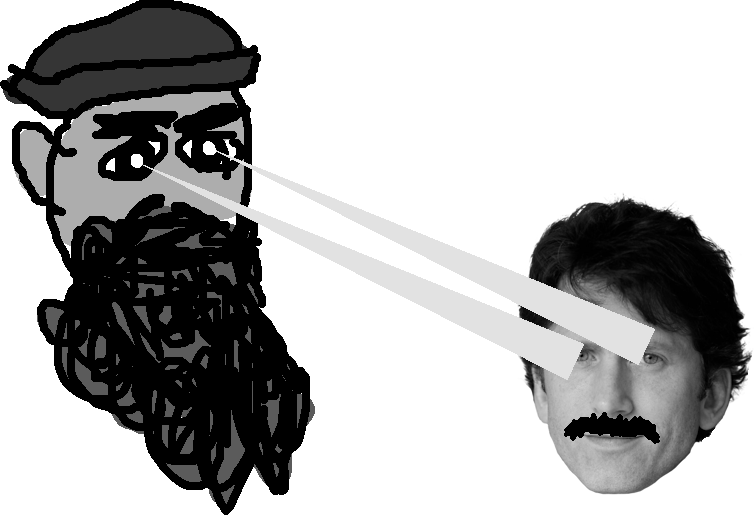
Falling on his knees, the Archduke Harry made the most passionate declaration of his suit. He told her that
he had something like twenty million ducats in a strong box at his castle. He had more acres than any nobleman in England. The shooting was excellent: he could prom- ise her a mixed bag of ptarmigan and grouse such as no English moor, or Scotch either, could rival. True, the pheasants had suffered from the gape in his absence, and the does had slipped their young, but that could be put right, and would be with her help when they lived in Roumania together.
As he spoke, enormous tears formed in his rather prominent eyes and ran down the sandy tracts of his long and lanky cheeks.
That men cry as frequently and as unreasonably as women, Orlando knew from her own experience as a man; but she was beginning to be aware that women should be shocked when men display emotion in their presence, and so, shocked she was.
' The Archduke apologised. He commanded himself sufficiently to say that he would leave her now, but would return on the following day for his answer.
That was a Tuesday. He came on Wednesday; he came on Thursday; he came on Friday; and he came on Saturday. It is true that each visit began, continued, or concluded with a declaration of love, but in between there was much room for silence. They sat on either side of the fireplace and sometimes the Archduke knocked
ORLANDO over the fire irons and Orlando picked them up again. Then the Archduke would bethink him how he had shot an elk in Sweden, and Orlando would ask, was it a very big elk, and the Archduke would say that it was not as big as the reindeer which he had shot in Norway; and Orlando would ask, had he ever shot a tiger, and the Archduke would say he had shot an albatross, and Or- Jando would say (half hiding her yawn) was an alba- tross as big as an elephant, and the Archduke would say —something very sensible, no doubt, but Orlando heard it not, for she was looking at her writing table, out of the window, at the door. Upon which the Archduke would say, “I adore you,” at the very same moment that Or- lando said “Look, it’s beginning to rain,” at which they were both much embarrassed, and blushed scarlet, and could neither of them think what to say next. Indeed, Orlando was at her wit’s end what to talk about and had she not bethought her of a game called Fly Loo, at which great sums of money can be lost with very little expense of spirit, she would have had to marry him, she sup- posed; for how else to get rid of him she knew not. By this device, however, and it was a simple one, needing only three lumps of sugar and a sufficiency of flies, the embarrassment of conversation was overcome and the necessity of marriage avoided. For now, the Archduke would bet her five hundred pounds to a tester that a fly 181
would settle on this lump and not on that. Thus, they would have occupation for a whole morning watching the flies (who were naturally sluggish at this season and often spent an hour or so circling round the ceiling) until at length, some fine blue bottle made his choice and the match was won. Many hundreds of pounds changed hands between them at this game, which the Archduke, who was a born gambler, swore was every bit as good as horse racing, and vowed he could play at it for ever. But Orlando soon began to weary.
““What’s the good of being a fine young woman in the prime of life,” she asked, “‘if I have to pass all my morn- ings watching blue bottles with an Archduke?”
She began to detest the sight of sugar; flies made her dizzy. Some way out of the difficulty there must be, she supposed, but she was still awkward in the arts of her sex, and as she could no longer knock a man over the head or run him through the body with a rapier, she could think of no better method than this. She caught a blue bottle, gently pressed the life out cf it (it was half dead already, or her kindness for the dumb creatures would not have permitted it) and secured it by a drop of gum arabic toa lump of sugar. While the Archduke was gazing at the ceiling, she deftly substituted this lump for the one she had laid her money on, and crying, “Loo Loo!” declared that she had won her bet. Her reckoning was that the
-grombo
ORLANDO Archduke, with all his knowledge of sport and horse- racing would detect the fraud and, as to cheat at Loo is the most heinous of crimes, and men have been banished from the society of mankind to that of apes in the tropics for ever because of it, she calculated that he would be manly enough to refuse to have anything further to do with her. But she misjudged the simplicity of the amiable nobleman. He was no nice judge of flies. A dead fly looked to him much the same asa living one. She played the trick twenty times on him and he paid her over £17,250 (which is about £40,885 :6:8 of our own money) before Orlando cheated so grossly that even he could be deceived no longer. When he realised the truth at last, a painful scene ensued. The Archduke rose to his full height. He coloured scarlet. Tears rolled down his cheeks one by one. That she had won a fortune from him was nothing—she was welcome to it; that she had de- ceived him was something—it hurt him to think her capable of it; but that she had cheated at Loo was every- thing. To love a woman who cheated at play was, he said, impossible. Here he broke down completely. Hap- pily, he said, recovering slightly, there were no witnesses. She was, after all, only a woman, he said. In short, he was preparing in the chivalry of his heart to forgive her and had bent to ask her pardon for the violence of his language, when she cut the matter short, as he stooped 183
ORLANDO his proud head, by dropping a small toad between his skin and his shirt.
In justice to her, it must be said that she would in- finitely have preferred a rapier. Toads are clammy things to conceal about one’s person a whole morning. But if rapiers are forbidden, one must have recourse to toads. Moreover toads and laughter between them sometimes do what cold steel cannot. She laughed. The Archduke blushed. She laughed. The Archduke cursed. She laughed. The Archduke slammed the door.
“Heaven be praised!” cried Orlando still laughing. She heard the sound of chariot wheels driven at a furious pace down the courtyard. She heard them rattle along the road. Fainter and fainter the sound became. Now it faded away altogether.
“T am alone,” said Orlando, aloud since there was no one to hear.
That silence is more profound after noise still wants the confirmation of science. But that loneliness is more apparent directly after one has been made love to, many women would take their oath. As the sound of the Arch- duke’s chariot wheels died away, Orlando felt drawing further from her and further from her an Archduke (she did not mind that) a fortune (she did not mind that) a title (she did not mind that) the safety and circumstance of married life (she did not mind that) but life she heard
ORLANDO going from her, anda lover. “Life anda lover,” she mur- mured; and going to her writing-table she dipped her pen in the ink and wrote:
“Life and a lover’—a line which did not scan and made no sense with what went before—something about the proper way of dipping sheep to avoid the scab. Read- ing it over she blushed and repeated,
“Life and a lover.” Then laying her pen aside she went into her bedroom, stood in front of her mirror, and arranged her pearls about her neck. Then since pearls do not show to advantage against a morning gown of sprigged cotton, she changed to a dove grey taffeta; thence to one of peach bloom; thence to a wine coloured brocade. Perhaps a dash of powder was needed, and if her hair were disposed—so—about her brow, it might become her. Then she slipped her feet into pointed slip- pers, and drew an emerald ring upon her finger.“Now,” she said when all was ready and lit the silver sconces on either side of the mirror. What woman would not have kindled to see what Orlando saw then burning in the snow—for all about the looking glass were snowy lawns, and she was like a fire, a burning bush, and the candle flames about her head were silver leaves; or again, the glass was green water, and she a mermaid, slung with pearls, a siren in a cave, singing so that oarsmen leant from their boats and fell down, down to embrace her; so
dark, so bright, so hard, so soft, was she, so astonishingly seductive that it was a thousand pities that there was no one there to put it in plain English, and say outright “Damn it Madam, you are loveliness incarnate,” which was the truth. Even Orlando (who had no conceit of her person) knew it, for she smiled the involuntary smile which women smile when their own beauty, which seems not their own, forms like a drop falling or a foun- tain rising and confronts them all of a sudden in the glass —this smile she smiled and then she listened for a mo- ment and heard only the leaves blowing and the spar- rows twittering, and then she sighed, “Life, a lover,” and then she turned on her heei with extraordinary ra- pidity; whipped her pearls from her neck, stripped the satins from her back, stood erect in her neat black silk knickerbockers of an ordinary nobleman, and rang the bell. When the servant came, she told him to order a coach and six to be in readiness instantly. She was sum- moned by urgent affairs to London. Within an hour of the Archduke’s departure, off she drove.
And as she drove, we may seize the opportunity, since the landscape was of a simple English kind which needs no description, to draw the reader’s attention more par- ticularly than we could at the moment to one or two re- marks which have slipped in here and there in the course
ORLANDO of the narrative. For example, it may have been observed that Orlando hid her manuscripts when interrupted. Next, that she looked long and intently in the glass; and now, as she drove to London, one might notice her start- ing and suppressing a cry when the horses galloped faster than she liked. Her modesty as to her writing, her vanity as to her person, her fears for her safety all seem to hint that what was said a short time ago about there being no change in Orlando the man and Orlando the woman, was ceasing to be altogether true. She was becoming a little more modest, as women are, of her brains, and a’ little more vain, as women are, of her person. Certain susceptibilities were asserting themselves, and others were diminishing. The change of clothes had, some phi- | losophers will say, much to do with it. Vain trifles as they seem, clothes have, they say, more important offices than merely to keep us warm. They change our view of the world and the world’s view of us. For example, when Captain Bartolus saw Orlando’s skirt, he had an awning stretched for her immediately, pressed her to take an- other slice of beef, and invited her to go ashore with him in the long boat. These compliments would certainly not have been paid her had her skirts, instead of flowing, been cut tight to her legs in the fashion of breeches. And when we are paid compliments, it behoves us to make some return. Orlando curtseyed; she complied; she flat-
tered the good man’s humours as she would not have done had his neat breeches been a woman’s skirts, and his braided coat a woman’s satin bodice. Thus, there is much to support the view that it is clothes that wear us and not we them; we may make them take the mould of arm or breast, but they mould our hearts, our brains, our tongues to their liking. So, having now worn skirts for a considerable time, a certain change was visible in Or- lando, which is to be found even in her face. If we com- pare the picture of Orlando as a man with that of Or- lando as a woman we shall see that though both are un- doubtedly one and the same person, there are certain changes. The man has his hand free to seize his sword; the woman must use hers to keep the satins from slipping from her shoulders. The man looks the world full in the face, as if it were made for his uses and fashioned to his liking. The woman takes a sidelong glance at it, full of subtlety, even of suspicion. Had they both worn the same clothes, it is possible that their outlook might have been the same too.
That is the view of some philosophers and wise ones, but on the whole, we incline to another. The difference between the sexes is, happily, one of great profundity. Clothes are but a symbol of something hid deep beneath. It was a change in Orlando herself that dictated her choice of a woman’s dress and of a woman’s sex. And
perhaps in this she was only expressing rather more openly than usual—openness indeed was the soul of her nature—something that happens to most people without being thus plainly expressed. For here again, we come toa dilemma. Different though the sexes are, they inter- mix. In every human being a vacillation from one sex to the other takes place, and often it is only the clothes that keep the male or female likeness, while underneath the sex is the very opposite of what it is above. Of the complications and confusions which thus result every one has had experience; but here we leave the general question and note only the odd effect it had in the par- ticular case of Orlando herself.
For it was this mixture in her of man and woman, one being uppermost and then the other, that often gave her conduct an unexpected turn. The curious of her own sex would argue how, for example, if Orlando was a woman, did she never take more than ten minutes to dress? And were not her clothes chosen rather at random, and some- times worn rather shabby? And then they would say, still, she has none of the formality of a man, or a man’s love of power. She is excessively tender-hearted. She could not endure to see a donkey beaten or a kitten drowned. Yet again, they noted, she detested household matters, was up at dawn and out among the fields in summer before the sun had risen. No farmer knew more
about the crops than she did. She could drink with the best and liked games of hazard. She rode well and drove six horses at a gallop over London Bridge. Yet again, though bold and active as a man, it was remarked that the sight of another in danger brought on the most womanly palpitations. She would burst into tears on slight provocation. She was unversed in geography, found mathematics intolerable, and held some caprices which are more common among women than men, as for instance, that to travel south is to travel down hill. Whether, then, Orlando was most man or woman, it is difficult to say and cannot now be decided. For her coach was now rattling over the cobbles. She had reached her home in the city. The steps were being let down; the iron gates were being opened. She was entering her father’s house at Blackfriar’s which, though fashion was fast deserting that end of the town, was still a pleasant, roomy mansion, with gardens running down to the river, and a pleasant grove of nut trees to walk in.
Here she took up her lodging and began instantly to look about her for what she had come in search of —that is to say, life and a lover. About the first there might be some doubt; the second she found without the least dif- ficulty two days after her arrival. It was a Tuesday that she came to town. On Thursday she went for a walk in the Mall, as was then the habit of persons of quality. She
had not made more than a turn or two of the avenue before she was observed by a little knot of vulgar people who go there to spy upon their betters. As she came past them, a common woman carrying a child at her breast stepped forward, peered familiarly into Orlando’s face, and cried out, “Lawk upon us, if it ain’t the Lady Or- lando!”” Her companions came crowding round, and Orlando found herself in a moment the centre of a mob of staring citizens and tradesmen’s wives, all eager to gaze upon the heroine of the celebrated law suit. Such was the interest that the case excited in the minds of the common people. She might, indeed, have found herself gravely discommoded by the pressure of the crowd—she had forgotten that ladies are not supposed to walk in public places alone—had not a tall gentleman at once stepped forward and offered her the protection of his arm. It was the Archduke. She was overcome with dis- tress and yet with some amusement at the sight. Not only had this magnanimous nobleman forgiven her, but in order to show that he took her levity with the toad in good part, he had procured a jewel made in the shape of that reptile which he pressed upon her with a repetition of his suit as he handed her to her coach.
What with the crowd, what with the Duke, what with the jewel, she drove home in the vilest temper imagin- able. Was it impossible then to go for a walk without